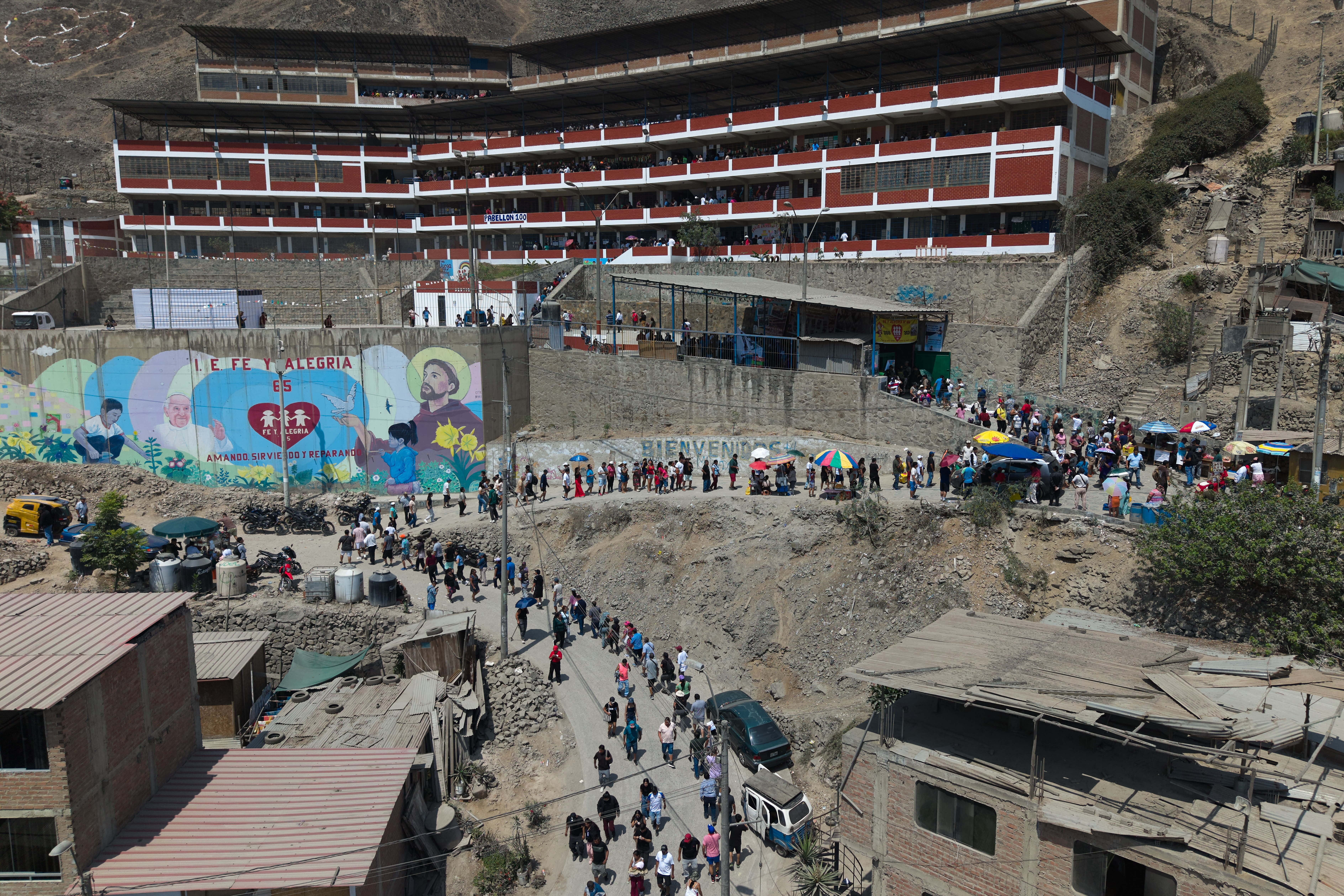
Peru’s attempt to elect its ninth president in a single decade has stalled. While the National Office of Electoral Processes (ONPE) blamed logistical failures for a last-minute, one-day voting extension, the delay points to a much deeper institutional rot. On Sunday night, as ballot counting was expected to begin, authorities instead announced that over 52,000 residents in Lima and thousands more in overseas hubs like Paterson, New Jersey, and Orlando, Florida, would have their voting window pushed into Monday. This unprecedented move has not only delayed the official count but has also amplified fears of a legitimacy crisis in a nation where trust in the ballot box is already at a historic low.
The chaos stems from a total breakdown in polling station management. In the early hours of Sunday, reports flooded in from across Lima of locked schools and absent poll workers. Under Peruvian law, voting is mandatory for citizens aged 18 to 70, with fines reaching roughly $32 for those who fail to show up. However, the system assumes a level of bureaucratic competence that was nowhere to be found this weekend. When the people arrived, the infrastructure to receive them simply did not exist.
A Fragmented Field of Thirty Five
The sheer volume of candidates has turned the 2026 election into a statistical nightmare. Thirty-five individuals are vying for the presidency. This is the largest pool in the history of the Andean nation, a figure that reflects a political system that has splintered into tiny, personality-driven factions rather than coherent parties. With so many names on the ballot, no single candidate is expected to come close to the 50% threshold required for an outright win.
Early exit polls suggest a razor-thin scramble for the top spots. Keiko Fujimori, making yet another run for the office her father once held, appears to be in a tight race with Rafael López Aliaga. Neither, however, has managed to pull away from a pack that includes a former minister and even a professional comedian. The fragmentation is so severe that the eventual winner of the first round might secure their spot in the June runoff with less than 15% of the total vote.
The Security Mandate
The voting delays are happening against a backdrop of public desperation. Peru is currently gripped by a surge in violent crime that has moved from the fringes of society to the very center of the political debate. Voters are no longer asking for economic reforms; they are demanding survival. In the weeks leading up to the vote, the murder of a bus driver in Lima became a flashpoint for national anger, highlighting the state's inability to control the streets.
Candidates have responded with increasingly drastic rhetoric. Proposals for "megaprisons" modeled after El Salvador’s hardline approach have become standard campaign talking points. Others have called for the reinstatement of the death penalty for serious crimes or the restriction of food for inmates. These are not nuanced policy positions. They are reactionary screams from a political class that knows it has lost control of the security situation.
Institutional Instability and the New Congress
For the first time in over three decades, Peruvians are also electing a bicameral Congress. Recent legislative reforms brought back the upper chamber, a move intended to provide a "check and balance" to a presidency that has become a revolving door. Since 2016, Peru has burned through presidents at an alarming rate, often due to "moral incapacity" impeachments or resignations triggered by corruption scandals.
The transition back to a two-chamber system is a high-stakes gamble. Supporters argue that a Senate will bring maturity and long-term thinking to a legislature known for its volatility. Critics, however, see it as another layer of bureaucracy that will only serve to protect the interests of the political elite. If the new Congress is as fragmented as the presidential field, the legislative gridlock that has paralyzed the country for years is likely to continue.
Logistical Failures or Something Worse
The decision to extend voting into Monday for specific regions has raised serious questions about electoral integrity. While ONPE insists the extension was necessary to protect the right to vote for those who faced closed polling stations, the selective nature of the extension is a lightning rod for controversy. Thousands of Peruvians in rural areas also reported difficulties, yet the primary extensions were focused on Lima and specific overseas districts.
In a country where "irregularity" is often a euphemism for fraud, the one-day delay provides a fertile ground for conspiracy theories. If the margin between the second and third-place candidates is as slim as projected, those who were unable to vote on Sunday—or those who saw the rules change mid-process—will almost certainly challenge the results. The government’s decision to waive fines for some but not all citizens adds another layer of perceived unfairness.
The Cost of Apathy
The fundamental problem facing Peru isn't just a slow vote count; it’s a total lack of belief in the process. When 27 million people are forced to choose between 35 candidates they largely view as dishonest, the resulting government lacks a mandate from day one. The logistical failures of this weekend are a physical manifestation of a state that is failing its basic duties.
The wait until Monday for a full count is more than just a delay in data. It is a period of high tension where the absence of official information is being filled by social media rumors and candidate accusations. Peru is a country that cannot afford another contested election, yet the very mechanics of its democracy seem designed to produce exactly that. The next few days will determine if the country can move toward a peaceful runoff in June or if it will descend into another cycle of protests and presidential exits.
The gears of the machine are stuck. Whether they can be forced back into motion without breaking entirely remains to be seen.