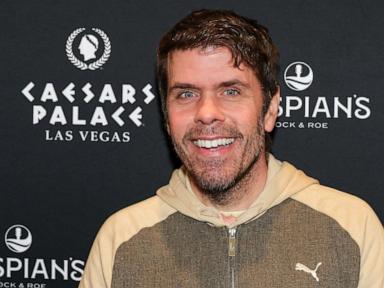
The glow of a monitor is a peculiar kind of sunlight. It warms the face while leaving the soul entirely in the dark. Millions of people know this light intimately. They sit in darkened rooms, staring at high-definition squares where real human beings compress their joys, breakdowns, and existential crises into monetized segments. For years, the internet consumed Perez Hilton as a caricature, a neon-colored villain of early celebrity gossip culture who traded in snark and digital provocation. But the screen does not care about past reputations when the current reality shifts.
Consider what happens when the performance stops, but the broadcast continues. Expanding on this idea, you can find more in: Why Stephen Baldwin Walked Away From Hollywood Stardom For Faith.
Police cars do not arrive with cinematic flair in these moments. They arrive with flashing red and blue lights reflecting off suburban windows, casting erratic patterns across living room walls that have never seen guests, only chat rooms. Law enforcement officers stepped onto the property of the prominent digital personality after viewers flagged an alarming livestream. On camera, behavior had shifted from unconventional commentary to apparent self-harm.
Panic moves fast across fiber-optic cables. Observers at Bloomberg have also weighed in on this trend.
A digital crowd is a strange collective organism. It possesses thousands of eyes and zero centralized empathy. When someone stumbles in public, people look away. When someone stumbles on a live feed, thousands of keyboards click simultaneously, unsure whether they are witnessing a stunt, a cry for help, or a slow-motion tragedy broadcast for entertainment. The boundary between the private living room and the public square dissolved long ago. Yet, we pretend the glass of the smartphone lens is a shield.
It is not a shield. It is a magnifying glass.
Emergency responders entered a space defined by ring lights and microphone stands. They found a man navigating an acute crisis under the unblinking gaze of remote strangers. The mechanics of modern wellness checks are grimly routine for dispatchers, yet entirely surreal for the person caught in the crosshairs. Police departments receive automated pips on computer screens, frantic phone calls from international time zones, and fragmented video clips sent by concerned or morbidly curious onlookers.
We have built a culture that encourages people to monetize their vulnerability while stripping away the safety nets that keep vulnerability from becoming fatal.
Look at the architecture of the modern attention economy. Platforms reward consistency, extremity, and emotional exposure. If you are calm, quiet, and healing off-line, the algorithm forgets you. If you are unraveling in real-time, the algorithm elevates you. Millions tune in, not necessarily out of malice, but out of a profound, modern loneliness that seeks connection through the wreckage of others.
When the police arrived at that door, they did not find a character from a 2000s gossip blog. They found a father, a person in acute distress, navigating the terrifying weight of public exposure while his internal world collapsed.
The emergency personnel handled the situation with standard protocols, ensuring physical safety and medical evaluation. But the structural emergency remains unresolved. What happens when the livestream ends? What happens when the chat room goes dark, the viewers scatter to the next notification, and the individual is left alone in the physical room with the ghosts of their own broadcast?
This is the hidden tax of the digital age. We have democratized broadcasting without building a moral framework for witnessing distress. We treat human pain like content, scrolling past warnings as easily as we scroll past advertisements.
The flashing lights outside that home eventually faded. The cruiser doors slammed shut, and the officers drove away into the night. But the stream stopped only because the state intervened, stepping through a threshold that thousands of digital voyeurs had stared into without reaching out.
We must ask ourselves what we are actually watching when we refuse to look away. The answer is rarely comfortable. It is a mirror reflecting a culture that mistakes visibility for connection, and performance for life. Until we learn how to see the human being behind the pixels, the sirens will keep wailing in the background of our favorite feeds.