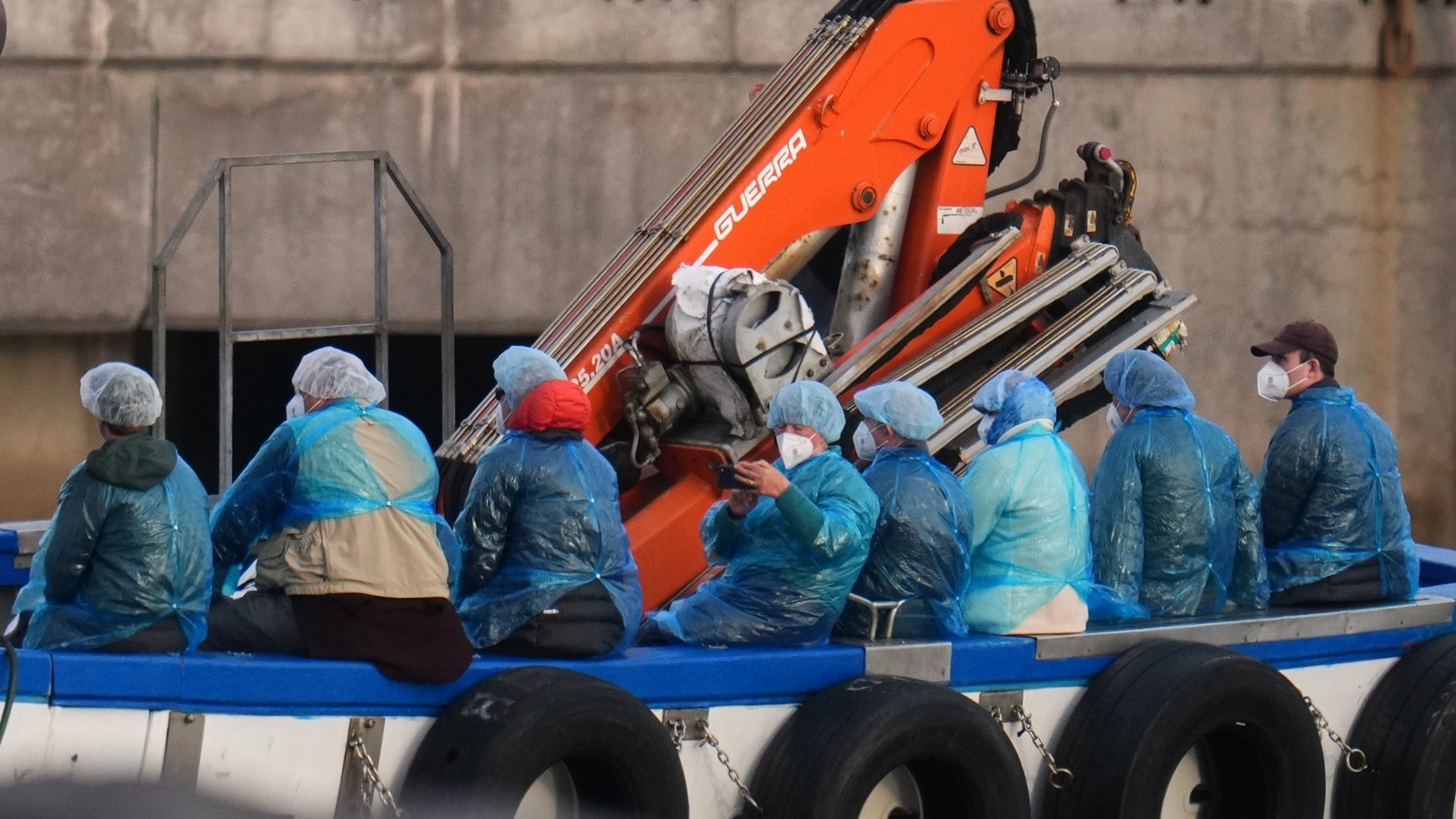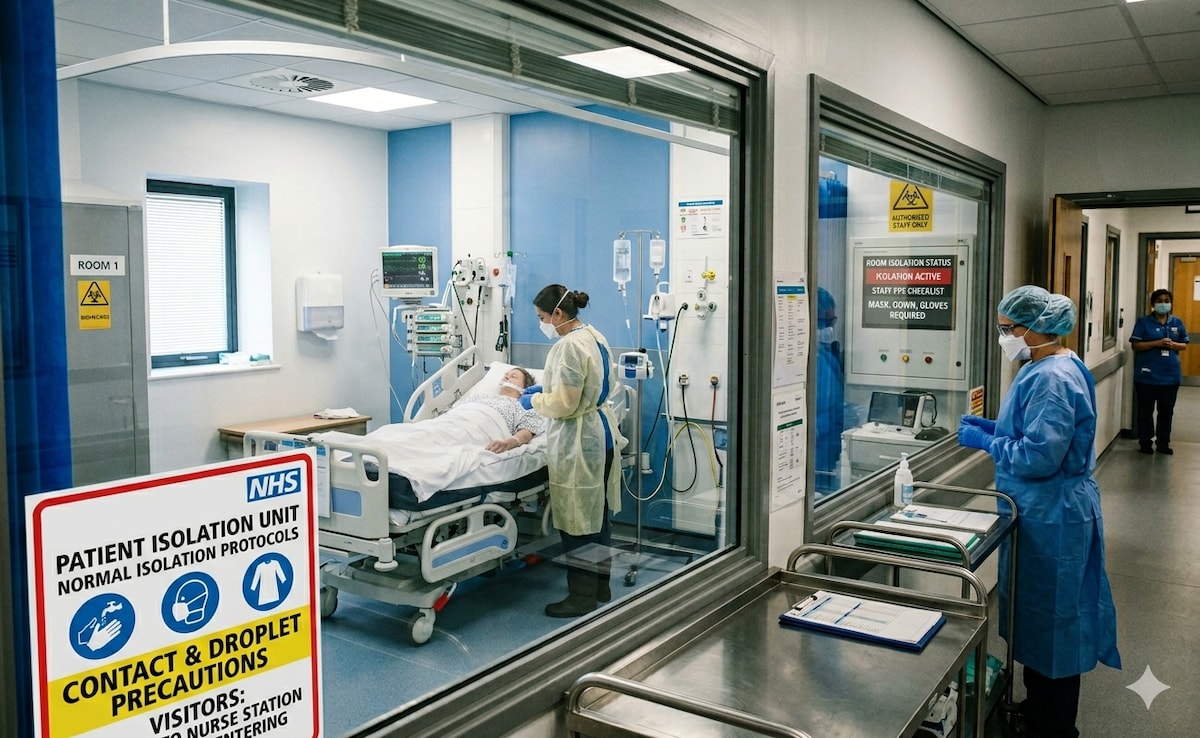
The air in the back of an ambulance is clinical, recycled, and smells of sterile wipes. It is a sharp contrast to the damp, earthy scent of the Welsh countryside, where the wind usually carries the smell of wet bracken and ancient stone. For the ten people currently under the watchful eye of British health officials, that sterile air is now a sanctuary. Or a cage.
They are not "cases" yet. They are people who shared a meal, a conversation, or a living space. Now, they are the front line of a quiet, desperate vigil against an invisible intruder: Hantavirus. Recently making headlines in this space: The Hantavirus Hysteria is a Failure of Basic Math.
To understand why a handful of people in a remote corner of the UK has triggered a national alert, you have to look past the dry headlines of "isolation" and "precaution." You have to look at the virus itself. It does not travel like the flu. It does not hang in the air of a crowded subway, waiting for a sneeze. It is more intimate than that. It is a ghost that haunts the periphery of human habitation, carried in the lungs of rodents and released in a fine, lethal dust.
The Dust in the Attic
Consider a hypothetical homeowner—let’s call him Arthur. Arthur lives in a cottage that has stood for two hundred years. He decides, on a Saturday morning, to finally clear out the old shed or the crawlspace under the stairs. He moves a box. A cloud of dust rises. In that dust, invisible and odorless, is the dried residue of a bank vole. More details on this are covered by National Institutes of Health.
When Arthur inhales, the clock starts.
This is the mechanical reality of Hantavirus. It is a zoonotic pathogen, meaning it jumps the fence from animals to humans. In the UK, the specific strain usually involved is the Seoul virus, or occasionally Puumala-like strains. While the headlines often point to the terrifying "Hantavirus Pulmonary Syndrome" seen in the Americas, the European variety often targets the kidneys.
The biology is a slow-motion heist. The virus enters the bloodstream and begins to compromise the integrity of the smallest blood vessels. They leak. The body, sensing an invasion, overreacts with an inflammatory response that can be more damaging than the virus itself.
The ten individuals currently being isolated by health authorities are caught in the "incubation window." It is a period of agonizing normalcy. You feel fine. You make tea. You watch the news. But you know that inside your cellular machinery, a battle might be starting that you won't feel for another two to four weeks.
The Weight of the Wait
Isolation is a heavy word. It implies a severance from the world, but for these ten, it is an act of communal love. By stepping away from their lives, they are ensuring that a rare occurrence does not become a common tragedy.
Public health officials in Britain are not acting out of panic, but out of a hard-learned historical respect for how viruses move. The decision to monitor ten people so closely suggests a specific "point-source" exposure. They likely all encountered the same environment—perhaps a farm building, a grain store, or a particular infestation that acted as the reservoir.
The Seoul virus strain is particularly tricky because it is carried by the common brown rat. Unlike more exotic diseases, the vector here is an animal that lives in the shadows of our infrastructure. We coexist with them, usually without incident. But when the viral load in a local rat population hits a certain threshold, the barrier between our world and theirs thins.
Symptoms, when they arrive, are deceptive. They begin as a mimicry of the common cold. A fever. An ache in the lower back. A sudden, inexplicable fatigue. For many, it stays there—a "flu-like illness" that passes. But for the unlucky few, the virus begins its work on the renal system. Hemorrhagic Fever with Renal Syndrome (HFRS) is the clinical term. It sounds like a death sentence, but with modern supportive care, the vast majority recover. The kidneys are resilient, provided they are given the time and the medical support to weather the storm.
The Invisible Guardrail
Why the national attention? Why ten people?
Because in the world of infectious disease, "rare" is a status that requires constant maintenance. The UK has historically seen very few Hantavirus cases. By isolating these ten individuals, the UK Health Security Agency (UKHSA) is effectively building a firebreak. They are not just watching for symptoms; they are mapping the limits of the exposure.
Every day that passes without a fever is a victory. Every blood test that comes back negative is a brick back in the wall of public safety.
The experts leading this charge—virologists and epidemiologists—operate on a philosophy of "over-response." If you wait until the cases are confirmed and the patients are in the ICU, you have already lost the trail. You have to hunt the virus in the quiet moments, in the period of health, to prevent the period of sickness.
There is a psychological toll to this kind of vigilance. Imagine being one of the ten. Every time you feel a chill, you wonder. Every time your head throbs after a long day, you ask yourself: Is this it? You are forced to become a hyper-vigilant observer of your own biology. You become a data point in a national security strategy.
The Lesson of the Vole
We often think of our health as something we own, a private matter between us and our doctors. But an outbreak—even a tiny, contained one like this—reminds us that our health is a shared geography. We are connected by the air we breathe, the surfaces we touch, and the animals that live beneath our floorboards.
The UKHSA's move to isolate these individuals is a reminder that we live in a world of microscopic stakes. We have built high-tech cities and digital networks, yet we remain vulnerable to the ancient biology of a rodent in a shed.
The risk to the general British public remains vanishingly low. This is not the start of a pandemic. It is a surgical strike by health officials to contain a localized risk. But it serves as a potent metaphor for the fragility of our "sterile" modern life.
Safety is not the absence of danger. It is the presence of an active, tireless defense.
As the sun sets over the hills where these ten people wait, the rest of the country continues. People go to pubs, they take trains, they clear out their garages. They do so because there are people whose entire professional existence is dedicated to watching the dust. They track the voles. They test the rats. They stand in the gap so that a cloud of dust in an attic remains a nuisance, rather than a catastrophe.
The ten will wait out their twenty-one days. They will return to their lives, likely with a newfound respect for the simple act of breathing clear, mountain air. And the rest of us will remain blissfully unaware of how close the invisible world came to touching our own, all because a few scientists decided that ten people were worth the world’s attention.
The silence of the countryside remains unbroken, but beneath the floorboards, the story continues, waiting for the next person to move a box.