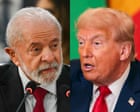
Foreign meddling in domestic elections always leaves a messy trail, but the line gets crossed when external governments start directly funding groups designed to destabilize core national institutions. Brazil recently found itself staring down this exact scenario. When reports surfaced detailing the Trump administration's plans to distribute funding to right-wing civil groups openly hostile to the Brazilian Supreme Court, the government didn't shrug it off.
Attorney General Jorge Messias stepped forward with a blunt assessment, declaring that such external interference simply cannot be tolerated. For a country navigating a tense and polarized electoral cycle, this revelation was treated less like a diplomatic misstep and more like a direct threat to national sovereignty. If you enjoyed this piece, you might want to read: this related article.
Decoding the Allegations Behind the Outrage
The controversy erupted following investigative reports revealing that a United States grant program aimed to inject roughly one million dollars into right-wing civil organizations. The catch? These specific groups were heavily focused on opposing the Supreme Federal Court (STF), an institution that has already weathered intense pressure, threats, and legal battles tied to the fallout from previous election cycles and coup investigations involving figures like Jair Bolsonaro.
Timing is everything in politics. These disclosures broke right as Brazil was barreling toward a high-stakes presidential vote. Messias didn't mince words on social media and official channels, framing the reports as an urgent warning sign. When a foreign power funnels cash into domestic pressure groups during an active voting window, it stops looking like standard international diplomacy and starts looking like an attempt to tilt the scales. For another angle on this story, refer to the latest update from NBC News.
Why the Supreme Court Became the Primary Target
You can't understand Brazil's sharp defensive reaction without looking at the unique pressure cooker surrounding its judiciary. Over the past few years, the Supreme Federal Court has positioned itself as the main bulwark defending democratic norms against far-right challenges. Because of that role, the court has faced relentless attacks from political actors trying to delegitimize its authority.
When external funding enters the equation to back these exact critics, it creates a dangerous feedback loop. Local political actors use foreign resources and ideological backing to amplify attacks on home-grown institutions. Messias and other legal authorities recognized that letting this slide would establish a terrible precedent. If foreign entities can bankroll campaigns against a nation's highest court without consequence, national sovereignty becomes an empty phrase.
The Broader Geopolitical Strain
This clash isn't happening in a vacuum. Tensions between the current Brazilian administration under Luiz Inácio Lula da Silva and right-wing populist movements globally have simmered for years. Washington's underlying policy posture toward Latin America has frequently crossed into heavy-handed ideological management, alienating leaders who expect baseline diplomatic respect.
By demanding immediate investigations to trace the origin and destination of these funds, Brazil's legal framework is sending an unambiguous message. Authorities want to determine whether these financial flows crossed the legal threshold into outright electoral interference. Even if the funds were disguised as routine grants or democracy-promotion initiatives, their real-world impact on a fractured domestic political landscape was bound to be volatile.
Protecting Democratic Integrity Moving Forward
Sovereignty isn't just about guarding borders against military threats; it's about keeping domestic politics free from foreign financial manipulation. Brazil's aggressive stance shows that emerging democracies are increasingly unwilling to play passive recipients to foreign intervention.
Transparency remains the ultimate disinfectant. By bringing these funding plans into the open and launching formal inquiries, Brazilian institutions are forcing international actors to think twice before treating local court systems as pawns in a wider geopolitical game. If modern elections are going to survive outside interference, more nations need to adopt this zero-tolerance approach.


