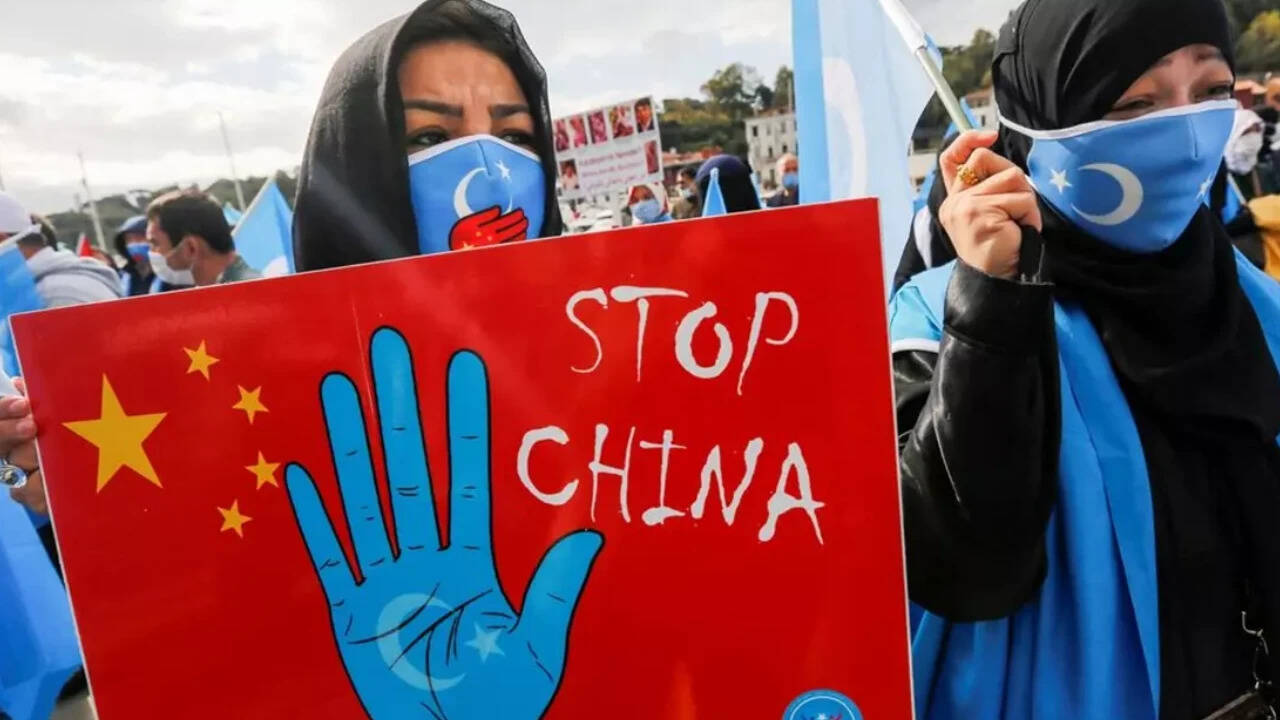
Every few months, a politician grabs a megaphone, points at a multinational corporation operating in a politically sensitive region, and demands a dramatic exit. The script writes itself. Lawmakers draft stern letters. Headlines flash. Moral outrage spikes on social media for forty-eight hours. Then everyone moves on while nothing actually changes on the ground.
When a US lawmaker recently targeted a coffee giant over a single outlet in Xinjiang, the playbook rolled out right on schedule. The demand was simple: pack up the espresso machines, abandon the storefront, and prove your moral purity by taking a financial hit.
It makes for great theater. It is also completely useless as a tool for human rights.
I have spent years watching corporate boards panic over legislative grandstanding. I have seen executives throw millions of dollars at symbolic gestures that satisfy domestic political optics while abandoning the very workers they claim to protect. The consensus is lazy. It assumes that physical absence equals moral clearance, and that cutting off economic ties hurts the oppressor rather than the ordinary citizens trying to earn a living in a complex economy.
Let us dismantle the illusion.
The Geography of Complicity Is a Myth
The primary misconception driving these boycotts is that multinational brands operate in isolated bubbles of choice. People imagine a corporate headquarters in Seattle or New York intentionally mapping out a strategy to prop up a controversial state apparatus just to sell a few hundred lattes a day.
That is not how global supply chains or retail footprints work.
A franchise or corporate-owned store in western China does not exist in a vacuum. It relies on local labor, local logistics, local landlords, and municipal infrastructure. When you demand that a brand pull out of a specific province, you are not striking a blow against state policy. You are shuttering a commercial hub that employs local baristas, sources local dairy, and pays local taxes to municipal budgets that will keep collecting revenue whether the green siren logo is on the wall or not.
The logic collapses under basic scrutiny. If corporate presence equals endorsement, then every foreign firm operating anywhere within a nation with an authoritarian government is directly complicit. If that standard were applied evenly, global trade would halt entirely. Yet lawmakers rarely target heavy manufacturing, tech supply chains, or raw material extraction with the same theatrical fury they reserve for consumer-facing coffee shops and retail outlets. Why? Because coffee is visible. Heavy industry is boring. Optics win elections; nuance does not.
Who Actually Suffers When Brands Retreat
Let us talk about the human element, because the politicians demanding these withdrawals never do.
When a multinational corporation pulls out of a region under political pressure, who loses? Does the local government alter its legal code, reverse its policies, or step down in shame?
Of course not.
The people who lose are the local employees. They lose steady wages, professional training, health benefits, and a workplace standard that often exceeds local employment baselines. In their place, a domestic competitor steps in, absorbs the real estate, hires the staff under potentially less transparent conditions, and continues business as usual without international scrutiny or public pressure.
By forcing international brands out of contested zones, activists and lawmakers effectively create information vacuums and economic isolation. They replace corporate engagement with local monopolies that answer only to the state. You do not reform a region by blinding the international community and removing every Western footprint. You achieve the opposite. You ensure that no outside observer, employee, or corporate policy can exert even a minor moderating influence on local labor practices.
The Hypocrisy of Selective Outrage
The most glaring flaw in the Xinjiang storefront debate is the sheer inconsistency of its application.
Look at global trade patterns. Look at where smartphones are assembled, where batteries are mined, and where textiles are woven. The entire global economy runs on interconnected supply chains that pass through jurisdictions with severe human rights concerns. Singling out a retail coffee outlet while ignoring the massive industrial machinery running the background economy is like screaming at a pedestrian while ignoring the freight train barreling down the tracks.
Lawmakers know this. The politicians drafting these letters understand that a coffee shop in Urumqi has zero impact on geopolitical strategy. But they also know that targeting a household brand name guarantees press coverage. It allows them to signal toughness to their constituents without disrupting the major commercial agreements that actually matter to their donors and regional economies.
It is low-cost, high-yield posturing.
Real Accountability Versus Performative Exits
If we genuinely care about labor conditions and human rights, we have to abandon the fantasy that corporate boycotts act as magic wands.
Real accountability requires messy, sustained engagement. It means maintaining international standards inside difficult markets, demanding transparency from suppliers, protecting local workers, and keeping channels of communication open. Walking away is easy. It lets executives wash their hands of a tough situation and return to safer markets, patting themselves on the back for their ethical purity while leaving the local population to shoulder the fallout.
Stop confusing symbolism with strategy. A corporate retreat is not a victory for human rights. It is an abdication of responsibility disguised as moral courage. Until lawmakers and activists are willing to tackle the entirety of global trade interdependence instead of picking easy targets for morning television segments, these boycotts will remain what they have always been: a distraction.