Stand on the banks of the Yalu River in Dandong, China, after dusk, and the global shifting of power ceases to be an abstract concept debated in sterile briefing rooms. It becomes literal geometry.
To your back, the Chinese cityscape blazes with neon neon brilliance. Skyscraper windows shimmer in reflection against the dark water, humming with the electricity of a global economic titan. But look across the narrow river toward Sinuiju, North Korea. Total darkness. The shoreline dissolves into an impenetrable, velvety black, punctured only by a rare, flickering bulb or the lone searchlight of a guard tower.
It is the sharpest geopolitical contrast on earth, rendered in light and shadow. Yet, beneath that stark divide lies a complex, decades-old web of dependence, shared history, and strategic necessity that is quietly tightening.
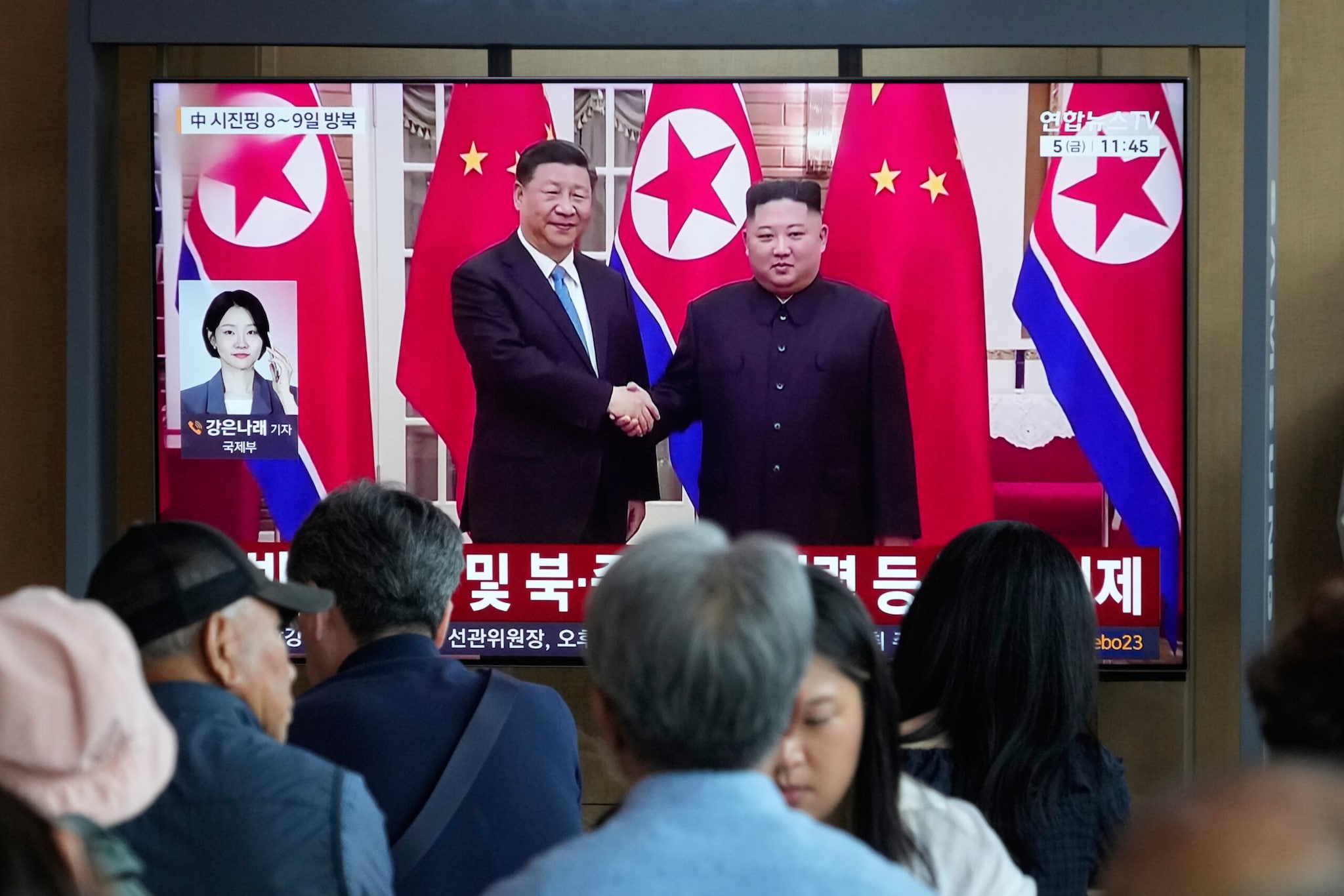
When the official state media channels in Beijing and Pyongyang broadcasted standard, icy dispatches about Xi Jinping and Kim Jong Un exchanging messages of "greater ties," the world largely shrugged. The headlines looked identical to a hundred others from the past half-century. They read like bureaucratic homework.
They are not.
To understand what is actually happening between China and North Korea, you have to look past the stiff, translated prose of diplomats. You have to look at the invisible stakes. For Beijing, the Hermit Kingdom is a shield. For Pyongyang, China is a lifeline. In a world that is rapidly fracturing into new cold war alliances, these two neighbors are realizing that their fates are inextricably linked, whether they particularly like each other or not.
The Geography of Survival
Imagine living in a house where your next-door neighbor is volatile, heavily armed, and deeply paranoid. You might not invite them over for dinner every Sunday. You might even find their behavior deeply exhausting. But if the rest of the neighborhood is trying to evict them, you realize that if their house goes up in flames, your own living room is going to catch fire next.
That is China's reality.
Beijing’s relationship with Pyongyang has never been built on genuine, warm affection. Historically, it has been described as being "as close as lips and teeth." It is a visceral, anatomical metaphor. When the lips are gone, the teeth get cold.
If the North Korean state were to collapse under the weight of international sanctions or internal strife, the fallout for China would be immediate and catastrophic. Millions of refugees would stream across the Yalu River into China’s northeastern provinces, triggering a humanitarian crisis of unprecedented scale. Worse, from Beijing's perspective, a collapsed North Korea means a unified Korean Peninsula backed by the United States military. Suddenly, American troops and democratic infrastructure would be sitting right on China’s land border.
For Xi Jinping, keeping North Korea stable is not a matter of communist solidarity. It is a matter of national defense.
Consider the sheer mechanics of survival in Pyongyang. Decades of isolation have left the country's economy fragile, relying on a patchwork of illicit trade, coal exports, and a massive gray market. But the one valve that cannot be shut off is Beijing. Crude oil flows through pipelines across the border; trucks carry grain, fertilizer, and consumer goods into the country. Without this quiet, steady pulse of Chinese economic life support, the lights across the river wouldn't just be dim—they would go out entirely.
The View from the Balcony
To comprehend the emotional weight of this alliance, we have to look at the human cost of the history that forged it.
Step back to the 1950s. The Korean War is raging, and newly founded Communist China sends hundreds of thousands of "Volunteers" across the frozen Yalu River to fight alongside North Korean troops against American and UN forces. Among them was Mao Anying, the eldest son of Mao Zedong. He was killed by an American airstrike in Pyongyang and remains buried there to this day.
When Kim Jong Un visits the graves of those Chinese soldiers, as he does during major anniversaries, it is a highly choreographed piece of political theater. But theater only works when it taps into a real, shared trauma. The older generation in both countries remembers a time when their blood was literally spilled in the same mud.
But the younger generation sees a different world.
A hypothetical twenty-something professional living in Shanghai, drinking iced Americanos and working for a tech startup, feels absolutely no cultural connection to a contemporary of the same age in Pyongyang, who might spend their days working in a state-run textile factory under the watchful eye of a party supervisor. The cultural chasm is vast. Yet, the geopolitical architecture created by their grandfathers still dictates their lives.
The Shanghai professional’s economic stability depends on China avoiding a hot war with the West. The Pyongyang worker's survival depends on China continuing to veto harsh new sanctions at the United Nations. They are tethered together by a rope woven seventy years ago.
The Leverage Game
It is a mistake to think of North Korea as a mere puppet of Beijing. The relationship is far more volatile. Kim Jong Un is acutely aware that China needs him alive, and he uses that knowledge as a shield to pursue his own ambitions, including his rapidly advancing nuclear weapons program.
Every time Pyongyang tests an intercontinental ballistic missile, politicians in Washington and Brussels demand that Beijing "reins in" its neighbor. But China's leverage is a paradox. If they push Kim too hard—if they completely cut off the oil or seal the border tight—they risk triggering the very collapse they are desperate to avoid.
Kim knows this. He plays the hand masterfully.
When global tensions are low, China often chides North Korea for its nuclear provocations, occasionally even agreeing to mild UN sanctions to signal its status as a responsible global superpower. But we do not live in a low-tension world anymore.
Look at the shifting global landscape. Washington is tightening its alliances with Tokyo and Seoul, creating a formidable, high-tech wall of containment around China’s eastern coast. Taiwan remains a constant flashpoint. In Europe, the geopolitical lines have hardened into concrete.
In this new, fragmented reality, Beijing can no longer afford to alienate its oldest buffer state. The recent exchange of warm words between Xi and Kim is a public signal to the West: the cracks in our alliance are closed. Do not miscalculate.
The Quiet Flow of the Yalu
Back on the riverbank in Dandong, the tour boats have docked for the night. The tourists who spent the afternoon peering through binoculars at the silent North Korean watchtowers have gone back to their hotels.
The water keeps moving, dark and indifferent to the ideological battles waged on its shores.
The public statements about "greater ties" are not just empty diplomatic pleasantries designed to fill space in a state newspaper. They are the sound of a closing door. As the world divides itself into rigid, opposing blocs, the bright lights of China and the deep darkness of North Korea are finding a strange, tense equilibrium. They are bound by geography, locked in a dance of mutual survival, watching the horizon for whatever storm comes next.