The map is no longer a fixed piece of paper pinned to a wall in Kyiv. It is alive. It stretches, morphs, and expands with every keystroke of a software engineer sitting in a dimly lit apartment, drinking lukewarm coffee while air raid sirens wail outside.
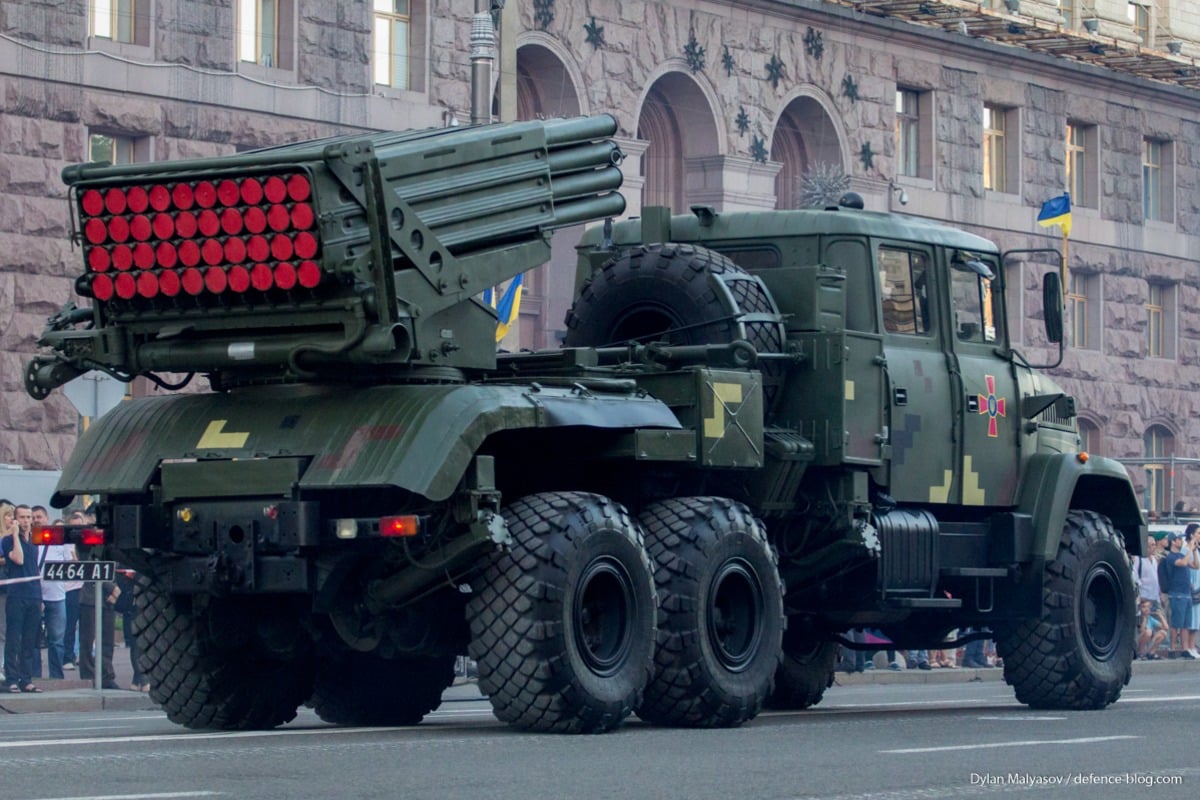
For decades, military doctrine taught that artillery was a blunt instrument of the immediate front line. You dug a trench, pointed a steel tube at a tree line a few miles away, and fired until the landscape turned to dust. That world is dead. A quiet revolution in military thinking has just fundamentally broken the old geography of conflict. Ukraine has codified a new reality, officially setting a 2,000-kilometer strike target into its core artillery and long-range doctrine. Also making headlines lately: The Anatomy of Transnational Escalation: Decoupling Institutional Grievances and Sovereign Friction in Azad Jammu and Kashmir.
To understand what 2,000 kilometers actually means, pull your eyes away from the military maps for a moment. Consider a hypothetical logistics manager we will call Andrei. He does not wear a uniform. He works at a massive oil refinery deep in the Russian hinterland, a place so far from the Donbas trenches that the war always felt like a distant television broadcast. Andrei used to clock in, check pressure valves, and worry about supply chains. He felt safe. The sheer, staggering vastness of his country’s geography was his shield.
Then the horizon changed. Additional insights into this topic are detailed by Al Jazeera.
The distance from Ukraine’s northern border to the Ural Mountains or the Arctic oil ports is no longer an insurmountable void. It is a flight path. When a nation redefines artillery to include deep-strike autonomous systems capable of reaching two thousand kilometers, geography stops being a fortress. It becomes a vulnerability.
The Anatomy of an Expanded Sky
Traditional military minds are struggling to process this shift. They look at a drone or a modified cruise missile and call it an aviation asset. The new Ukrainian doctrine treats these long-range systems as the logical evolution of the cannon.
Why the distinction? It comes down to control, volume, and intent.
Traditional air power relies on multi-million-dollar fighter jets, pristine runways, and pilots whose training takes years and costs fortunes. If you lose a jet, a piece of your national identity dies with it. Artillery, however, is about relentless pressure. It is about a math equation where the cost of the incoming strike is a fraction of the cost of the defense. By pulling long-range kamikaze drones and ballistic innovations under the umbrella of artillery command, the strategic goal changes. It is no longer about winning isolated dogfights in the clouds. It is about systematic, industrialized erosion of an enemy's capacity to wage war.
Step into the shoes of the designers making this happen. They are not working in pristine defense mega-factories. Many of these breakthroughs are born in converted auto repair shops and agricultural tech hubs.
Imagine a team huddled around a CNC machine. They are stripping down cheap fiberglass, optimizing small internal combustion engines, and soldering guidance chips bought off commercial markets. They face a brutal constraint: Western allies have long restricted the use of their own long-range missiles inside Russian territory, fearing escalation. Necessity did not just breed invention; it forced a total structural rewrite of domestic production.
The math they are calculating on their tablets is unforgiving. A single Russian air defense missile, like those used in the S-400 system, can cost millions of dollars to produce. A Ukrainian-built long-range strike drone might cost twenty thousand. If you launch twenty drones, and nineteen are shot down but one hits the main distillation tower of an oil refinery fifteen hundred kilometers away, who won that exchange? The economy of war dictates the answer. The defense burned through irreplaceable, high-tech interceptors to stop cheap lawnmower engines, and still lost a facility that takes months to repair.
The Invisible Stakes Behind the Numbers
This is not a clean story of technological triumph. It is a grueling, terrifying trial by fire, and the human cost is heavy on every side of the wire.
The people pushing these boundaries are working under the weight of existential dread. If their software code bugs out, if the jamming resistance fails, a village back home pays the price. They are trying to build an industrial-scale defense apparatus while their electricity grids are being smashed to pieces.
Consider the sheer psychological weight of this geographic expansion. For the first two years of the full-scale invasion, the psychological boundary of the war was relatively defined. There was the zero-line—the bleeding edge where infantrymen dodged artillery shells in muddy treelines—and there was the rear. Now, the rear has evaporated.
When a factory in Tatarstan, nearly 1,300 kilometers from Ukraine, is struck by a light aircraft converted into an uncrewed flying bomb, the conceptual safety of an entire nation shatters. Workers look at the sky differently. Managers realize that their air defense networks, designed to protect Moscow or specific border installations, are suddenly full of holes because you cannot guard every square inch of a landmass that spans eleven time zones.
This creates a massive dilemma for Russian military planners. Do they pull air defense systems away from the front lines, where they protect advancing troops, to shield power plants and factories deep in the interior? Every choice they make carries a catastrophic trade-off.
How the World Got Distance Wrong
For decades, global military strategy assumed that long-range precision strikes were the exclusive playground of superpowers. You needed the wealth of the United States or the legacy infrastructure of the Soviet Union to project power across a continent.
That assumption was wrong.
What we are witnessing is the democratization of distance. When microchips became cheap and GPS-denied navigation software became open-source, the barrier to entry collapsed. You no longer need a multi-billion-dollar defense budget to build a weapon with continental reach. You just need a clear understanding of your enemy's logistical bottlenecks and the sheer will to exploit them.
The new 2,000km doctrine is an acknowledgement that the front line is a fiction. The true center of gravity in modern conflict lies far behind the trenches. It rests in the train yards that move ammunition, the refineries that fuel tanks, and the factories that assemble microchips for glide bombs. By targeting these nodes, Ukraine is attempting to starve the machine at its source.
But the tech is only as good as the human network supporting it. Behind every successful deep strike are thousands of eyes on the ground. Partisans monitoring railway movements, analysts staring at commercial satellite imagery until their eyes bleed, and intelligence officers piecing together the exact shift schedules of critical infrastructure workers. It is a massive, decentralized mosaic of human effort.
The Friction of the Future
It would be a mistake to view this doctrine as a silver bullet. The sky is an incredibly hostile environment, not just because of flak and missiles, but because of invisible waves of electronic warfare.
As Ukrainian drones push deeper, Russian electronic countermeasures grow more sophisticated. Entire regions are blanketed in GPS-spoofing signals that confuse navigation systems, making devices believe they are flying upside down or hundreds of miles away from their actual coordinates. The technical battle changes by the hour. A guidance system that worked flawlessly on Tuesday might be completely useless by Thursday because the enemy updated their jamming frequencies.
It is a constant, exhausting game of cat and mouse played out in lines of code. Engineers on both sides are trapped in a loop of action and reaction, knowing that the penalty for falling behind is measured in human lives.
The uncertainty is what keeps people awake at night. This expansion of the battlespace brings the world into uncharted territory. When the threshold for striking deep into a nuclear-armed state is lowered through the use of domestic, low-cost tech, the old rules of deterrence begin to fray. Western capitals watch this development with a mix of awe and deep anxiety. They find themselves bystander-partners to a conflict where the boundaries of engagement are being redrawn weekly by a nation fighting for its survival.
The true significance of Ukraine's 2,000km artillery doctrine does not lie in the specific models of drones or the exact range of their newer missiles. It lies in the total obliteration of sanctuary. The idea that a country can launch a war of aggression while keeping its own industrial heartland wrapped in a blanket of geographic immunity is gone forever.
The engineer in Kyiv hits save on a new flight-routing script. Outside, the morning light is just starting to cut through the smog of a city under siege. Somewhere, fifteen hundred kilometers away, a radar screen blips.