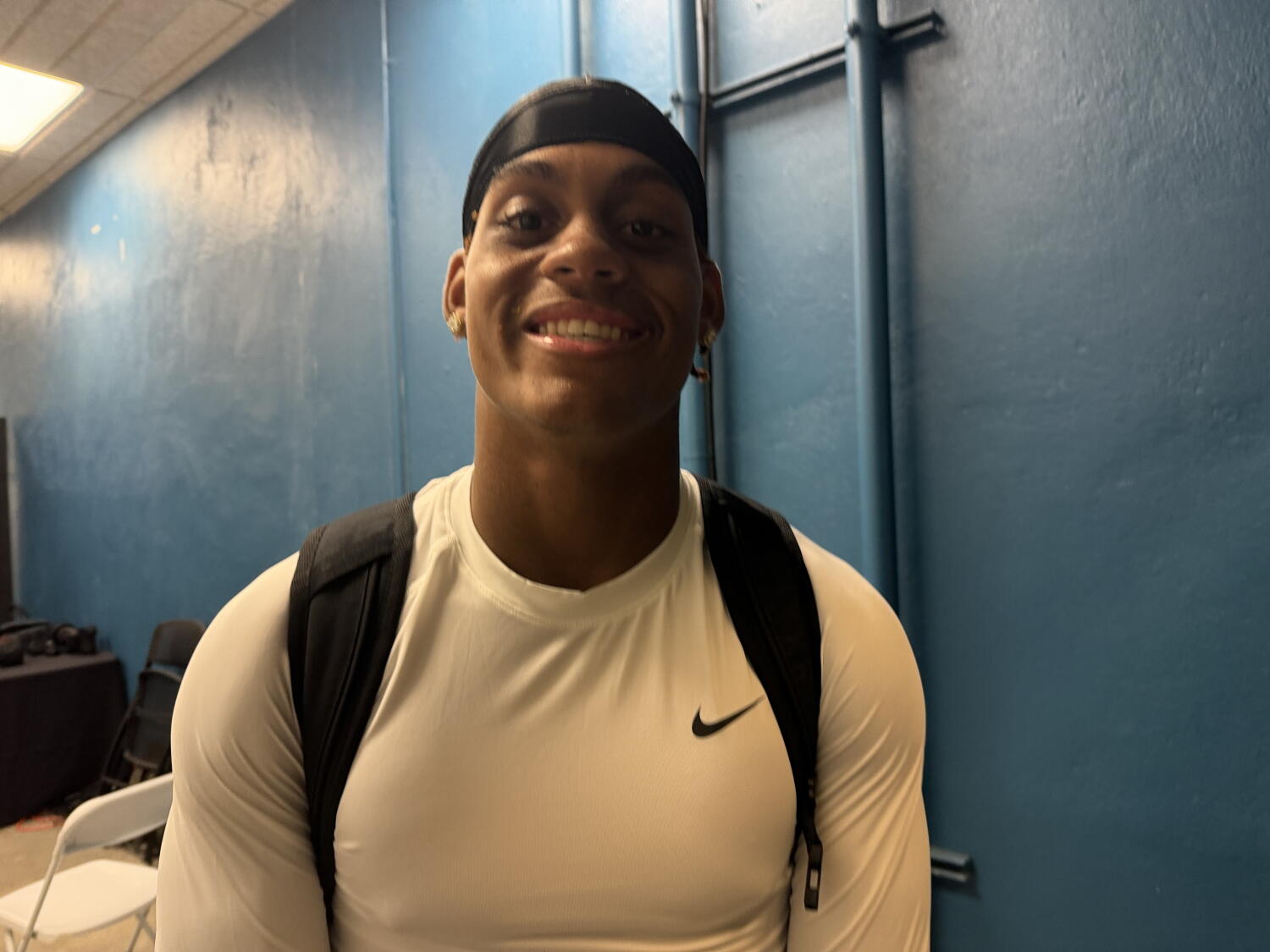
Reggie Miller walking into the stadium wearing red is an act of visual sacrilege that cuts straight to the bone of collegiate sports tribalism. For decades, the mere mention of Miller conjured images of UCLA gold and true blue, a lethal jumper from the wing, and a swagger born in Westwood that stayed with him through an 18-year NBA career with the Indiana Pacers. Yet, standing amid the electric tension of the Rose Bowl to support his nephew, Mike Lindsay, Miller cast off decades of institutional branding. He donned the crimson hue of the opposition.
The internet treated it as a quirky viral snapshot. Observers chuckled about a proud uncle crossing enemy lines. They missed the underlying structural weight of what that wardrobe choice represents. In the ecosystem of high-stakes athletics, colors are treated as religion. Fans tattoo them onto their skin. Universities build multi-billion-dollar merchandising machines around them. Alumni tie their personal identities to the fabric of the jersey. When a living deity of a university program publicly trades his sacred colors for the shade of a competitor to support a blood relative, it exposes the artificial nature of sports tribalism. Family remains the only absolute truth in a world built on corporate allegiance. For a more detailed analysis into this area, we recommend: this related article.
To understand the friction of that moment, one must examine the architecture of the Miller family athletic dynasty. Greatness in sports is rarely an accident of birth. It is often a crucible. Cheryl Miller dominated women’s basketball with a ferocity that rewrote the record books long before Reggie ever hit a clutch shot in Madison Square Garden. Darrell Miller played Major League Baseball. Tammy Miller starred in volleyball. This is a family that understands the specific, crushing demands of elite competition. They know the isolation, the physical toll, and the mental fragility required to reach the pinnacle.
When Mike Lindsay took the field at the Rose Bowl, he did not just carry his own ambitions on his shoulders. He carried the ghost of an athletic lineage that towers over most programs. Every snap, every tackle, and every movement is filtered through the lens of a famous uncle and legendary aunts. The pressure to validate a famous last name can crush even the most resilient competitor. To get more context on this issue, comprehensive coverage can be read on NBC Sports.
This brings the narrative to the core friction facing modern collegiate athletes. The amateur model has fractured under the weight of television contracts, transfer portals, and name-image-likeness valuations. Players are treated as mobile commodities, traded and recruited with corporate coldness. Programs demand total emotional surrender from their fan bases while treating athletes as temporary workers.
Yet, when Reggie Miller stood on the sideline in red, he bypassed the corporate infrastructure entirely. He reminded everyone watching that the entire enterprise relies on human beings. Mike Lindsay is not a logo on a television screen or a fantasy roster asset. He is a nephew whose sweat, injuries, and triumphs belong to a family that sat in the stands, held their breath, and worried about his safety long before he ever wore a collegiate uniform.
The sports media industrial complex thrives on manufactured rivalries. Broadcasters spend hours setting up dramatic storylines about institutional grudges, historic hatreds, and conference supremacy. They want viewers to believe that a rivalry game is a war between opposing cultures. Reggie Miller wearing red short-circuited that entire narrative arc in a single afternoon.
Tribalism requires uniformity. It demands that everyone stay inside their designated box. UCLA fans expect their icons to bleed blue forever. Opposing fans expect outsiders to maintain respectful distance. By casually crossing that invisible boundary, Miller exposed the absurdity of tribal expectations. Blood does not care about conference realignment. Loyalty to a nephew does not bend to the rules of alumni associations.
Examining the mechanics of supporting a young athlete under this microscope reveals a quiet exhaustion. Families of elite competitors live in a state of chronic low-grade anxiety. They watch their children absorb high-impact collisions, endure punishing training regimens, and carry the weight of public scrutiny on social media. When the game ends, the television cameras turn off, and the corporate sponsors pack up their gear, the family is left to pick up the pieces.
Reggie Miller wearing red was an acknowledgement of that reality. It was a silent signal that beneath the jerseys, the television broadcasts, and the stadium noise, the only thing that truly guards an athlete's back is the family standing in the stands.
The public obsession with brand purity looks increasingly foolish when measured against the raw reality of human connection. Fans want absolute loyalty to an institution that would replace a player tomorrow if a better prospect walked onto campus. Athletes, meanwhile, learn early that institutional love is conditional. Familial love is the only constant.
As the echoes of the Rose Bowl fade into the offseason, the snapshot of Reggie Miller in red remains a quiet manifesto. It demonstrates that the most powerful moments in sports happen when someone decides to step outside the script written by the boosters and the networks.
The roar of the crowd is deafening. The weight of tradition is heavy. The colors on the jersey are designed to unite millions of strangers under a common banner. But when the lights go out and the stadium empties, the only color that truly matters is the bloodline running through the family sitting in the tunnel, waiting for the noise to stop.


