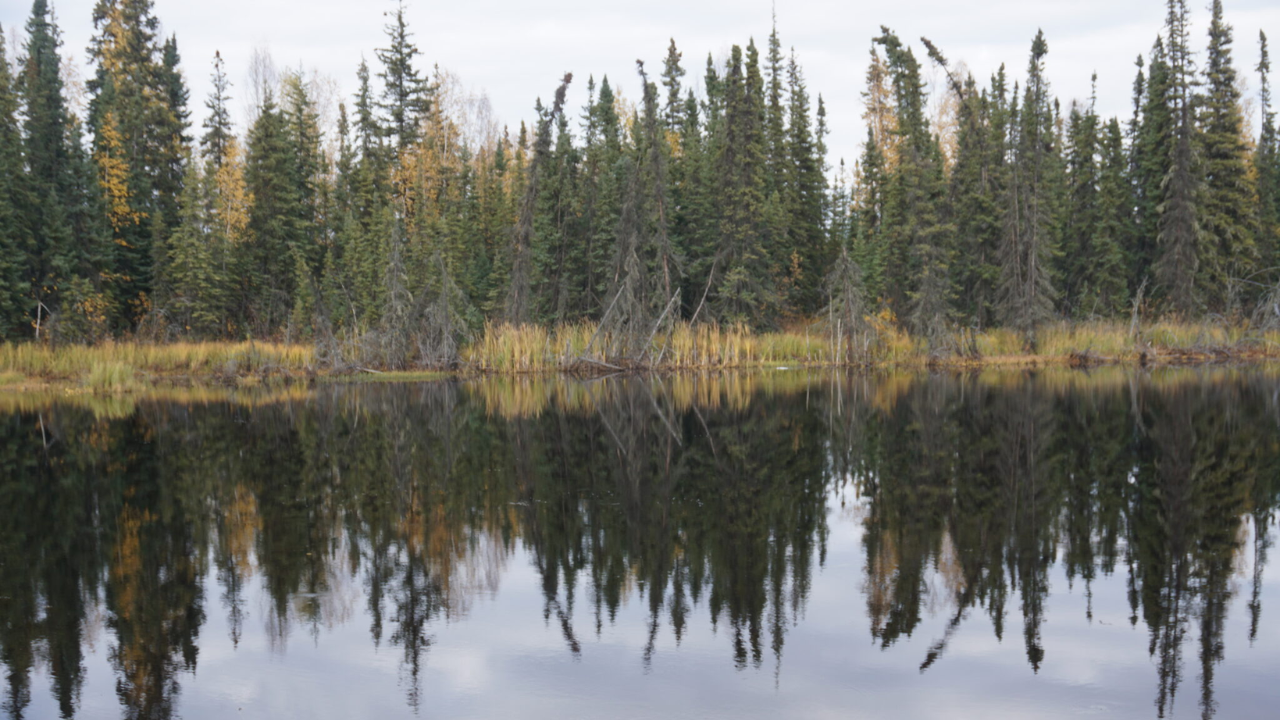
The environmental commentariat loves a simple story. Give them a green canopy, a frozen layer of ancient dirt, and a neat linear narrative, and they will write poetry about it. The current consensus claims that boreal forests act as a reliable thermal umbrella. We are told that the trees shade the permafrost so effectively that summer thaw stays roughly one metre shallower, keeping the ancient carbon locked safely away beneath the roots.
It is a comforting bedtime story. It is also dangerously incomplete. Recently making waves lately: Why The Panic Over Regional Sprawls Misses The Cold Logic Governing Middle East Escalation.
I have spent decades watching researchers, policy wonks, and corporate sustainability teams throw billions of dollars at conservation models built on static assumptions. They look at a patch of taiga, measure the shade in July, and assume the system operates on a neat, predictable thermostat. They miss the brutal, chaotic mechanics of the sub-Arctic because they prefer elegant literature to messy reality.
Stop treating the boreal forest as a passive sunshade. It is an active engine of thermal disruption, and our obsession with tree-line shade is blinding us to the real mechanics of permafrost collapse. More details on this are explored by TIME.
The Flawed Physics of the Canopy Myth
Let us look at the core premise of the lazy consensus: that tree cover suppresses ground temperatures during the peak of summer. On the surface, the logic seems sound. A dense canopy intercepts solar radiation. It blocks direct sunlight from hitting the moss and organic mats at the forest floor.
Ground temperatures beneath a thick spruce stand are indeed cooler during a July heatwave than those in an adjacent, burned-over clearing. That part of the data is real.
The mistake is stopping the analysis right there.
That same canopy does something else entirely during the eight months of the year when the sun barely clears the horizon. Trees are dark. Conifers, with their persistent needles, have a remarkably low albedo compared to the pristine, reflective white of fresh snow. When winter arrives, a dense boreal forest absorbs solar radiation, holding onto heat and radiating it downward. More importantly, tall vegetation acts as a mechanical windbreak, preventing the sweeping winds of the northern latitudes from scouring away insulating snow cover.
Snow is one of the best natural thermal insulators on the planet. It traps heat within the ground, preventing the deep winter freeze from penetrating as far as it otherwise would.
When you add these factors together, the net annual thermal budget shifts dramatically. The summer shade saves the topsoil a few centimeters of melt, but the winter blanket warms the entire profile from below and keeps the baseline soil temperature higher year-round. The canopy does not protect the permafrost; it acts as a thermal trap.
The Wildfire Factor No One Wants to Quantify
Every time a lightning strike hits the dry moss of the taiga, the entire fragile equilibrium of the forest-permafrost relationship gets shredded in a weekend. Yet, standard ecological models treat fire as an anomaly rather than a primary driver of landscape evolution.
I have watched climate analysts scratch their heads when a protected boreal reserve sheds permafrost faster than a logged or disturbed tract. They blame global emissions—which are certainly driving the baseline up—while ignoring the local feedback loop.
When a severe wildfire sweeps through a boreal stand, it vaporizes the canopy. Suddenly, the shade is gone. Sunlight hits the blackened forest floor directly. According to the standard narrative, this should trigger runaway permafrost degradation.
Sometimes it does. But often, something counter-intuitive happens.
The fire burns off the thick, spongy organic surface layer. That organic layer—the duff—acts like a heavy winter coat, trapping summer heat just as effectively as it traps winter warmth. Once that insulating blanket is reduced by fire, winter cold can penetrate deep into the mineral soil unimpeded. For the first few years post-fire, winter cooling can actually outpace summer warming, stabilizing or even thickening the active layer in specific soil types.
The conventional narrative gets the timeline completely backward because it views the forest as a static painting rather than a dynamic, violently oscillating system.
Redefining the Question
People ask: How can we preserve boreal forest cover to keep permafrost frozen?
That is the wrong question. It assumes that more trees equal more cold, and that conservation of the current biomass configuration equals climate stability.
The right question is: How do hydrological pathways and subsurface drainage override surface vegetation effects during extreme seasonal shifts?
Water is the ultimate thermal transport mechanism. It carries heat directly into the heart of the frozen matrix. You can plant all the spruce trees you want, but if changing precipitation patterns route warm autumn rain through the upper soil column, that permafrost is going to liquefy. The latent heat of fusion required to melt ice is massive, but water flowing through subsurface macropores delivers thermal energy with devastating efficiency.
We are managing northern landscapes based on microclimatic measurements taken at the soil surface, while the real structural failure is happening ten feet down via hydrological routing that our models completely ignore.
What Real Adaptation Looks Like
If you are managing land, investing in carbon offsets, or drafting northern infrastructure policies, you need to abandon the simplistic notion that planting trees equals saving the cryosphere.
Here is what actually happens on the ground, stripped of the academic gloss:
- Biomass density is a double-edged sword. Dense, unmanaged forests can accelerate winter ground warming by trapping snow and absorbing low-angle solar radiation. Pretending that all canopy cover is ecologically benign is lazy management.
- Drainage dictates destiny. A dry permafrost slope behaves entirely differently from a saturated polygonal peatland. Soil moisture content dictates thermal conductivity far more than the presence or absence of a few pine trees.
- Disturbance is the baseline. The Arctic and sub-Arctic are not stable ecosystems undergoing anthropogenic stress; they are transient systems shifting rapidly toward a new, non-analog state. Fighting this transition with 20th-century forestry tactics is a waste of capital.
I have seen organizations pour millions into reforestation projects designed to shade delicate northern soils, only to watch the entire investment rot from the bottom up because they ignored subsurface hydrology and winter snow mechanics.
We need to stop romanticizing the northern wilderness as a fragile garden that needs our protective shade. The permafrost is thawing because the global energy balance is out of equilibrium, and a few pine needles are not going to save it.
Cut the fairy tales. Look at the thermodynamics.