Offshore Energies UK looks at a structural engineering failure and decides the best fix is to tell heavy rig hands to skip lunch.
Under the trade body's safe weight limit policy, workers tipping the scale past 124.7 kilograms fully clothed face expulsion from the North Sea. The lazy consensus in corporate media frames this as an unfortunate lifestyle reckoning for a heavier workforce. It is presented as a tragic necessity. Physics demands it, we are told. Winch cables have breaking points.
This narrative is a cop-out.
The crisis is not that drillers and technicians are too heavy. The crisis is that modern offshore aviation and evacuation infrastructure has stagnated while corporate cost-cutters squeezed every extra pound of payload out of commercial transport flights.
Let us look past the PR spin from trade bodies and examine the mechanics.
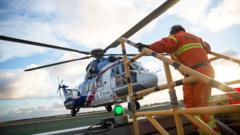
Offshore rescue helicopters, predominantly models like the Sikorsky S-92 or Airbus H225, have maximum structural lifting capacities that factor in the combined weight of the winch operator, the rescue stretcher, safety gear, and the casualty. When safety agencies compute that a 124.7 kg threshold is the absolute ceiling for a safe hoist in high sea states, they are admitting that their rescue architecture cannot handle variance. They are designing for an idealized, bell-curve human specimen that ceased to exist in heavy industry decades ago.
I have watched companies burn millions on compliance theatre while ignoring the mechanical elephant in the room. Shifting the liability of emergency survival onto an individual's BMI scale is a neat trick. It transforms a capital equipment limitation into a personal moral failing.
If a crane on a platform cannot lift a standard industrial pallet because the crane's engineering specs are outdated, nobody marches onto the rig floor to berate the pallet for being too dense. You upgrade the crane. Yet when it comes to search-and-rescue human external cargo systems, the industry throws its hands up and hands out diet plans.
The 124.7 kg cap includes full survival gear: thermal immersion suits, life jackets, harness equipment, and boots. A heavy-set worker with a dense, muscular build or a tall frame hits that ceiling rapidly before adding a single gram of body fat. The policy conflates mass with unfitness. It treats a 6-foot-4 subsea engineer who can haul heavy valves across a slick deck the same way it treats an administrative hazard.
Imagine a scenario where an offshore installation faces a catastrophic blow-out in a severe November gale. Winds are howling at 60 knots, and whitecaps are tearing across the platform's lee. In that environment, winching a survivor requires absolute margins of error. HM Coastguard and operators argue those margins disappear if a single hoist exceeds load limits.
Fair enough. But why are rescue hoists operating on margins so razor-thin that a worker weighing 125 kilograms breaks the math?
Because aircraft configurations prioritize passenger density and fuel payload over rescue hoisting capacity. Operators pack maximum seating into transport cabins to optimize daily flight economics. Every extra seat sold means less structural tolerance left over for extreme-case winch recoveries. The commercial imperative to cram more bodies onto a routine crew change flight directly compromises the safety envelope of the emergency recovery system.
Instead of re-engineering winches, upgrading cable metallurgy, deploying higher-capacity rescue baskets instead of traditional single-person slings, or stationing dedicated heavy-lift recovery assets in the sector, operators outsourced the problem to the human resources department.
The human cost of this lazy policy is staggering. Thousands of experienced personnel face career termination. These are veterans with decades of subsea institutional knowledge. Replacing them with lighter, greener hands introduces massive operational risk. Experience keeps platforms safe. A greenhorn who meets arbitrary weight targets but lacks situational awareness is a far greater hazard to a rig than a seasoned, barrel-chested hand who knows how to shut down a live line in the dark.
The transition framework offers temporary medical certificates and weight-management support, but this misses the point entirely. Biological realities do not bend to corporate directives. Human beings possess diverse skeletal structures. Telling a generation of veteran industrial workers to alter their physical frame or pack their bags is an admission of failure by leadership.
The North Sea does not care about optics. It respects competence, redundancy, and robust engineering. By shrinking the acceptable physical profile of the workforce to match degraded rescue limits, the industry is not raising safety standards. It is lowering its own ambitions.
Stop pretending this is about saving lives. It is about saving money on equipment upgrades. Fix the winches. Redesign the rescue gear. Stop hiding behind a bathroom scale.