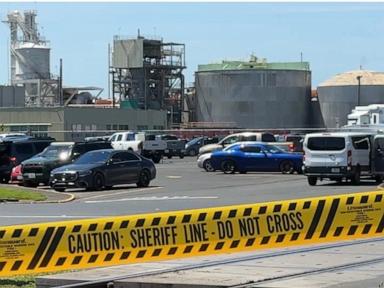
Eleven workers died at the Nippon Dynawave packaging mill in Longview, Washington, when nearly a million gallons of caustic white liquor flooded the facility. The instant narrative from federal investigators and media reports follows a comforting, predictable script: greedy management ignored inspection warnings, deferred maintenance, and prioritized production quotas over human life.
The U.S. Chemical Safety Board released data showing an inspection contractor flagged the vessel as unfit for service ten months prior to the catastrophe. External checks identified severe wall thinning. Management failed to act. Case closed, villains identified, outrage satisfied.
Except this lazy consensus explains nothing and solves less.
Pinning industrial manslaughter entirely on corporate malevolence comforts us because it implies safety failures are anomalies caused by bad actors. If bad actors are the sole problem, firing executives or tightening misdemeanor penalties fixes the system. That is a dangerous illusion. Industrial catastrophes do not happen because managers wake up hoping to kill their workforce. They happen because our entire regulatory and operational framework is built on a broken model of risk management that treats data as a suggestion and mechanical degradation as a negotiable variable.
The Flawed Architecture of Priority Inspections
To understand why the Longview disaster occurred, look past the moral outrage and examine the mechanics of industrial asset integrity. When an engineering firm tags a vessel with a Priority 1 warning, plant operators do not immediately see a flashing red light of absolute doom. They see an economic optimization problem.
Industrial facilities operate under continuous financial pressure to maximize run times between scheduled outages. A major pulping digester or chemical storage vessel cannot simply be valved off on a whim. Shutting down a core process component costs millions in lost output, triggers cascading operational adjustments, and invites regulatory scrutiny over production bottlenecks.
When applied Technical Services evaluated that white liquor tank, they provided technical findings: significant wall thinning below minimum safe thicknesses. But standard industrial compliance protocols rely on a system of deferred consequences. Plant engineering teams perform risk assessments that weigh the probability of failure against the immediate cost of remediation. For months, the tank held. Each day it didn't rupture reinforced a cognitive bias known in safety engineering as normalization of deviance. If the tank survived yesterday while running at standard capacity, operators assume it will survive today.
The system fails because it treats inspection reports as probabilistic estimates rather than hard structural boundaries. Regulators write guidelines that assume rational actors will always choose safety over profit. That assumption ignores the financial reality of legacy heavy industry operating on razor-thin margins.
The Deadly Cascade of Operational Blindness
The physical mechanics of the Longview failure reveal a second systemic flaw that investigators gloss over: the complete decoupling of upstream inventory control from downstream containment capacity.
Hours before the wall gave way, a downstream vessel—the digester—was taken offline for repairs. Standard operating procedure dictates that when you halt consumption, you choke off supply. Yet white liquor continued to flow into the storage tank. By six-twenty in the morning, the tank approached maximum capacity. Less than an hour later, the compromised steel shell buckled under the hydrostatic head pressure and chemical corrosion.
Imagine a highway bridge with a crumbling support pillar where traffic engineers continue routing heavy freight trucks while simultaneously narrowing the escape lanes.
This was not just a failure to heed a corrosion report; it was a catastrophic failure of procedural interlocking. Modern industrial plants are immensely complex socio-technical systems. Yet communication between operational control rooms and maintenance divisions often operates through manual silos. The operators filling the tank were disconnected from the structural integrity data sitting in an engineer’s filing cabinet.
Worse still, the emergency response protocol compounded the tragedy. When the tank ruptured, the internal plant radio call failed to specify that white liquor had breached containment. First responders rushed into a toxic, caustic flood thinking they were dealing with standard water or minor runoff. One rescuer waded directly into the chemical lake and suffered catastrophic burns.
When emergency procedures fail to accurately identify the agent of destruction, the organization's safety culture has collapsed at every level.
Moving Beyond Performative Outrage
Public discourse demands blood. Commentators call for longer prison sentences for negligent executives. Under current federal statutes, willful safety violations resulting in worker death carry laughably light penalties—often treated as misdemeanors with maximum sentences measured in months.
Increasing criminal penalties feels satisfying, but it acts as a placebo. Threatening CEOs with prison does not fix a corroded steel plate or bridge the communication gap between an external audit contractor and an overworked shift supervisor. In fact, hyper-punitive regulatory environments often backfire. When penalties become draconian without addressing structural economic pressures, companies do not invest more in safety; they invest more in concealment. They hire better lawyers, lobby against stricter inspection mandates, and obfuscate maintenance logs to avoid triggering liability.
If we want to stop industrial disasters, we have to redesign the incentives.
First, mandatory safety standards must include automatic, non-negotiable operational derating triggers. When an inspection contractor identifies critical wall thinning, the asset must legally drop its capacity threshold or face immediate mandatory state intervention—completely removing the economic calculus from the hands of plant management.
Second, real-time telemetry must replace static inspection reports. Relying on an outside engineering firm to look at a tank every few months is an outdated relic of industrial-era bureaucracy. Modern continuous acoustic emission monitoring and ultrasonic wall-thickness sensors can track structural degradation in real time, feeding data directly into automated safety interlocks that halt fluid flow before a vessel reaches critical stress limits.
The tragedy in Longview is a symptom of an industry running on borrowed time, using twentieth-century administrative tools to manage twenty-first-century chemical hazards. Stop treating these disasters as moral failures of individual managers and start treating them as design flaws in our industrial infrastructure.