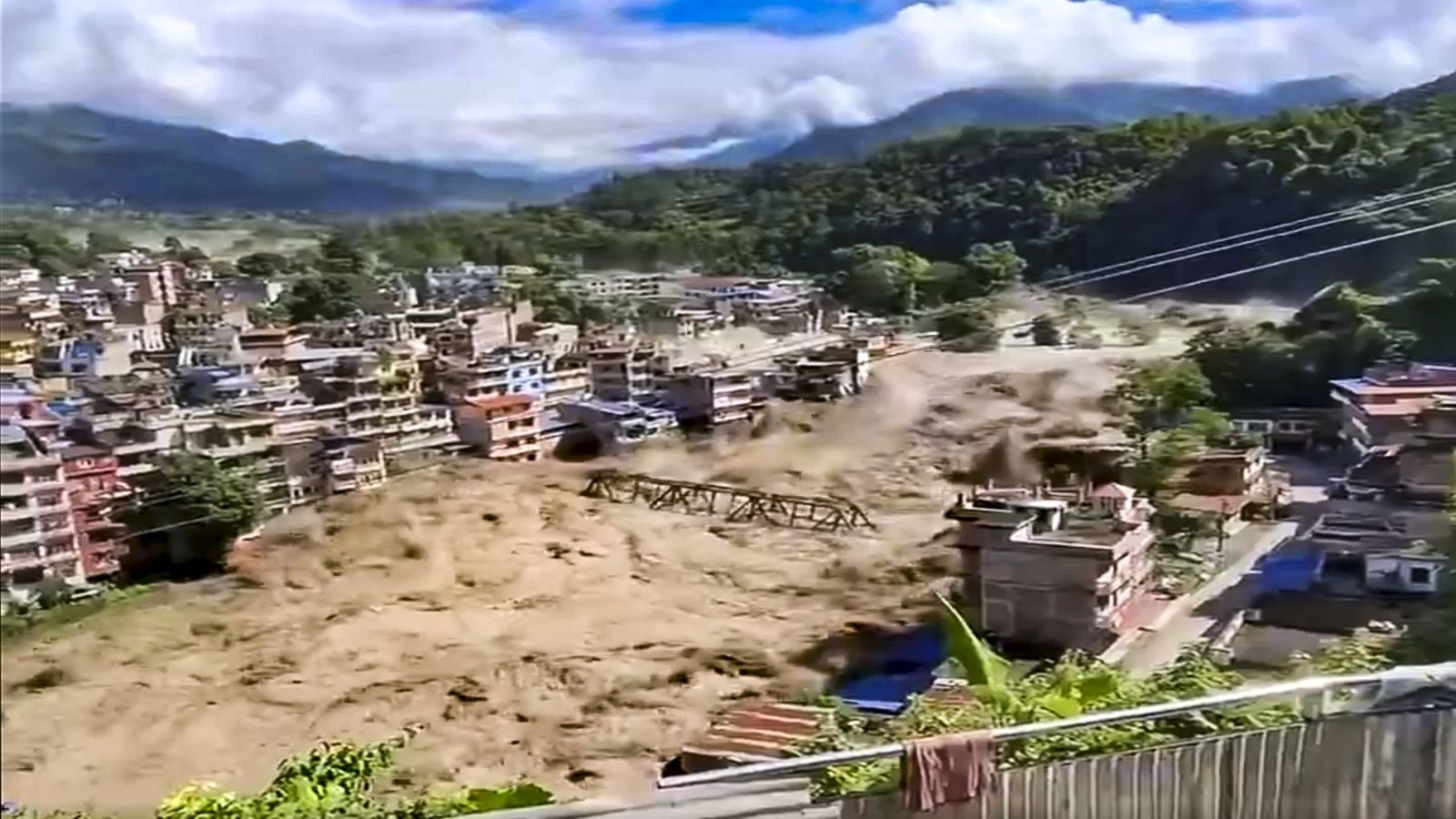
Every major newsroom is currently running the exact same comforting narrative about the catastrophic flash floods along the Nepal-China border. They point to the grim figures—over 734 dead and thousands missing—and immediately point the finger at a fractured glacier on Lirung Peak, shouting climate change as the prime mover of destruction. It is an easy, emotionally satisfying consensus that lets everyone off the hook. It treats a predictable engineering apocalypse like an act of angry gods.
Stop blaming the sky and start looking at the blueprints.
I have watched nations blow millions on post-disaster finger-pointing while ignoring the structural hubris staring them in the face. The tragedy along the Bhote Koshi and Trishuli river corridors is not merely a weather story. It is an industrial design failure of monumental proportions. When a glacial lake outburst or ice-rock avalanche triggers a downstream catastrophe, treating the resulting casualties as an unavoidable natural lottery ignores how we choose to crowd high-risk Himalayan gorges with heavy infrastructure and poorly sited projects.
Let us define terms precisely. A flash flood driven by a glacial lake outburst flood or ice avalanche is sudden, but it obeys the laws of geomorphology and fluid dynamics. Water and debris follow ancient, carved pathways. When you pack hundreds of construction workers into narrow riverbeds to build high-yield hydropower plants without factoring in catastrophic valley-floor scouring, you are not developing infrastructure; you are playing roulette with a loaded gun. Over nine hundred people missing or unaccounted for came directly from hydropower project sites along these violently active river corridors. That is not a climate statistic. That is an occupational and regional planning indictment.
The lazy consensus relies on treating mountain ecosystems as fragile anomalies that suddenly betray us. Ecosystems are not betraying anyone; they are behaving exactly as they always have. The real anomaly is the hubris of modern civil engineering that assumes historical flow rates apply in a tectonic powder keg.
Consider a scenario where every government agency stops treating high-altitude flash floods as black swan events and instead mandates a zero-infrastructure buffer zone along volatile Himalayan drainage vectors. We would see immediate pushback from developers whining about lost kilowatt-hours and capital expenditure returns. Yet, how many billions are now being funneled into emergency airlifts, forensic DNA-analysis teams, and international aid appeals that could have funded predictive relocation and genuine geological safety barriers years ago?
The international humanitarian response follows a predictable loop. Appeal for millions, ship emergency blankets, deploy specialized tunnel-rescue teams, and wait for the next valley to wash out. Meanwhile, local warning systems in steep mountain topography remain fundamentally flawed because they rely on downstream sensors that give people minutes—sometimes seconds—to outrun a wall of water and debris.
If you want to understand why the death toll climbs past 734, look past the initial meteorological trigger. Look at the permit approvals granted for river-bed construction. Look at the absence of mandatory, real-time seismic-acoustic monitoring arrays planted directly beneath unstable glacial tongues high above. We have the satellite telemetry. We have the seismic sensors. What we lack is the political spine to halt industrial buildouts in active debris tracks.
Stop mourning the failure of early warning infrastructure while continuing to greenlight high-density commercial presence in active gorges. Until governments criminalize building dormitories and tunnel portals directly inside active alluvial fans, every subsequent flood will carry the exact same preventable body count.