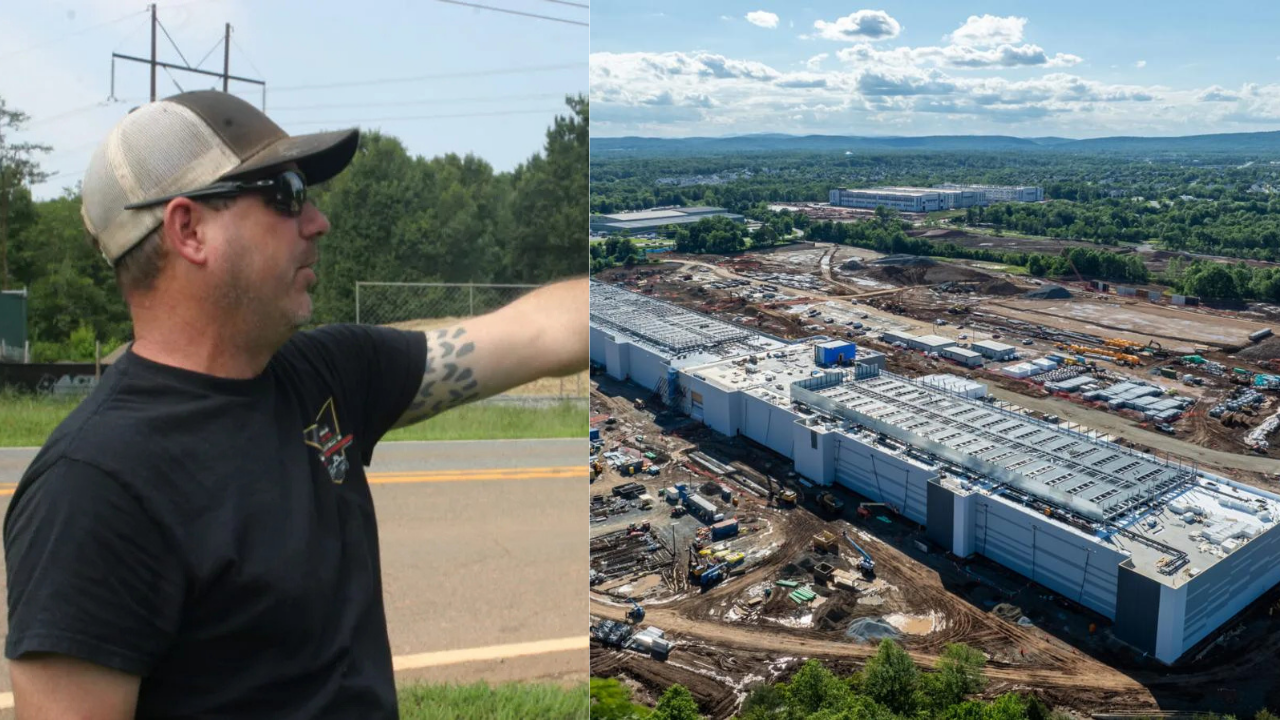
The headlines write themselves. Local resident sues tech giant because a server farm ruined the peace of his rural valley. Noise, lights, endless construction hums. Sympathy flows instantly toward the homeowner fighting the corporate behemoth. It feels like a classic David versus Goliath tale.
It is also complete nonsense.
Focusing the entire rage of the community on Amazon misses the mechanical reality of how local infrastructure actually collapses. I have spent two decades watching municipalities trip over themselves to sign zoning waivers, grant massive tax abatements, and rewrite master plans just to court hyperscale cloud operators. Then, the moment the concrete trucks roll in and the transformers start humming, the same local politicians who begged for the facility suddenly act shocked that a data center looks and sounds like a heavy industrial plant.
The lawsuit out of Virginia is not a cautionary tale about corporate overreach. It is a post-mortem on municipal hypocrisy.
The Zoning Board Sold You Out Long Before Ground Broke
Every time a community throws a fit over a new server facility destroying their quiet life, point the finger at the local planning commission. Amazon does not eminent domain private land to build these complexes against a town's will. They arrive with deep pockets, pitch thousands of temporary construction jobs, promise a bump in commercial tax revenue, and ask for a simple rezone from agricultural or light industrial to heavy commercial.
Elected officials hear "tax base expansion" and stop reading. They approve the permits, sign the fast-track agreements, and collect the economic development PR wins.
"Municipalities want the property tax check without the industrial footprint."
That does not work. You cannot drop a campus housing tens of thousands of servers requiring massive substation-level power draws and continuous cooling loops into a pastoral setting and expect it to whisper like a library. The noise and the visual impact are physical constants of computation at scale. If a town council lacks the foresight to mandate a two-mile buffer zone or acoustic shielding requirements during the permitting phase, suing the tenant after the lease is signed is pure theater.
The Power Grid Illusion
Let us address the energy panic. Every time a new cloud cluster pops up, local activist groups scream about grid collapse. They claim Netflix streaming and AI training models are going to leave local residents freezing in the dark.
This argument relies on a fundamental misunderstanding of how commercial power procurement operates. Amazon and its peers do not simply plug into the neighborhood wall outlet and drain the local coal plant. They sign multi-gigawatt Power Purchase Agreements that directly finance new utility-scale wind and solar installations, often building redundant transmission infrastructure specifically to carry that load.
The real vulnerability of the grid is not corporate consumption. It is decades of underinvestment in transmission lines by regulated monopolies who pocketed guaranteed returns while ignoring aging transformers. Blaming a data center for grid strain is like blaming a freight train for wearing out a highway that was already built out of cardboard.
The Real Cost of Modern Infrastructure
Pretending we can have modern digital infrastructure without physical consequence is a child's fantasy. Every text message sent, every video streamed, every enterprise database queried requires silicon, copper, water for cooling towers, and megawatts of electricity.
When people move to the country, they often expect the clock to stop. They want the convenience of high-speed cloud access, remote work tools, and instant delivery apps, but they want the physical infrastructure that makes those luxuries possible hidden on another planet.
That cognitive dissonance is staggering.
The Virginia lawsuit will likely drag on for months, maybe years. It will generate plenty of outraged op-eds and give local politicians a convenient shield to pretend they care about rural preservation. But when the settlement checks clear and the lawyers take their cut, the server racks will still be humming, pulling power from the grid, and processing the digital lifeblood of the modern economy.
Stop suing the tenant for acting like a heavy industrial plant when the landlord zoned it for heavy industry. Change the zoning laws before the ink dries, or admit that you wanted the tax revenue until the noise finally reached your porch.


