Motorsport historically enforces a strict physiological homogeneity among its elite competitors. Standard single seaters and endurance prototypes rely on dual upper limb steering inputs matched with lower limb acceleration and braking vectors. When a driver enters this environment without upper limbs, the traditional human machine interface collapses entirely.
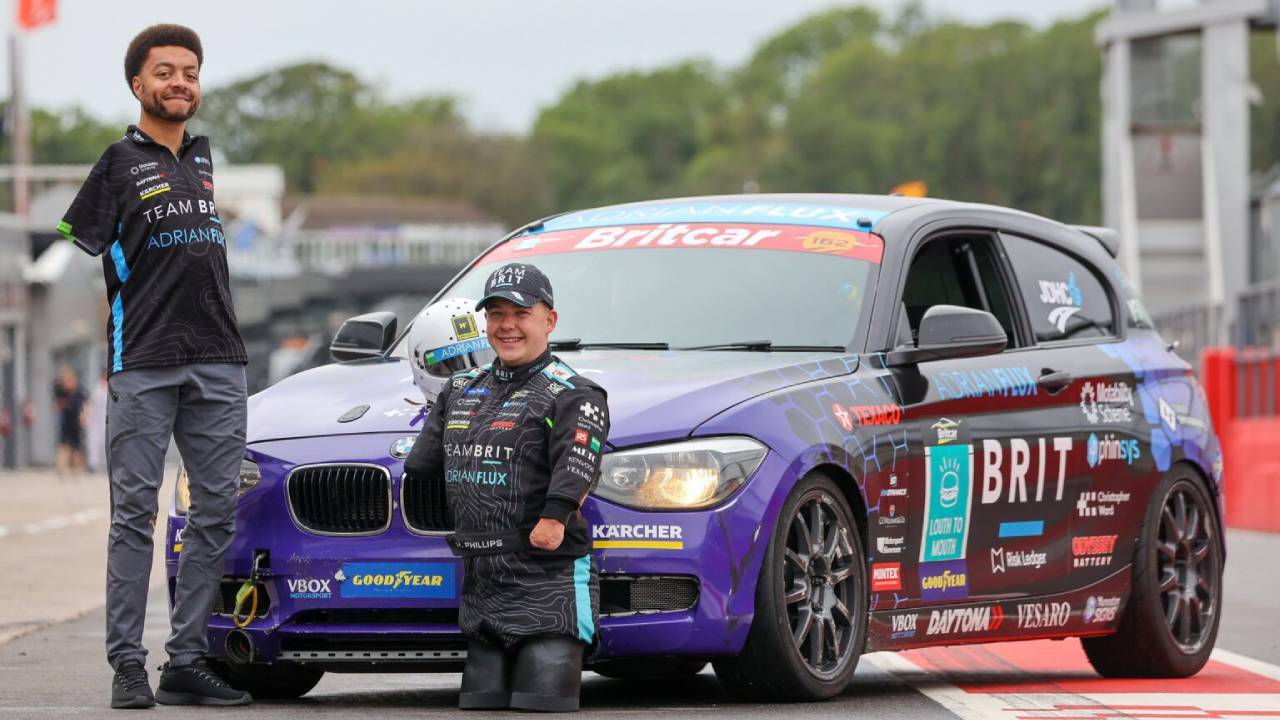
This analysis deconstructs how twenty three year old rookie Callum Smith, operating within the Team BRIT ecosystem, maps bilateral foot mechanics to high velocity machinery. By routing spatial trajectory control through a footwell mounted steering plate while simultaneously managing acceleration and deceleration forces, this case study isolates the functional remapping required to compete against able bodied drivers in endurance series like the 24 Hours of Le Mans.
The Kinematic Reconfiguration of Vehicle Control
In a conventional race car, the upper body manages rotational inertia and steering weight, while the lower body handles linear force distribution. Smith's physical configuration requires a complete inversion of this physiological labor division.
Input Channel Redirection
- Rotational Vector Management: The left foot engages a custom designed steering plate engineered by Jim Doran Hand Controls. This mechanical linkage transfers foot angle displacement into steering rack rotation, replacing the standard steering wheel radius.
- Linear Vector Management: The right foot controls a dual phase floor mounted lever. Twisting downward actuates throttle opening, while pushing forward toward the dashboard activates hydraulic braking circuits.
- Auxiliary System Mapping: Secondary controls, including turn indicators, high beams, and windscreen wipers, are integrated via a steering wheel mounted or column mounted Lodgesons Bleeper system accessible by foot or supplemental digital switches.
The fundamental operational bottleneck in this setup is limb multi tasking. An able bodied driver distributes control across two arms and two legs. Smith concentrates steering, acceleration, and braking input entirely into the lower extremities, heightening the demand for split second neurological processing.
The Physics of Resistance and Neuromuscular Load
Racing machinery introduces extreme mechanical feedback through unassisted or heavily weighted steering racks. Standard drivers absorb high cornering loads through the shoulders, chest, and arms. For a driver operating via foot steering, the physical constraints change significantly.
The primary mechanical friction point is steering resistance at speed. As downforce increases and front tires scrub under lateral acceleration, feedback force travels backward through the steering column into the footwell plate.
The Adaptation Vector
- Eye to Foot Coordination: Visual processing must convert track geometry into micro adjustments of the left ankle rather than wrist rotation. This demands an accelerated feedback loop between visual cortex stimuli and distal lower limb muscular response.
- Load Thresholds: Racing setups require fine motor control under high muscular tension. Steering a vehicle at speeds exceeding 110mph at circuits like Donington Park and Silverstone exposes the foot and ankle complex to sustained vibrational and directional G force loads.
- Regulatory Egress Constraints: To clear licensing safety mandates, drivers must execute an unassisted emergency extraction, proving the ability to release harnesses and exit the cockpit within a strict ten second window. For a driver without upper limbs, this requires specialized release mechanisms operated entirely through lower body leverage and trunk mobility.
Economic and Structural Barriers in Grassroots Motorsport
Talent acquisition in professional motorsport is constrained by capital intensity. Moving from track day testing to competitive endurance grids requires overcoming strict financial parameters.
The baseline cost structure for an adaptive rookie season involves several distinct expenditure tiers:
- Hardware Engineering: Custom footwell steering plates, bespoke pedal box fabrication, and electronic bleeper integrations require dedicated engineering hours from specialist adaptive firms.
- Vehicle Conversion: Modifying an academy class chassis, such as a BMW 1 Series or Audi A3 S Line, to safely pass motorsport scrutineering standards.
- Licensing and Tuition: Professional instruction, skid pan testing at facilities like Thruxton, and official licensing assessment fees.
Estimated expenditures scale from twenty thousand pounds for initial baseline testing to upwards of fifty thousand pounds for a full competitive season framework. This capital requirement creates a structural barrier that necessitates corporate sponsorship integration. Without targeted brand partnerships, technical innovations in adaptive motorsport remain isolated prototypes rather than scalable pathways to endurance grids.
Strategic Operational Outlook
The entry of adaptive drivers into competitive mainstream racing grids shifts the evaluation of driver capability from anatomical conformity to telemetry output. Lap time consistency, tyre degradation management, and race craft execution remain the sole objective metrics of performance.
The integration path relies on proving that customized mechanical interfaces can match the response times of standard driver controls under endurance racing conditions. Success at Le Mans depends on scaling these adaptive vehicle architectures while maintaining the mechanical reliability required for twenty four hours of continuous high stress operation.