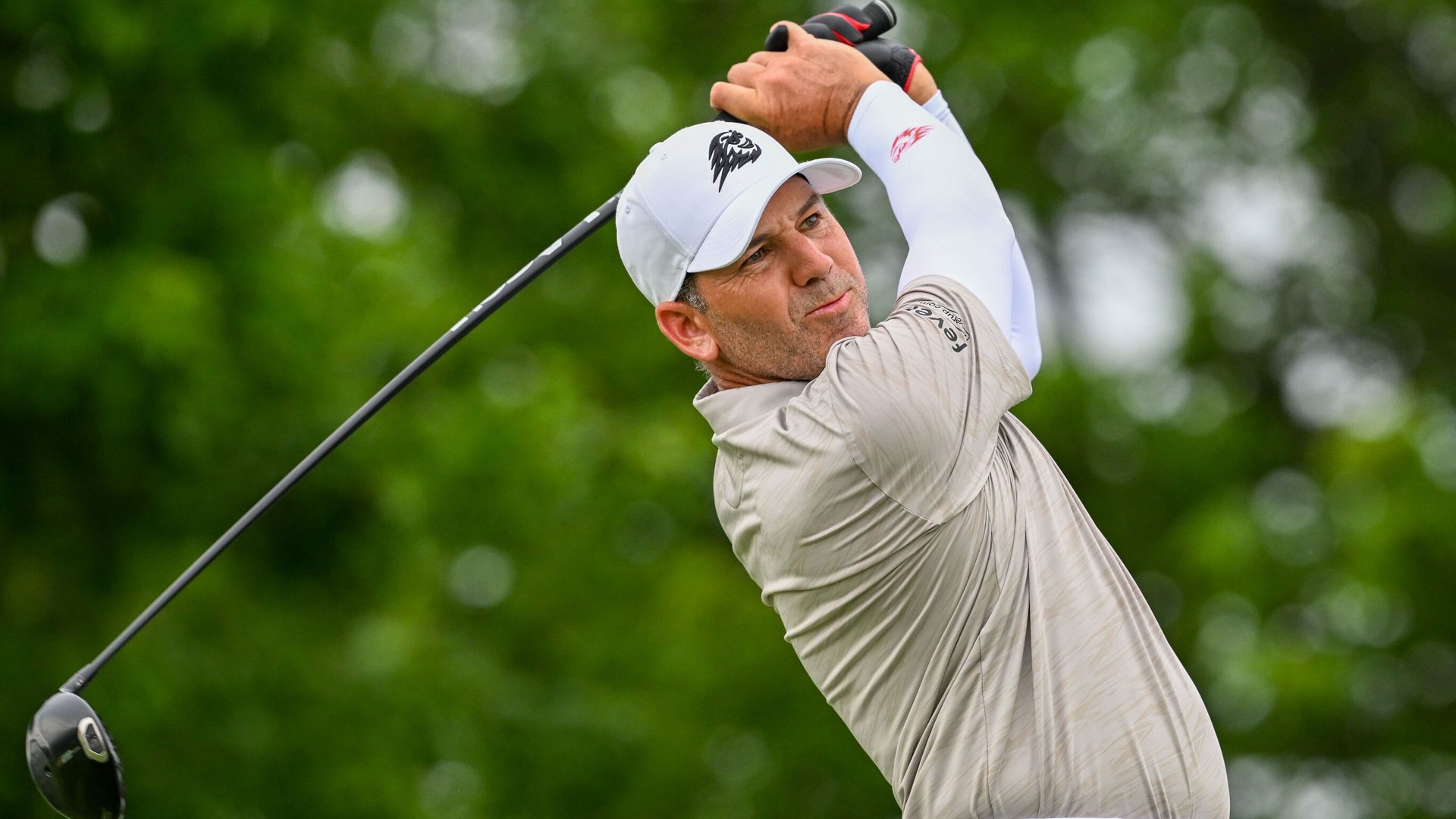
Silence.
That is the first thing you notice when a multi-billion-dollar sports empire runs out of road, not the screeching of brakes or the shouting of lawyers, just a heavy, suffocating quiet where bass-heavy club music used to rattle the teeth of gallery marshals. For four years, the breakaway golf league known as LIV Golf operated like a perpetual motion machine fueled by seemingly bottomless sovereign wealth, throwing nine-figure signing bonuses at major champions while blaring pop songs over putting greens from London to Adelaide. Now, following a stunning bankruptcy filing that brings the turbulent experiment to an abrupt close, the fairways are empty, the tour buses are parked, and the men who traded legacy for guaranteed millions are left staring at a balance sheet that finally demanded payment.
To understand how an enterprise backed by one of the wealthiest investment funds on earth could fold under the weight of insolvency, you have to step away from the press releases and look at the Tuesday morning reality of a mid-tier tour caddie. Let us call him Marcus—a hypothetical composite of dozens of veteran loopers who followed their bosses across the chasm in 2022. Marcus did not get a $100 million upfront wire transfer. He got a modest bump in his weekly retainer, free flights on charter jets, and the sudden, intoxicating illusion that the grueling meritocracy of professional golf had been permanently repealed. For a while, the champagne tasted real.
Yet even from inside the ropes, Marcus could see the cracks widening beneath the freshly laid sod.
The Illusion of Infinite Money
Professional sports leagues survive on a simple, brutal three-legged stool: broadcast rights, corporate sponsorships, and ticket sales. Remove one leg, and the stool wobbles; remove all three, and you are simply burning cash in a wind tunnel. From its inception in June 2022, LIV Golf attempted to rewrite the laws of sports economics by subsidizing every single leg of that stool itself.
Consider the numbers that eventually dragged the organization into bankruptcy court. Over four seasons, operational losses climbed well past the $1.4 billion mark, driven by guaranteed player contracts totaling upwards of $2 billion and $25 million tournament purses that bore zero correlation to commercial revenue. When you pay a single golfer $150 million before he hits a competitive tee shot, you need a massive television contract to recoup the outlay. Instead, LIV struggled to secure prime-time linear broadcast deals, initially retreating to YouTube streams before settling for low-margin revenue-sharing arrangements with secondary networks that drew a fraction of the PGA Tour's Sunday ratings.
Think of LIV Golf like a luxury pop-up restaurant in the middle of the Mojave Desert. The owners hired Michelin-starred chefs, flew in white truffles by helicopter, and handed out gold-plated menus, yet forgot to build a road connecting the dining room to a city. A handful of curious travelers arrived by private plane, marveled at the extravagance, and left without paying a bill because the house insisted everything was on the tab. Sooner or later, even the richest patron looks at the monthly ledger, realizes nobody is buying dinner, and locks the front door.
I remember standing behind the eighteenth green at a tournament in 2023, watching a former U.S. Open champion tap in for a meaningless twelfth-place finish worth more than $350,000. Around the green, maybe two hundred spectators clapped politely, half of them holding complimentary passes distributed through local radio giveaways. The disconnect between the financial scale of the spectacle and the actual human appetite for it felt dizzying, almost surreal, like watching an elaborate theater production performed for an empty auditorium. You wanted to believe that disruption could force innovation, that shotgun starts and 54-hole sprints might modernize a slow, traditional game. Deep down, though, anyone who has ever bought a ticket to watch human beings compete knew something essential was missing.
Why Guaranteed Pay Killed the Drama
Sports do not captivate us because athletes are rich; they captivate us because athletes are vulnerable.
When a young journeyman stands over a six-foot par putt on Sunday afternoon at a traditional tour stop, his mortgage, his health insurance, and his livelihood for the next twelve months hang on the rotation of a dimpled urethane sphere. His hands shake. His throat dries out. Millions of people watching at home lean forward on their couches because we recognize that raw, existential terror—it is the same dread we feel before a job interview or a difficult medical diagnosis, distilled into three seconds of athletic execution.
By guaranteeing tens of millions of dollars upfront and eliminating the Friday cut, LIV Golf accidentally sterilized its own product. When every player in the forty-eight-man field cashes a six-figure check regardless of whether he shoots sixty-two or eighty-two, the psychological stakes evaporate. Fans are remarkably perceptive creatures. They can forgive a messy broadcast, and they can adapt to quirky team names like the "Crushers" or the "RangeGoats," but they will never invest their emotions in a contest where the participants cannot lose anything that matters.
The bankruptcy filing exposes the fatal flaw in the breakaway business model: you can buy talent, and you can buy venues, but you cannot manufacture cultural urgency. Major corporations noticed the apathy immediately. Blue-chip sponsors—the insurance giants, financial institutions, and luxury automakers that keep professional golf afloat—largely stayed on the sidelines, wary of geopolitical backlash and unconvinced by microscopic television audiences. Without corporate hospitality suites selling out months in advance, tournament after tournament operated at a staggering eight-figure deficit.
The Corporate Restructuring Reality
When news of the Chapter 11 bankruptcy filing broke, casual observers asked a natural, bewildered question: how does a league backed by a $900 billion sovereign wealth fund go bankrupt?
The answer lies in the cold mechanics of corporate ring-fencing and strategic retreat. LIV Golf was never structured so that the sovereign fund's entire treasury was legally liable for every vendor invoice or future player bonus. Instead, the league operated through distinct corporate entities—shell structures designed to contain liability if the venture failed to achieve self-sustaining profitability. Following protracted, inconclusive merger talks with the PGA Tour and shifting domestic investment priorities back in Riyadh, the financial backers simply turned off the spigot.
Without continuous capital injections from its parent investors, LIV Golf's standalone balance sheet collapsed almost overnight. Assets consisted primarily of intangible team intellectual property—franchises that had failed to attract external private-equity buyers at the $200 million valuations league executives once boasted about—and a handful of leases on golf properties. Liabilities, meanwhile, stretched into the hundreds of millions, encompassing unpaid vendor contracts, broadcast production debts, and the remaining installments of guaranteed player agreements that suddenly became unsecured claims in a federal bankruptcy proceeding.
Imagine the shockwaves rippling through the locker room when players realized their "guaranteed" contracts were only as solid as the solvency of the specific limited liability company that signed them. For years, critics of the breakaway circuit warned that the money was a bridge to nowhere. Players brushed off the warnings, convinced that sovereign backing meant absolute immunity from market forces. Bankruptcy court has a harsh way of reminding everyone that in corporate law, parent entities walk away from failing subsidiaries every single day.
Scars Left Across the Fairways
Look beyond the billionaire boardrooms and the fallen stars, and you see the wider wreckage left across the sport. For four years, professional golf tore itself apart in public. Lifelong friendships fractured over dinner tables; Ryder Cup legacies were shredded; television ratings across the entire sport dipped as exhausted fans tuned out a civil war that seemed exclusively about how wealthy men could become slightly wealthier.
Consider a hypothetical tournament director in a mid-sized American city—let us call her Elena—who spent twenty years building a beloved community golf event that raised millions for local children's hospitals. During the peak of the LIV turf war, Elena watched purse sizes skyrocket across the board as the established tours scrambled to match breakaway money. Suddenly, her local sponsors were being asked to double their commitments just to keep pace with inflated prize funds, while half the marquee stars she used to feature were playing exhibition events six thousand miles away. The inflation triggered by LIV Golf did not stay contained inside its own league; it distorted the economics of the entire ecosystem, leaving smaller tournaments gasping for air long after the breakaway circuit folded.
And what happens now to the players who jumped? Some, like major champions with multi-year exemptions into the Masters, the PGA Championship, the U.S. Open, and The Open Championship, still have a stage four weeks a year, though their world ranking points have eroded to dust. Others—the mid-career pros who gave up their tour cards for a $10 million payout in 2022—now face the humiliating prospect of grinding through Monday qualifiers or begging for sponsor exemptions on tours they publicly disparaged only months ago.
Will the PGA Tour welcome them back? Likely, yes, though not without steep fines, mandatory charitable contributions, and a cold reception on the practice range from peers who turned down generational wealth to protect the integrity of the existing structure. Forgiveness in professional sports usually moves at the speed of television ratings, yet trust, once broken in a tight-knit fraternity, takes decades to repair.
The Morning After the Party
History is littered with rebel sports leagues that promised to topple entrenched giants—the USFL in football, the ABA in basketball, the World Hockey Association—and nearly all of them followed the exact same trajectory. They arrived with loud promises, raided top talent with unsustainable salaries, forced the established league to evolve, and ultimately collapsed under the weight of their own overhead. What made LIV Golf unique was the sheer scale of its burn rate: no sports venture in human history has ever lost so much money in so little time while leaving behind so few memorable athletic moments.
Think back over the last four years and try to name a single iconic shot from a LIV Golf tournament. You can picture Tiger Woods's chip-in at the sixteenth hole at Augusta National in 2005; you can picture Jack Nicklaus raising his putter in 1986; you can picture Rory McIlroy weeping on the eighteenth green after winning a major. When you search your memory for LIV Golf, you do not see a golf shot at all. You see press conferences, court filings, oversized novelty checks, and jets idling on tarmacs.
That absence tells the whole story. You cannot buy history with a wire transfer, and you cannot force people to care simply by turning up the volume on the loudspeakers.
Late yesterday afternoon, a grounds crew worker at one of the courses slated to host a LIV event next spring walked out onto the eighteenth green to check the moisture levels in the turf. The grandstands were half-built, raw aluminum scaffolding rising against a gray November sky, and a stack of promotional banners sat wrapped in plastic beside the cart path, waiting for logos that will never be hung. He knelt down, pressed his thumb into the cold grass, and stood back up as the wind blew a stray scorecard across the fringe and into the rough.


