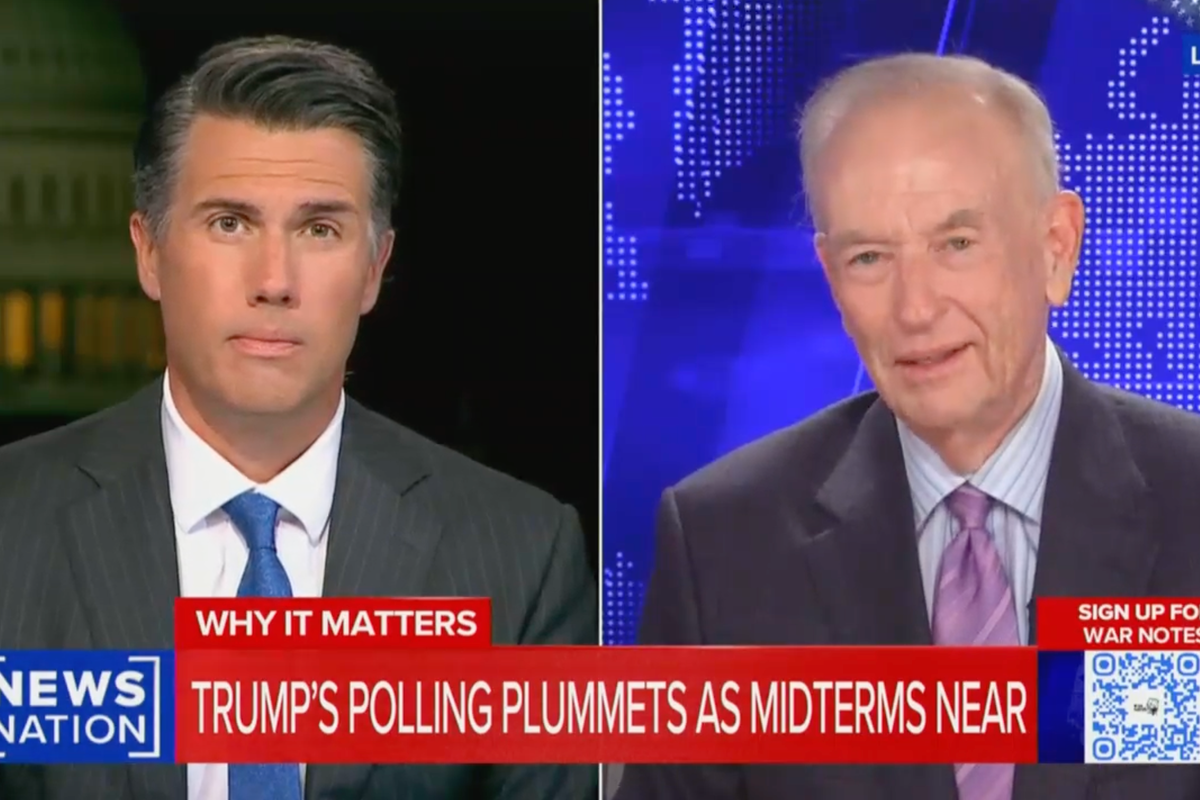
History rarely moves in a straight line. Sometimes, it takes a sharp, violent turn that catches even the most seasoned political observers off guard. When Bill O'Reilly revealed details of his private phone conversation with Donald Trump just one week before the U.S. military strikes on Iran, it offered a rare look behind the curtain of high-stakes foreign policy.
Trump didn't want a war. He wanted a deal. Yet, despite last-minute diplomatic efforts and backchannel discussions involving Beijing and Geneva, the situation deteriorated past the point of no return. Now, O'Reilly finds himself looking back at the warnings he issued, wrestling with the heavy reality of how fast campaign promises collide with harsh geopolitical truths.
The Anatomy of a Broken Deal
Let's look at what actually happened before the first missiles flew. O'Reilly shared that his final one-on-one conversation with Trump focused entirely on avoiding military intervention. The strategy centered on leaning on international partners—specifically China—to pressure Tehran into dropping its nuclear ambitions.
It sounded practical on paper. But diplomacy requires two willing participants.
When talks in Geneva hit a brick wall and Iranian representatives bluntly stated they refused to back down, the calculus changed overnight. Critics like Piers Morgan and Megyn Kelly have rightly pointed out that launching a major Middle East conflict completely contradicts Trump's 2024 campaign platform of keeping America out of foreign entanglements. Voters elected an "America First" candidate to fix domestic inflation and secure the southern border, not to open up a new theater of war.
O'Reilly doesn't dispute the contradiction. He acknowledges it head-on. His defense boils down to a simple, unyielding phrase: things change. When intelligence agencies and international bodies like the United Nations signal that a hostile regime is moments away from crossing the nuclear threshold, sitting back ceases to be a viable option.
Weighing the Immediate Aftermath
War carries a devastating human and political cost. Six American service members lost their lives in the initial operations, a grim reality that immediately sparked fierce backlash from across the political spectrum. Pundits and isolationist members of the conservative base argued that these sacrifices served foreign interests rather than American security.
O'Reilly, however, points to what he views as the stark operational outcomes of the strike. In his assessment, the military action dismantled critical ballistic missile infrastructure, neutralized key drone sites, and eliminated high-ranking leadership, including Ayatollah Ali Khamenei.
Whether these tactical victories translate into long-term strategic stability remains an open question. O'Reilly admits he has played out dozens of scenarios in his mind, and none of them guarantee a peaceful or predictable democratic transition inside Iran. That uncertainty is precisely what makes the situation so heavy. When you advise a president on the brink of a massive geopolitical gamble, the weight of what could go wrong lingers long after the smoke clears.
Navigating the Domestic Fallout
The political fallout inside Washington has been just as chaotic as the theater of war. Figures from the previous administration, including former Vice President Kamala Harris, condemned the military operation as an unprovoked war of choice that endangered American lives.
O'Reilly fires back at those criticisms with characteristic bluntness, arguing that years of weak diplomacy and unfrozen funds during previous administrations directly enabled Tehran's aggressive posture. He maintains that domestic critics offer plenty of opposition but zero viable alternatives for handling a regime committed to destruction.
Trump now owns this conflict. The gamble is immense. If the strategy successfully deters future aggression and neutralizes an existential threat without dragging the country into a prolonged ground invasion, history might view it as a decisive pivot. If it spirals into a quagmire, the warnings given in private phone calls will stand as a permanent reminder of a path the country should have avoided.
The margin for error is zero, and the stakes couldn't be higher.
Trump must win war or go down as loser president: Bill O'Reilly | On Balance
Bill O'Reilly discusses the high-stakes gamble facing the Trump administration during an appearance on NewsNation's On Balance.
http://googleusercontent.com/youtube_content/1