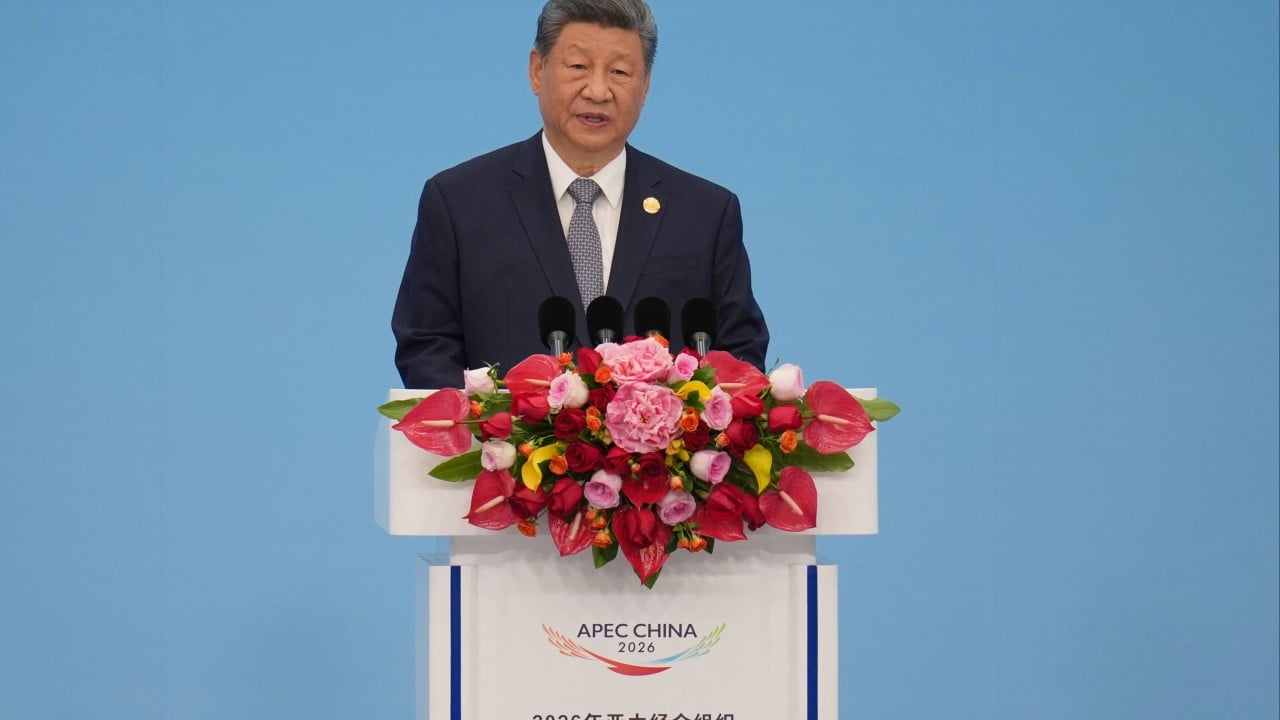
Beijing wants to build a formal diplomatic and economic bridge between China’s Guangdong-Hong Kong-Macao Greater Bay Area and the world’s premier coastal innovation hubs, including the San Francisco Bay Area, Tokyo Bay, and the New York metropolitan region. On the surface, Chinese President Xi Jinping’s call for a global association of bay areas reads like standard multilateral goodwill aimed at green technology, maritime trade, and urban sustainability. Beneath the diplomatic phrasing lies a calculated industrial strategy designed to bypass Western technology controls, anchor global supply chains to southern China, and rebrand Shenzhen and Hong Kong as indispensable nodes in international commerce.
Diplomacy rarely moves without an economic engine underneath it. For decades, coastal clusters have generated a disproportionate share of global gross domestic product, patent filings, and venture capital allocation. When Beijing proposes linking these coastal zones through a dedicated association, it is attempting to shift the arena of international cooperation away from national capitals—where geopolitical friction and national security hawks dominate—and toward sub-national economic powerhouses where municipal leaders, port authorities, and multinational executives speak the common language of capital flows and infrastructure.
The Architecture of Coastal Power
To understand why a global association of bay areas appeals to Beijing, look at the raw concentration of wealth along specific stretches of coastline. Economists and urban planners have long tracked the "bay area economy" model, where deep-water ports, dense university networks, and deep pools of private risk capital reinforce one another.
Three regions have historically defined this model:
- The San Francisco Bay Area built its dominance on semiconductor engineering, software architecture, and venture capital ecosystems anchored by Stanford University and the University of California, Berkeley.
- The Tokyo Bay Area transformed post-war industrial manufacturing into high-precision robotics, advanced materials, and dense transit-oriented logistics across Yokohama, Kawasaki, and Tokyo.
- The New York Metropolitan Bay Area paired maritime shipping capacity with the deepest capital markets, corporate legal frameworks, and financial engineering hubs on earth.
China’s Greater Bay Area (GBA) was explicitly engineered to rival and eventually surpass these three benchmarks. Spanning nine mainland cities in Guangdong province—including Shenzhen, Guangzhou, Dongguan, and Foshan—alongside the two Special Administrative Regions of Hong Kong and Macao, the GBA encompasses roughly 86 million people and an economic output exceeding $1.9 trillion.
Yet size alone does not guarantee technological self-sufficiency. While Shenzhen excels at rapid hardware prototyping, telecommunications equipment, and electric vehicle manufacturing, and Hong Kong retains deep capital market infrastructure, the region still faces structural bottlenecks in foundational research, high-end semiconductor lithography, and global regulatory standard-setting. A formal association linking Shenzhen with Silicon Valley and Tokyo is designed to keep channels of technical exchange, talent mobility, and joint research open at a moment when Washington and its allies are actively narrowing them.
Bypassing National Walls Through Municipal Doors
Geopolitics has grown hostile to bilateral tech deals. Export controls on advanced computing chips, outbound investment screening mechanisms, and scrutiny over cross-border data flows have chilled direct corporate partnerships between Washington and Beijing.
Sub-national diplomacy offers a pressure valve. State governors, city mayors, port directors, and university administrators operate under different incentives than national defense ministries. A mayor in California or a prefectural official in Japan worries about port volume, municipal tax revenue, clean-energy transitions, and local job creation. By framing the initiative around shared urban challenges—rising sea levels, port decarbonization, smart grid management, and aging infrastructure—Beijing lowers the political temperature required for engagement.
Consider how a hypothetical joint working group between the Port of Shenzhen and a North American West Coast port might function. Rather than negotiating sensitive semiconductor supply chains, engineers and administrators collaborate on automated crane logistics, green hydrogen bunkering for container ships, and cold-chain customs digitization. Once those institutional pipes are laid, commercial trust rebuilds, creating secondary pathways for venture funds, clean-tech startups, and supply chain consultants to operate across borders with less political friction.
This is not a new playbook. During the height of Cold War tensions and subsequent trade disputes, sister-city agreements and regional trade councils frequently preserved commercial ties when ambassadors were recalled. Scaling that concept into an institutionalized global association of bay areas gives Beijing a permanent multilateral platform where China is the founding convener rather than a latecomer adapting to Western rules.
The Internal Friction Inside China’s Greater Bay Area
Before Beijing can lead a global network of coastal hubs, it must solve a glaring contradiction at home. Unlike the San Francisco Bay Area or Tokyo Bay, which operate under single national currencies, unified legal codes, and frictionless internal labor mobility, China’s Greater Bay Area is stitched together across three distinct legal and economic systems.
| Feature | Mainland GBA Cities (Shenzhen, Guangzhou) | Hong Kong SAR | Macao SAR |
|---|---|---|---|
| Legal System | Socialist Civil Law | Common Law | Portuguese-influenced Civil Law |
| Currency | Renminbi (CNY) | Hong Kong Dollar (HKD) | Macanese Pataca (MOP) |
| Capital Controls | Strict cross-border controls | Free capital flow | Free capital flow |
| Internet & Data | Great Firewall / strict data localization | Open internet / cross-border rules | Open internet / gaming & tourism focus |
| Primary Economic Edge | Hardware manufacturing, EVs, AI | International finance, IP arbitration | Hospitality, leisure, Lusophone trade |
These borders within a border create persistent friction. A biomedical researcher in Shenzhen cannot easily send biological samples across the river to a laboratory in Hong Kong without navigating complex customs clearances. A tech startup raising venture capital in Hong Kong dollars faces regulatory hurdles when moving that liquidity into mainland subsidiaries to pay engineering payroll. Data generated by autonomous vehicle trials in Guangzhou cannot automatically flow into cloud servers regulated under Hong Kong’s privacy framework.
Beijing has spent years rolling out incremental fixes—such as the Wealth Management Connect scheme, streamlined customs checkpoints at Hengqin and Qianhai, and mutual recognition of professional qualifications for lawyers and architects. Even so, the integration remains incomplete. By inviting foreign bay areas into a global association, Chinese policymakers hope to accelerate domestic regulatory reform through external benchmarking, using international standards in green finance, intellectual property protection, and maritime arbitration to pressure local bureaucracies into smoother coordination.
Why Silicon Valley and Tokyo Are Hesitant
Invitation does not equal participation. For leaders in Silicon Valley, Tokyo, and New York, joining a Beijing-backed bay area association carries real reputational and regulatory hazards.
In the United States, federal scrutiny of sub-national agreements with Chinese entities has intensified sharply. Congressional committees routinely investigate state-level economic development offices, public pension funds, and research universities for ties to Chinese state-linked organizations. A California municipal official or university dean who signs a memorandum of understanding with a Beijing-sponsored bay area secretariat risks immediate political backlash, loss of federal grant eligibility, and accusations of naivete regarding intellectual property leakage.
Silicon Valley’s private sector has also shifted its posture. Ten years ago, Sand Hill Road venture capitalists and Shenzhen hardware founders maintained a symbiotic loop: ideas and capital flowed west-to-east, while prototypes and scaled manufacturing flowed east-to-west. Today, US venture firms face strict compliance rules under outbound investment restrictions targeting artificial intelligence, quantum computing, and microelectronics. Many prominent funds have split their China operations into separate legal entities or wound down direct exposure altogether. For a Silicon Valley executive, the upside of formal membership in a Chinese-led association rarely outweighs the compliance cost.
Tokyo Bay presents a different calculation. Japanese corporations remain deeply entangled with Chinese supply chains, particularly in automotive components, industrial machinery, and consumer electronics. Yet Japan’s economic security legislation pushes companies to diversify manufacturing toward Southeast Asia and India while tightening controls over dual-use technologies. Japanese municipal leaders in Kanagawa or Tokyo may attend international urban forums on disaster resilience or hydrogen energy, but they are unlikely to endorse a governance structure that appears to validate Beijing’s geopolitical framing over Tokyo’s alliance commitments with Washington.
The Global South Alternative
If Silicon Valley and Tokyo keep their distance, does the initiative stall? Not necessarily. The quiet secret of Beijing’s bay area strategy is that its primary audience may not be California or Japan at all.
Across Southeast Asia, the Middle East, and Latin America, rapidly urbanizing coastal corridors are searching for development blueprints that do not require decades of slow institutional evolution. Regions like the Strait of Malacca, the Persian Gulf ports of Dubai and Abu Dhabi, and Brazil’s coastal industrial belt look at Shenzhen’s transformation from a collection of fishing villages in 1980 into a hardware metropolis as a replicable model.
When Beijing promotes a global association of bay areas, it packages Shenzhen’s urban planning, high-speed rail integration, automated port technology, and state-backed industrial parks as an exportable operating system. Participating hubs in emerging markets gain access to Chinese infrastructure financing, telecommunications equipment, and digital port management software. In exchange, China secures long-term commercial footholds, maritime logistics data, and alignment on technical standards across the fastest-growing trade routes in the world.
This dynamic reframes the entire proposal. Even if Western bay areas send only low-level observers or skip the meetings entirely, a coalition linking the Greater Bay Area with ports in Singapore, Malaysia, the United Arab Emirates, and Saudi Arabia creates a formidable commercial bloc. It allows China to define what a "modern bay area economy" looks like—one characterized by state-directed industrial policy, integrated digital surveillance and logistics, and green energy infrastructure built with Chinese solar panels, batteries, and electric commercial fleets.
The Battle Over Standards and Talent
Beyond concrete and container ships, the real contest among coastal innovation hubs centers on invisible rules. Whoever writes the technical standards for autonomous shipping, cross-border digital trade, carbon accounting, and artificial intelligence governance captures long-term economic rent.
Historically, standards for global commerce emerged from institutions anchored in North America and Europe, reinforced by the market dominance of Silicon Valley software and New York financial contracts. China’s Greater Bay Area is attempting to build an alternative standard-setting ecosystem from the ground up. Hong Kong plays a critical role in this effort. With its internationally recognized common law courts and established arbitration centers, Hong Kong serves as the legal translation layer between mainland Chinese industrial scale and international commercial contracts.
Talent flows represent the second front. Innovation clusters live or die by their ability to attract mobile engineers, founders, and researchers. While the San Francisco Bay Area still commands unmatched global appeal for top artificial intelligence researchers and software architects, rising living costs, visa bottlenecks, and political polarization have created openings for rival hubs. Hong Kong and Shenzhen have aggressively courted overseas STEM graduates with tax incentives, housing subsidies, and fast-track residency permits.
A global association of bay areas gives these recruitment drives an institutional wrapper. Academic exchanges, joint climate-tech hackathons, and cross-border startup incubators serve as talent pipelines. Even modest two-way flows of mid-career engineers and graduate researchers help mainland Chinese labs stay plugged into global scientific conversations that might otherwise be cut off by geopolitical decoupling.
What Comes Out of the Harbor
For corporate strategists, investors, and policymakers watching from outside China, dismissing Xi Jinping’s bay area proposal as empty diplomatic rhetoric misses how Beijing executes long-term industrial policy. Chinese statecraft rarely relies on a single dramatic breakthrough; it favors overlapping institutional frameworks that gradually shift commercial gravity over ten- to twenty-year horizons.
Whether Silicon Valley executives ever sit on the board of a Beijing-convened bay area association is almost beside the point. The call itself signals to domestic provincial officials, state-owned banks, and private Chinese tech champions that southern China’s coastal integration remains a top national priority. Capital will continue pouring into cross-harbor bridges, subsea tunnels, automated terminals, and semiconductor fabrication facilities across the Pearl River Delta.
At the same time, multinational companies operating in Asia face a sharper strategic choice. Supply chains are splitting into parallel tracks—one optimized for North American and European compliance regimes, and another deeply integrated with Chinese manufacturing and emerging market ports. Navigating those waters requires treating the Greater Bay Area not as a passive factory floor, nor as an open replica of Silicon Valley, but as an ambitious, state-backed industrial ecosystem actively building its own global network port by port.