An electric kettle sits on your kitchen counter 24 hours a day. Unlike a toaster tucked into a pantry cabinet or a blender pulled out for weekend smoothies, your kettle is permanent room decor.
Yet for decades, appliance brands sold us ugly plastic jugs that looked like cheap office supplies. Don't miss our earlier coverage on this related article.
When design-forward brands stepped in to fix this problem, they created a brand-new headache. They built stunning, minimalist kettles that boiled water terribly slow, poured like leaky buckets, or burned out within six months. You were forced to choose between an eyesore that worked well and an aesthetic masterpiece that couldn't handle a simple morning pour-over.
You don't have to settle for that trade-off anymore. To read more about the history here, ELLE offers an in-depth summary.
After testing dozens of options, analyzing thermal efficiency metrics, and living with these counter fixtures through hundreds of morning coffee rituals, I can tell you which stylish kettles actually justify their footprint on your quartz.
What Most People Get Wrong About Countertop Kettles
People usually buy a kettle based strictly on color or silhouette. They see a sleek matte finish on social media and hit buy.
That is how you end up with a kettle that drips scalding water onto your hand every time you tilt it past forty-five degrees.
Great kettle design isn't just about exterior paint. It's about weight distribution, thermal retention, spout geometry, and how the handle feels when the vessel is full of boiling water. A heavy stainless steel body looks premium on a marble island, but if the balance point sits too far back, pouring feels clumsy.
There's also the noise factor. Thin, cheap metal housings amplify the sound of boiling water until your morning kitchen sounds like a jet engine warming up on a runway. Heavy double-wall insulation muffles that rumble to a whisper while keeping the exterior cool to the touch.
Then comes the heating element itself. A kettle can look like a piece of modern sculpture, but if it operates at a weak 1000 watts, you'll spend seven minutes waiting for a single cup of tea. Look for at least 1200 to 1500 watts of power for quick boiling performance.
The Gooseneck Specialist for Coffee and Tea Lovers
If your daily routine involves pour-over coffee or loose-leaf tea, a gooseneck kettle is essential. The curved, slender spout gives you precise control over water flow rate and placement.
Fellow Stagg EKG
The Fellow Stagg EKG remains the undisputed favorite for minimalist kitchens. Its silhouette is unmistakable, featuring a swept-back handle, a flush digital screen integrated into the base, and a clean geometric profile.
It heats water fast with its 1200-watt element. The real magic lies in its micro-processor control, which holds your exact target temperature for up to 60 minutes.
It isn't perfect, though. The capacity is small at 0.9 liters. If you routinely brew large pots of tea for guests, you'll need to boil water twice. The delicate gooseneck spout also means it pours slowly by design. You won't want to use this to quickly fill a large pot for pasta.
Balmuda The Pot
Balmuda took a different approach with their signature kettle. It is smaller, lighter, and distinctly compact. Holding just 0.6 liters, it targets solo drinkers who want speed and absolute elegance.
The handle incorporates a subtle indicator light that glows softly while heating. The spout design offers a smooth pour, allowing you to drop a trickle of water directly into a drip cone without splashing.
If you have limited counter space in a city apartment, this unit takes up barely more room than a large coffee mug.
Full-Pour Kettles That Elevate Modern Kitchens
Goosenecks are great for precision, but sometimes you just want to boil a liter of water in a flash to fill a French press or steep a giant pitcher of iced tea.
SMEG Variable Temperature Kettle
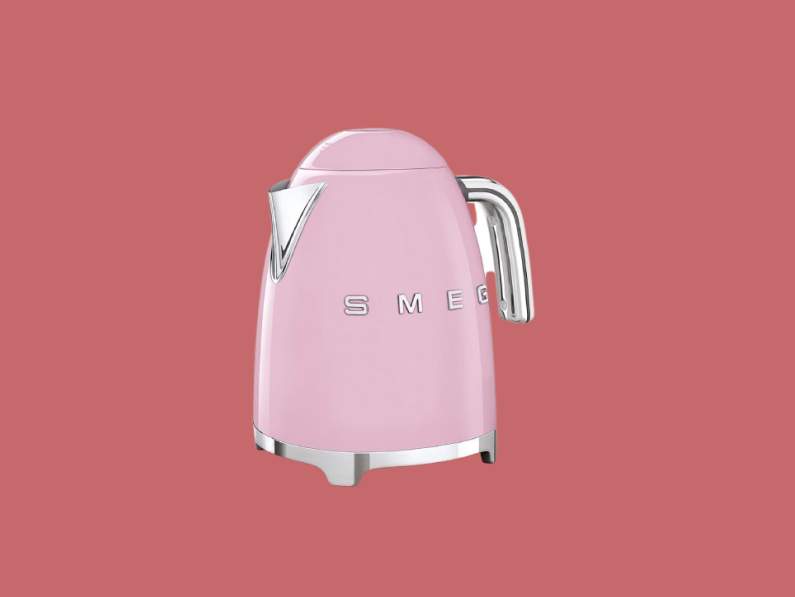
SMEG dominates the retro-chic aesthetic. With rounded curves, chrome accents, and vibrant high-gloss enamel finishes, these kettles recall 1950s diner style reworked for contemporary homes.
Unlike earlier models that only had a simple power switch, the variable temperature version lets you select from seven temperature settings ranging from 120°F to 212°F. This matters if you drink delicate green teas that turn bitter when scalded by boiling water.
The stainless steel body is substantial, and the soft-opening lid prevents hot steam from bursting upward when opened. Be aware of the footprint, though. The base is wide, so make sure you measure your counter clearance under upper cabinets before buying.
KitchenAid Precision Gooseneck and Electric Kettles
KitchenAid brings heavy-duty utility to countertop aesthetics. Their 1.2-liter electric kettle features a smooth, domed stainless steel body with a sturdy die-cast aluminum handle.
It feels rock solid. The mechanical slide control for temperature selection gives a satisfying physical click, avoiding fussy touchscreens that break down over time. It's a workhorse dressed up in classic kitchen colors.
Material Choices That Change How Your Water Tastes
What your kettle is made of affects both its lifespan and your daily experience.
- Stainless Steel (304 Grade): The industry gold standard. It resists corrosion, handles high heat easily, and stays free of chemical leaching. Opt for models with seamless interior stainless steel liners so water never touches plastic parts inside.
- Borosilicate Glass: Perfect if you love watching water come to a roll. Glass kettles look airy and lightweight on dark countertops. The downside? Hard water scale shows up immediately. You need to descale them frequently with white vinegar to keep them clear.
- Ceramic: Ceramic kettles offer incredible heat retention and a handmade, artisanal look. However, they are heavy even when empty, and a single accidental drop against a granite counter can crack the body.
Features You Should Never Sacrifice for Looks
Never buy a kettle that omits auto shut-off and boil-dry protection, no matter how gorgeous the exterior looks.
Auto shut-off kills power within seconds of reaching a boil. Boil-dry protection cuts the circuit if you accidentally turn the kettle on without water inside, preventing heating element burnouts or house fires.
Look for a concealed heating element hidden beneath a smooth stainless steel floor. Older kettle designs exposed the metal heating coils directly to water, creating mineral buildup pockets that were impossible to clean. Smooth interiors scrub clean in seconds.
Keep an eye out for cord storage built into the underside of the base. A clutter-free counter requires hiding excess wire length. Good designs let you wrap unnecessary cord underneath while keeping the base flat against your countertop.
Keeping Your Countertop Kettle Looking Brand New
Hard water is the enemy of stylish appliances. Mineral deposits—mostly calcium and magnesium—build up inside the base within weeks, slowing down heat transfer and making your kettle work harder.
Don't buy expensive chemical descaling solutions.
Fill your kettle with a 50/50 mix of water and white distilled vinegar. Bring it to a boil, turn off the kettle, and let it sit for 30 minutes. The acid dissolves mineral scale effortlessly. Rinse thoroughly with fresh water two or three times.
For the exterior finish, stick to microfiber cloths damp with warm water. Never use abrasive scrubbers on powder-coated or painted surfaces, as they will scratch matte finishes and strip away protective clear coats.
Pick the Right Match for Your Morning Workflow
If your morning centers on pour-over coffee, grab a Fellow Stagg EKG or Balmuda The Pot for precision flow control. If you brew large batches of tea or need fast boiling power for cooking, pick up a full-pour stainless steel model like the SMEG Variable Temperature unit.
Check your kitchen's power outlets, clear a dedicated spot away from direct sink splashes, and choose a finish that complements your hardware fixtures rather than matching your cabinets exactly.