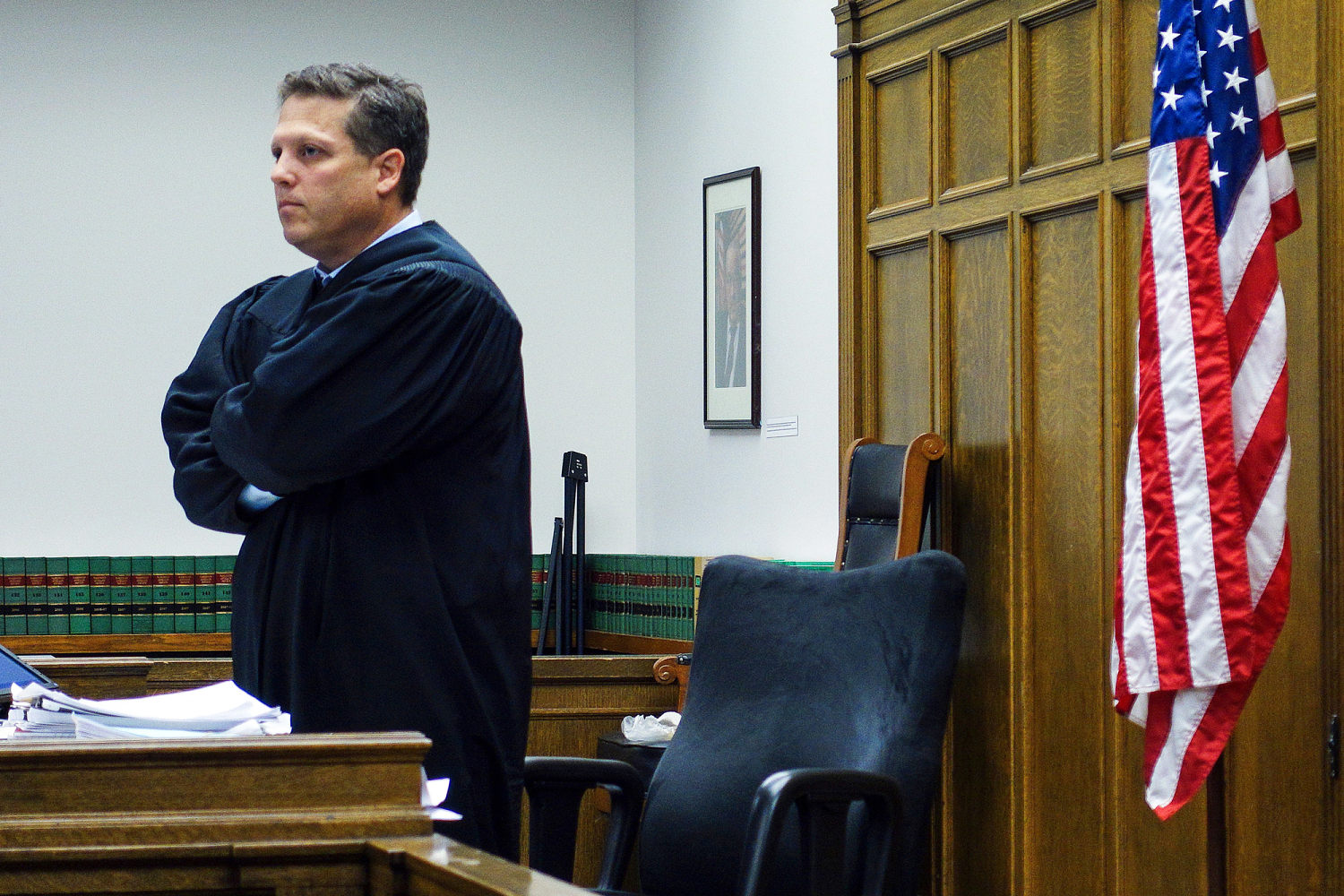
Fifty-four minutes after taking the oath of office as the chief federal law enforcement officer for western Washington, Roger Rogoff received an email that stripped him of his title. The directive came straight from the White House, invoking presidential authority to terminate his appointment on the spot. Now, Rogoff has launched a federal lawsuit that directly challenges the administration, opening a constitutional fault line over whether the executive branch can override court-appointed prosecutors. The lawsuit turns a brief administrative record into a high-stakes constitutional battle over who controls federal prosecutions when the White House and the judiciary clash.
At its core, this dispute exposes a deep institutional fracture inside the federal justice system. When a United States Attorney position falls vacant, federal law sets up a clear statutory progression. The Attorney General holds the power to appoint a temporary replacement for up to 120 days under Title 28, Section 546 of the United States Code. Once that 120-day clock expires without a presidential nominee winning Senate confirmation, the statute transfers appointment authority directly to the judges of the local federal district court. Those judges are empowered to choose a prosecutor who serves until the Senate confirms a permanent successor.
That statutory mechanism existed for decades as a quiet safety valve designed to prevent federal prosecutor offices from languishing without leadership. In western Washington, the district had gone without a Senate-confirmed United States Attorney since 2023. After an interim tenure appointed by the Justice Department expired, the federal judges in Seattle stepped in, vetted candidates through a bipartisan panel, and unanimously selected Rogoff. A former state court judge and veteran prosecutor, Rogoff took his oath expecting to lead the office. Before he could even finish his initial meetings in the courthouse, the executive branch moved to shut him out.
The Statutory Clash Inside Section 546
The legal confrontation hinges on two competing interpretations of presidential power versus congressional mandate. The executive branch points to Title 28, Section 541, which states that United States Attorneys are subject to removal by the President. White House officials argue that Article II of the Constitution grants the chief executive absolute authority to remove any executive branch officer, regardless of how that officer took the seat. From this perspective, allowing judicial appointees to manage federal prosecutions without executive approval undermines presidential control over federal law enforcement.
Rogoff’s legal team counters that Congress explicitly structured Section 546 to prevent executive overreach and long-term vacancies. They argue that when a prosecutor is appointed by federal judges following the expiration of the executive’s 120-day window, the President cannot simply nullify the judicial choice through a quick email termination. Doing so effectively nullifies the statutory role given to the courts and leaves offices managed indefinitely by unconfirmed acting officials favored by the Justice Department.
The mechanics of this disagreement reach far beyond administrative technicalities. If the court rules that the executive branch can instantly fire any judicially appointed prosecutor, the statutory 120-day limit created by Congress becomes functionally meaningless. The executive branch could keep unconfirmed interim appointees in place indefinitely, firing any judicial selection the moment an oath is administered.
Executive Control Versus Judicial Safeguards
The tension between the executive branch and district courts has built up over months across multiple jurisdictions. Similar friction surfaced in other federal districts where temporary appointments lapsed without presidential nominees reaching the Senate floor. When courts attempted to exercise their statutory backup power, the Justice Department resisted, arguing that judges were infringing on executive territory.
In Seattle, federal judges selected Rogoff after a structured review intended to maintain institutional stability. The administration, however, made clear before the swearing-in that it did not support the judicial selection process. Acting Attorney General Todd Blanche publicly asserted that district court judges must coordinate with the White House to ensure candidates meet executive standards, arguing that POTUS retains inherent authority to remove temporary appointees at will.
This philosophical rift leaves the Western District of Washington in a administrative limbo. With Rogoff barred from accessing official computer systems and physical offices, daily operations fall back to career first assistants. The legal standing of actions taken during these leadership gaps remains a key vulnerability that defense attorneys across the region are actively examining.
Implications for Federal Prosecutions
Uncertainty at the top of a federal prosecutor’s office creates immediate legal vulnerabilities for ongoing criminal cases. Under federal criminal procedure, indictments, plea agreements, and grand jury authorizations require explicit legal authority from the head of the district or designated delegates. When the legitimate identity of the United States Attorney is thrown into doubt, defense lawyers gain immediate grounds to challenge filings.
Defense teams in high-profile federal cases routinely file motions to dismiss indictments when questions arise around the validity of an acting prosecutor's appointment. If a judge later determines that an unconfirmed official lacked lawful authority to authorize charges or sign indictments, months of investigative work and courtroom proceedings can be derailed.
- Grand jury indictments returned during contested leadership periods face immediate statutory challenges.
- Search warrants and wiretap applications signed by disputed supervisors face heightened suppression scrutiny.
- Plea bargains negotiated without clear supervisory authority risk post-conviction appeals.
The practical consequences extend to active investigations involving complex financial fraud, drug trafficking, and civil rights matters. Career prosecutors working within the district are forced to navigate conflicting instructions and structural ambiguity, knowing that every filing they submit could be challenged based on who sits in the chief prosecutor's chair.
The Problem of Indefinite Unconfirmed Leadership
The broader systemic issue stems from the growing reliance on temporary appointments across the federal government. When presidential nominations stall or are withheld entirely, key justice positions remain filled by temporary officials who have not undergone Senate advice and consent.
Congress enacted the judicial appointment fallback specifically to curb this reliance on unconfirmed interim leadership. By placing the authority in the hands of local district judges when the 120-day window closes, lawmakers intended to encourage the White House to submit formal nominations for Senate evaluation. The current standoff in Seattle demonstrates what happens when the executive branch chooses to bypass that legislative pressure, maintaining control through rapid dismissals instead of formal confirmation paths.
A Constitutional Test Case for Article II
Rogoff’s lawsuit now moves to the federal bench, where a judge must weigh the constitutional limits of presidential removal power against statutory safeguards built by Congress. The court must decide whether Section 546 creates a protected class of judicial appointees who can only be replaced through formal nomination and Senate confirmation, or whether executive removal power remains absolute under Article II.
Historical precedent offers mixed signals. Supreme Court jurisprudence has long recognized executive authority over core prosecutorial functions, but it has also upheld legislative limits on executive removal power when statutory mechanisms serve specific institutional checks. The Seattle lawsuit forces these two constitutional doctrines into direct conflict.
If the federal court grants Rogoff’s request for an injunction, restoring his access to the office and prohibiting the Justice Department from recognizing alternative leadership, the decision will trigger an immediate appeal. Higher courts will be forced to rule on whether the executive branch can systematically override judicial selections made under Section 546.
A ruling in favor of the White House would give the executive branch unchecked freedom to manage federal prosecutor offices indefinitely through temporary designations, bypassing Senate scrutiny altogether. Conversely, a ruling favoring Rogoff would re-establish judicial appointment as an absolute statutory wall, forcing the administration to go through the Senate to replace court-selected prosecutors.
The lawsuit filed in Seattle is not merely a dispute over one man's 54-minute tenure. It is a direct test of whether congressional limits on executive power hold up when tested in the federal courts.