The coffee grows cold on the corner of the desk in Hsinchu. Outside the glass window, the neon hum of the science park flickers against a heavy, gray Taiwanese twilight. Lin has not looked at his phone in four hours. On the screen before him lies a blueprint for a semiconductor etching process so precise it feels like carving poetry into a falling snowflake.
Lin is forty-two. He has spent half his life perfecting silicon. But today, the air in the lab tastes like a warning.
Across the narrow strait, a different kind of machinery is turning. It is not made of steel or silicon wafers, but of quietly offered fortunes, sleek headhunters in high-speed rail stations, and shell companies designed to look like local startups while bleeding an island of its intellectual lifeblood.
Taiwan is fighting a war on two fronts. One is loud, iron-clothed, and tracked by satellite imagery. The other is whisper-quiet, happening in coffee shops, encrypted chat groups, and university cafeterias.
To understand why an island the size of Maryland commands the nervous attention of Washington, Beijing, and every major capital on earth, you cannot just look at gross domestic product figures or export charts. You have to look at Lin. You have to look at the human cost of being the indispensable heartbeat of modern civilization.
The Iron and the Ocean
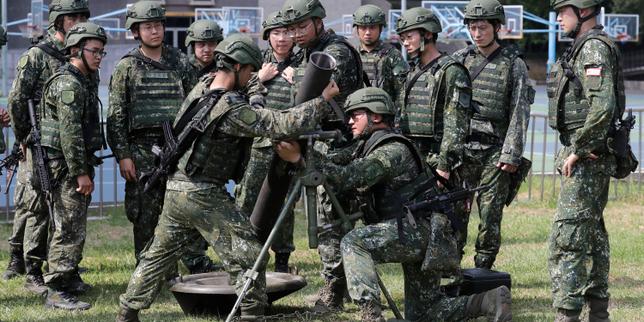
Sirens are not new to the coast. Generations have grown up with the rumble of military drills, the sudden scramble of air force jets breaking the sound barrier, and the steady, unyielding rhythm of conscription.
When the military announces large-scale exercises, the television screens flicker with grey destroyers cutting through white-capped swells and mobile missile batteries rolling through coastal orchards. To the casual observer thousands of miles away, it looks like theater. A geopolitical dance of deterrence.
To the people living under the flight paths, it is the background music of existence.
Security is expensive. It demands billions of dollars diverted from healthcare and education. It requires young men and women to pause their civilian dreams, trading textbooks for combat boots during mandatory service updates. But physical defense is only half the ledger. An army can guard a coastline, yet fail entirely if the minds that make the nation matter are quietly lured away one by one.
Consider what happens next. While destroyers maneuver in the Taiwan Strait, a different sort of invasion targets the island's most precious resource: human genius.
The Quiet Poaching Machine
For years, a shadow economy of talent acquisition has operated in the margins. Semiconductor fabrication is not something you can learn from a textbook. It is a generational craft, passed down through late-night debugging sessions, stubborn trial-and-error, and an intuitive feel for machines that cost hundreds of millions of dollars.
Competitors across the water know this. They cannot simply buy a foundry off the shelf; the United States and its allies have made sure of that with export controls and diplomatic pressure. So, they decided to buy the people who know how to build them.
Headhunters armed with venture capital and state-backed subsidies whisper promises of triple-digit salaries, lavish housing allowances, and blank checks to senior engineers, researchers, and project managers. They set up shell corporations in Taiwan, disguising their true ownership behind layers of local proxies. An engineer working sixty-hour weeks under intense pressure receives an unsolicited message on LinkedIn. The offer is simple. Leave your patents behind, bring your notebook, and double your net worth by sunrise.
It is a profound temptation. Burnout is real. The housing market in Taipei is brutal. The stress of maintaining a technological monopoly is exhausting.
Yet, for every engineer who packs their bags, something vital breaks.
The Anatomy of a Crackdown
Governments do not act lightly when their foundation is threatened. Recently, Taipei realized that passive defense was suicide. The legislative and judicial machinery swung into motion with sudden, unspolicited force.
Investigators raided suspicious office suites hidden in ordinary commercial buildings across Taipei and Hsinchu. They found sleek glass desks, empty of products, housing dozens of laptop screens operated by young recruiters whose primary job was mapping out organizational charts of major chipmakers. These shell companies were not manufacturing anything. They were talent pipelines.
The government tightened the screws. Laws were rewritten to classify core semiconductor technologies as national security assets. Penalties for industrial espionage were cranked up to felony levels, carrying prison sentences that send a chilling message to anyone tempted by foreign gold. Cross-border headhunting without proper authorization became a criminal offense.
Critics called it heavy-handed. Business groups worried about the chilling effect on normal international commerce. But walk through the corridors of the National Taiwan University engineering department, and you hear a different perspective.
You hear relief.
The Weight of the Core
Why does it matter if a few engineers cross the strait?
Imagine a bridge built out of a million interconnected stones. Each stone is shaped by hand, fitted precisely into its neighbor. If you pull out one stone, the bridge might hold. If you pull out fifty, a crack forms. If you pull out the master masons who understand the mortar, the whole arch collapses.
Taiwan produces over ninety percent of the world's most advanced semiconductors. These chips power everything from the smartphone in a teenager's pocket in London to the guidance systems of autonomous vehicles in Detroit and the supercomputers mapping climate change in Geneva.
If the talent is siphoned away, the manufacturing capability follows. And if the manufacturing capability leaves, the island loses its ultimate shield—the silicon shield. Nations that matter globally are rarely invaded; they are protected by the sheer impossibility of replacing them.
Lin closes his laptop. The simulation has finished running, and the yield rate for the new wafer design is optimal. It works.
He stands up, stretches his stiff shoulders, and walks out into the cool night air. The streetlamps of Hsinchu cast long shadows down the pavement. Tomorrow, the drills in the strait will continue. Tomorrow, the quiet emails from anonymous recruiters will land in thousands of inboxes.
The struggle is not just about territory or ideology. It is a contest fought in the quiet spaces of human ambition, testing whether loyalty to a homeland can withstand the gravity of a blank check.
And for now, the line holds.