Asphalt holds heat long after the Texas sun drops behind the concrete sprawl of Houston. If you have ever stood on the shoulder of a feeder road along the Gulf Freeway at dusk, you know the specific, suffocating humidity that rises from the blacktop, smelling faintly of diesel exhaust, damp earth, and scorched rubber. Cars whip past at seventy miles an hour. The wind they push hits your chest like a physical shove.
Now, strip away the safety of a guardrail. Strip away the predictability of normal traffic. Put yourself in the worn sneakers of a man standing in that exact space, watching an unmarked government SUV accelerate straight toward him.
Impact.
A two-ton steel frame meets human bone at speed. There is no Hollywood slow-motion effect in real life, only a sickening thud, the screech of locked brakes arriving a fraction of a second too late, and the sudden, terrifying silence that falls over a body sprawled across the pavement.
In Houston, a federal grand jury looked at the wreckage of such an encounter and did something that happens so rarely in American law enforcement that it sends shockwaves through courthouses from Harris County to Washington, D.C. They indicted an Immigration and Customs Enforcement officer for striking and injuring an immigrant with his vehicle.
Most news reports reduce this moment to three dry, sterile sentences. An officer was on duty. A vehicle made contact with a pedestrian. Charges were filed. We read the headline over morning coffee, nod briefly at the mechanism of the justice system, and scroll onward to sports scores or weather forecasts.
Doing so misses the entire human earthquake beneath the asphalt.
The Anatomy of a Split Second
To understand why a federal indictment in Houston matters, we have to step inside the invisible architecture of an immigration enforcement operation. These encounters do not happen in pristine courtrooms with stenographers and wooden gavels. They unfold in apartment parking lots off Bellaire Boulevard, outside corner panaderías in the East End, and along dusty residential streets where children ride bicycles twenty feet away.
Consider a hypothetical composite—let us call him Mateo—to ground the reality of the thousands of men and women who navigate Houston’s shadow economy every single day. Mateo wakes at four in the morning. He packs a lunch of cold beans and tortillas wrapped in foil, kisses the forehead of his sleeping daughter, and steps out into the muggy dark to catch a ride to a commercial roofing site in Katy. Mateo is not a cartel boss. He is not a fugitive mastermind. Under federal statute, his presence in the country without authorization is a civil violation, roughly equivalent in legal classification to an unpaid municipal fine or a zoning infraction.
Yet when unmarked vehicles roll into an intersection with red and blue lights hidden behind tinted windshields, the enforcement machinery treats the ensuing foot chase like a counter-terrorism raid.
Fear is an ancient, involuntary biological hijack. When a person whose entire livelihood, family stability, and physical freedom depend on remaining invisible suddenly sees armed agents closing in, the human nervous system does not pause to consult the Federal Rules of Criminal Procedure. Adrenaline floods the bloodstream. Heart rates spike past one hundred and sixty beats per minute. Legs run.
And behind the wheel of a government-issued Ford Explorer or Chevrolet Tahoe sits an officer flooded with that exact same chemical cocktail.
I have spent years studying use-of-force files and speaking with both federal agents and the families left behind after enforcement operations go sideways. There is a specific kind of tunnel vision that descends during a pursuit. Officers call it the red mist. Your peripheral vision collapses until the only thing left in the universe is the fleeing figure fifty yards ahead of your hood. Every instinct trained into you screams one command: Apprehend. Do not let them slip away.
Here is where the law draws a thick, unyielding line in the dirt.
A motor vehicle is not a pair of handcuffs. It is not a verbal command, nor is it a non-lethal compliance tool. Under settled constitutional law—specifically the Supreme Court’s landmark ruling in Tennessee v. Garner and decades of subsequent Fourth Amendment jurisprudence—an automobile driven at a human being is a deadly weapon. Using it to block, bump, or strike a fleeing suspect is legally indistinguishable from firing a hollow-point round at their spine.
Why Federal Indictments Almost Never Happen
If you feel a quiet skepticism when you hear that a federal officer has been indicted, your instincts are calibrated to reality. Holding federal law enforcement officers criminally accountable in the United States is notoriously difficult, akin to trying to thread a needle while wearing winter gloves in a hurricane.
First, there is the sheer institutional insulation. Unlike municipal police officers, whose body-camera footage is increasingly subject to state public records laws and local civilian oversight boards, federal immigration agents have historically operated behind a thick curtain of administrative secrecy. For years, ICE lagged far behind local police departments in deploying body-worn cameras, leaving investigators to rely almost entirely on the written narratives of the officers involved—reports drafted hours after the dust settled, often with the assistance of union counsel.
Second, prosecutors face a brutal statutory hurdle. To convict a federal agent of violating someone’s civil rights under color of law—typically prosecuted under Title 18, Section 242 of the U.S. Code—the government cannot merely prove that the officer was negligent, reckless, or bad at driving. They must prove beyond a reasonable doubt that the officer acted willfully.
Think about what that word demands inside a jury box.
It means federal prosecutors from the Department of Justice’s Civil Rights Division must convince twelve ordinary Texans that the man sitting at the defense table didn't just lose control of his steering wheel in the heat of the moment. They have to prove he knew his conduct was unlawful and chose to weaponize his vehicle anyway.
When a grand jury in Houston returns a true bill under those conditions, it tells us something profound about the evidence sitting inside that sealed room. Grand juries do not indict federal agents on hunches. They indict when dashcam video, traffic surveillance from a nearby gas station, forensic crash reconstruction, or the damning testimony of fellow officers tells a story that cannot be explained away as an accidental fender-bender.
The Invisible Ledger of Houston
Houston is the fourth-largest city in the United States, and arguably its most complex demographic experiment. Walk down Westheimer Road or spend an afternoon in Gulfton, and you hear dozens of languages braided together. Nearly one in four Houstonians was born outside the United States. The city’s skyline—those glittering glass towers rising out of the coastal prairie—was built, wired, plumbed, and roofed largely by immigrant hands.
Yet beneath the city’s celebrated diversity runs a quiet, persistent current of dread.
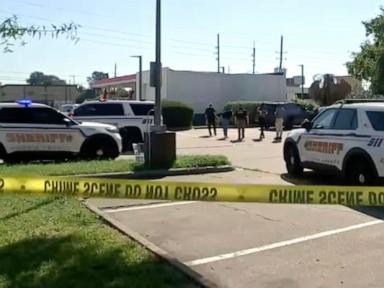
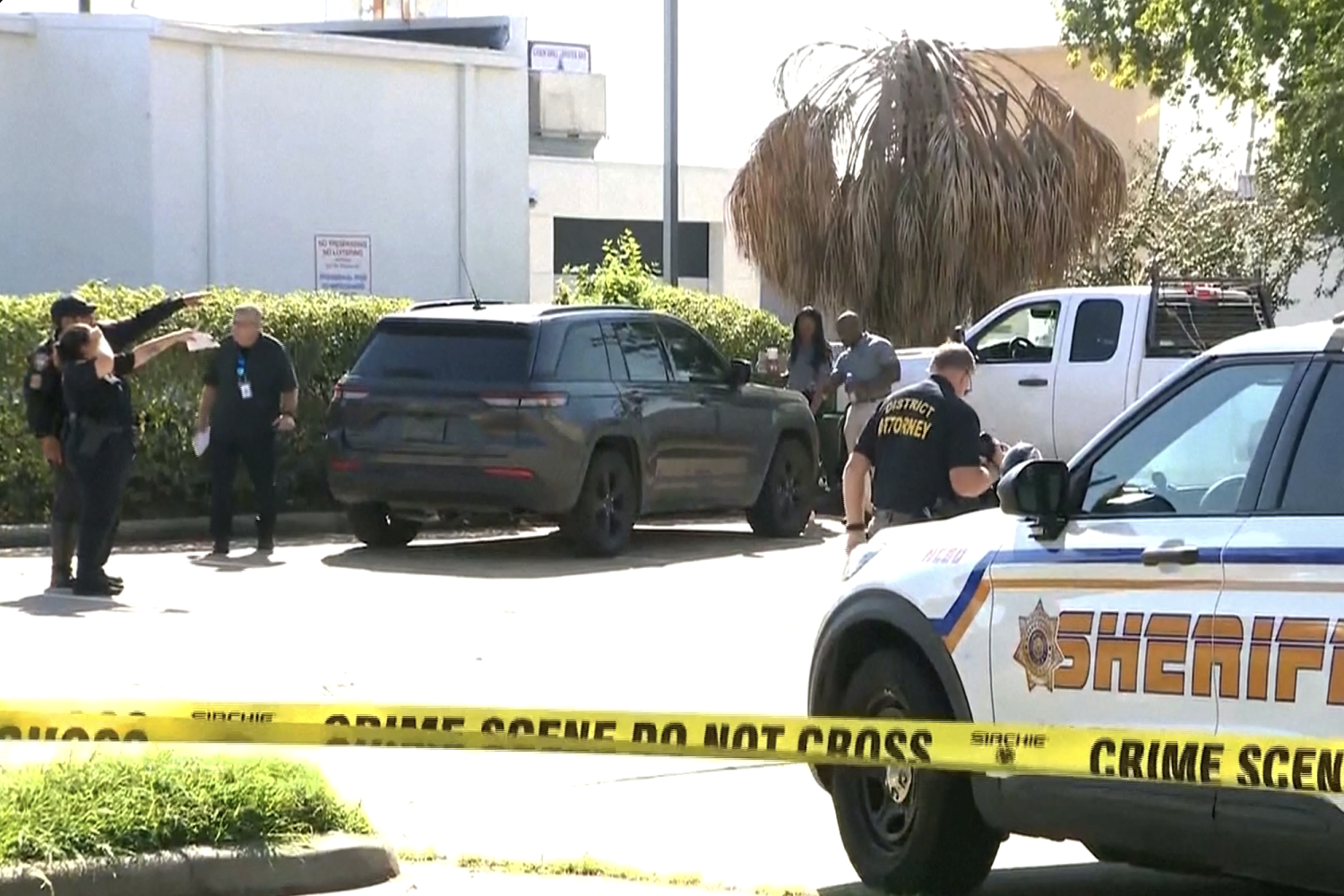
When an incident like this happens, the physical injury to one man is only the first ripple in a much wider pond. After the ambulance leaves and the yellow crime-scene tape is rolled back up, a different kind of damage spreads through entire neighborhoods.
Consider what happens next in a community where word travels faster than any local news broadcast.
A mother in Pasadena decides not to take her asthmatic son to the emergency room because she saw unmarked SUVs parked near the hospital bus stop. A restaurant worker in Spring Branch refuses to report a wage theft scheme because walking into a government building feels like walking into a trap. A witness to a violent neighborhood robbery keeps their blinds drawn when detectives knock on the door, terrified that cooperating with local police will accidentally trigger a federal database match.
This is the hidden tax of unchecked enforcement. When the line between public safety and unchecked aggression blurs, everyone in the city becomes less safe. Trust, once shattered by the sound of crunching metal on a residential street, takes a generation to rebuild.
The Myth of the Clean Arrest
We love clean narratives in America. We want to believe that law enforcement is a binary equation: good guys uphold the rules, bad guys break them, and when the two collide, force is applied with surgical precision.
Real life is infinitely messier.
Having watched countless hours of pursuit footage over the years, I have come to realize that the most dangerous moments in policing rarely stem from calculated malice. More often, they emerge from an institutional culture that treats every minor evasion as a personal affront to authority. When an agent views a fleeing immigrant not as a human being panicked by the prospect of permanent separation from their children, but as an adversary who must be conquered at any cost, judgment evaporates.
A five-thousand-pound SUV becomes an extension of frustration. The accelerator pedal becomes an exclamation point.
And what of the officer himself? It is easy to flatten him into a one-dimensional villain, just as it is easy to flatten the injured immigrant into an anonymous statistic. Neither caricature brings us closer to the truth. Somewhere in Houston, a federal agent who likely spent years believing he was serving his country is now staring down federal felony charges, his career in ruins, his family’s future hanging by a thread. Whatever drove him to press down on that pedal—whether anger, panic, hubris, or a catastrophic failure of training—the consequences are now permanently etched into his life as well.
Accountability is not vengeance. Accountability is simply the insistence that a badge is a covenant, not a blank check.
The Weight of the Road
Think back to the physics of that collision for one final moment.
In crash reconstruction, investigators measure skid marks in feet and inches. They calculate drag factors, coefficients of friction, reaction times, and kinetic energy. Kinetic energy equals one-half mass times velocity squared. Doubling the speed of a vehicle quadruples the destructive force it delivers on impact.
Human bodies have no crumple zones. We have no airbags tucked beneath our ribs. When steel meets skin, bone yields first, followed closely by everything a person spent a lifetime building—their ability to lift a heavy beam, to walk a child to school, to stand upright without wincing in pain.
In a sprawling metropolis of freeways and feeder roads, Houstonians spend half their lives behind the wheel, insulated from the outside world by climate-controlled cabins and laminated glass. It is dangerously easy to forget how fragile life is on the other side of the windshield.
Somewhere in Houston tonight, a man is learning how to walk again, measuring his progress in inches across a physical therapy floor, while a federal prosecutor prepares a folder of photographs for a courtroom down the road. And out on the Gulf Freeway, thousands of headlights continue to streak through the dark, each driver trusting that the invisible rules holding our streets together will still be there tomorrow morning.