Twenty-five years after 9/11, airport checkpoints are practically fortresses. You take off your shoes, empty your water bottle, and walk through millimeter-wave scanners while reinforced cockpit doors lock from the inside. Yet on November 19, 2026, the FBI, Department of Homeland Security (DHS), and Transportation Security Administration (TSA) sent an urgent joint bulletin to American airlines, cargo carriers, and airports.
The threat they're worried about doesn't involve smuggling box cutters past TSA. It involves someone who already has the keys to the flight deck.
Al Qaeda affiliates and online supporters have spent weeks praising the September 30 attempted hijacking of Flydubai Flight 1073, urging followers to copycat the attack against American, Israeli, and Jewish targets. Federal officials clarified that there isn't a specific, credible plot active right now. Still, the timing—dropped just days before nearly 6 million Americans flew for Thanksgiving—exposes a blind spot that multi-billion-dollar terminal scanners simply can't fix.
Inside the Flydubai Flight 1073 Attack That Sparked the Warning
To understand why Washington is rattled, you have to look at what actually happened over the Saudi-Jordanian border on September 30, 2026. Most casual news readers assume a hijacking means armed terrorists storming the cabin. That's outdated.
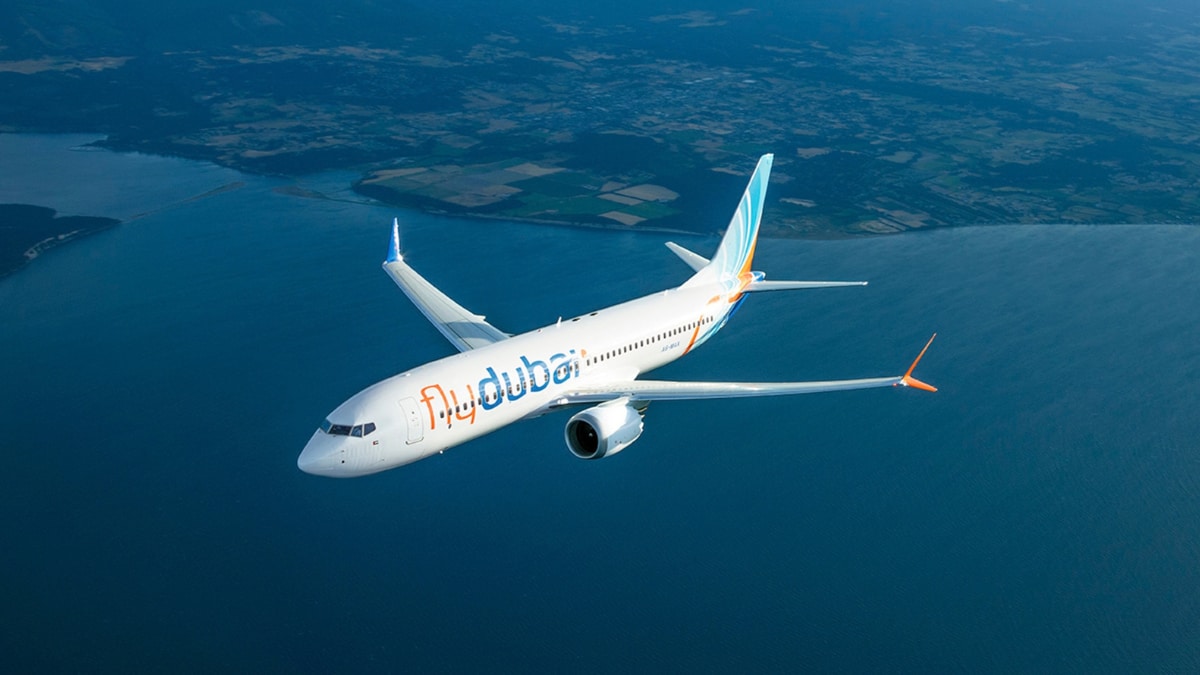
Flydubai Flight 1073, a Boeing 737 MAX 8 carrying 172 passengers and crew from Dubai to Tel Aviv's Ben Gurion Airport, was cruising smoothly at 34,000 feet. About an hour out from landing, First Officer Hamam al-Hammami turned on Captain Smit Machchhar inside the locked cockpit. He didn't smuggle a weapon through security. He grabbed the cockpit's own emergency crash axe.
Al-Hammami repeatedly struck Captain Machchhar in the head and arms, fracturing his skull, before throwing the jet into a violent dive.
Here's how close that flight came to total disaster:
- The Boeing 737 plunged from 34,000 feet down to 17,000 feet in under sixty seconds, hitting roughly 600 miles per hour.
- Overspeed stress ripped most of the plane's rudder straight off the tail.
- Israeli Air Force fighter jets scrambled after the transponder broadcast squawk code 7500—the international signal for unlawful interference—and radio contact went dead for half an hour.
Only sheer human grit stopped a mass-casualty event. Bleeding heavily and drifting in and out of consciousness, Captain Machchhar fought his way to the reinforced cockpit door and unlocked it from the inside. Passengers and cabin crew rushed in, tackled al-Hammami, and tied him up using headphone wires and cable ties. Two off-duty Flydubai pilots who happened to be riding in the cabin took the controls and miraculously landed the crippled, rudderless aircraft at Prince Sultan bin Abdulaziz Airport in Tabuk, Saudi Arabia.
Investigators later found images of former Al Qaeda leader Ayman al-Zawahiri and notorious suicide bomber Humam Khalil Abu-Mulal al-Balawi on al-Hammami's social media accounts. UAE prosecutors confirmed his goal was crashing the airliner directly into Ben Gurion Airport.
Why Al Qaeda's New Strategy Breaks Traditional Airport Security
If you've ever worked around aviation compliance or security logistics, you know the entire post-9/11 architecture was built around a single premise: keep bad guys out of the cockpit.
Reinforced Kevlar doors, secondary barriers, armed Federal Air Marshals, and strict passenger screening all assume the threat comes from row 14B. When the attacker is sitting in the right-hand pilot's seat, every single one of those defenses works for the terrorist. That bulletproof door that keeps passengers out also keeps rescuers from stopping a rogue crew member. Had Captain Machchhar lost consciousness two seconds earlier, nobody on that plane could have breached the flight deck in time.
That's exactly why Al Qaeda's propagandists latched onto Flight 1073.
According to the November 19 DHS and FBI intelligence bulletin, terrorist messaging explicitly celebrates the Flydubai incident as a blueprint for "bypassing security measures". Counterterrorism analysts point out a major shift in how the group operates today. Rather than spending years recruiting, training, and funding complex sleeper cells—which leaves digital footprints intelligence agencies can intercept—Al Qaeda is telling self-radicalized insiders not to wait for orders.
As counterterrorism researchers noted following the advisory, Al Qaeda isn't asking would-be attackers to make contact anymore. They're betting the next operative already wears a uniform, holds a security badge, or sits inside the cockpit.
The Glaring Blind Spot in Global Pilot and Staff Vetting
Checkpoint screening in the United States and major international hubs is tight. Background vetting across international borders, however, is surprisingly fragmented.
Look at the red flags surrounding al-Hammami that emerged after his arrest. Reports revealed he had previously been barred in Oman before eventually securing employment in the UAE, yet warning signs didn't cleanly follow him across employers and jurisdictions. In an industry facing global pilot shortages and rapid international hiring, airlines routinely recruit flight crews, mechanics, ramp agents, and catering staff from dozens of countries.
Once someone passes initial onboarding, continuous monitoring often drops off a cliff. Mental health evaluations, social media behavioral indicators, and cross-border intelligence sharing rarely sync in real time between foreign aviation authorities and private carriers.
Even inside the cockpit, basic equipment protocols are suddenly under scrutiny. Federal aviation regulations worldwide require crash axes on commercial jets so crews can hack through panels during an electrical fire or escape a jammed fuselage after a crash. Nobody wrote those rules assuming a first officer would use one as a melee weapon against the captain.
What Travelers and Aviation Professionals Need to Watch Right Now
Panic doesn't help anyone, and perspective matters. Tens of thousands of commercial flights take off and land safely every single day. The November 19 FBI, DHS, and TSA advisory specifically noted that lone actors inspired by foreign terror groups rarely mobilize immediately on command—though when they do, they move fast and without warning.
For the aviation sector, closing this gap requires immediate operational shifts rather than more passenger theater:
- Enforce strict two-person cockpit rules without exceptions. Many airlines adopted rules requiring a flight attendant to enter the flight deck whenever one pilot steps out for the restroom. That prevents a lone pilot from locking the door, though it doesn't stop a physical ambush while both pilots are seated. Airlines need stricter behavioral peer-reporting programs so crews actually speak up when a colleague shows signs of extremism or severe instability.
- Overhaul cross-border credentialing. Aviation regulators must close the data gaps between national intelligence services and airline HR departments. A security flag in one Gulf or European state shouldn't vanish simply because a pilot applies to a carrier in another country.
- Train flight attendants and deadheading crews for flight-deck emergencies. Flight 1073 survived because a wounded captain unlocked the door, passengers reacted instantly instead of freezing, and two off-duty pilots happened to be onboard. Cabin crews need updated drills covering cockpit incapacitation and rapid restraint protocols.
If you're a frequent flyer, you don't need to cancel your trips, yet paying basic attention during flights isn't paranoia—it's smart travel. Keep your seatbelt fastened whenever you're seated, since violent maneuvers like Flight 1073's 17,000-foot drop turn unbuckled passengers into projectiles. Stay off noise-canceling headphones during takeoff and landing, know where your nearest exits are, and trust your instincts if crew behavior ever feels genuinely erratic.
Al Qaeda wants airlines to spend millions chasing ghosts at the terminal gate while ignoring the people already past security. Until aviation regulators fix how insiders are vetted and monitored across borders, the weakest link in flight safety won't be the passenger line—it'll be the hiring pipeline.
For further reporting on the federal bulletin, see the coverage of the DHS, FBI, and TSA aviation warning, which outlines what intelligence officials told airlines ahead of the holiday rush.


