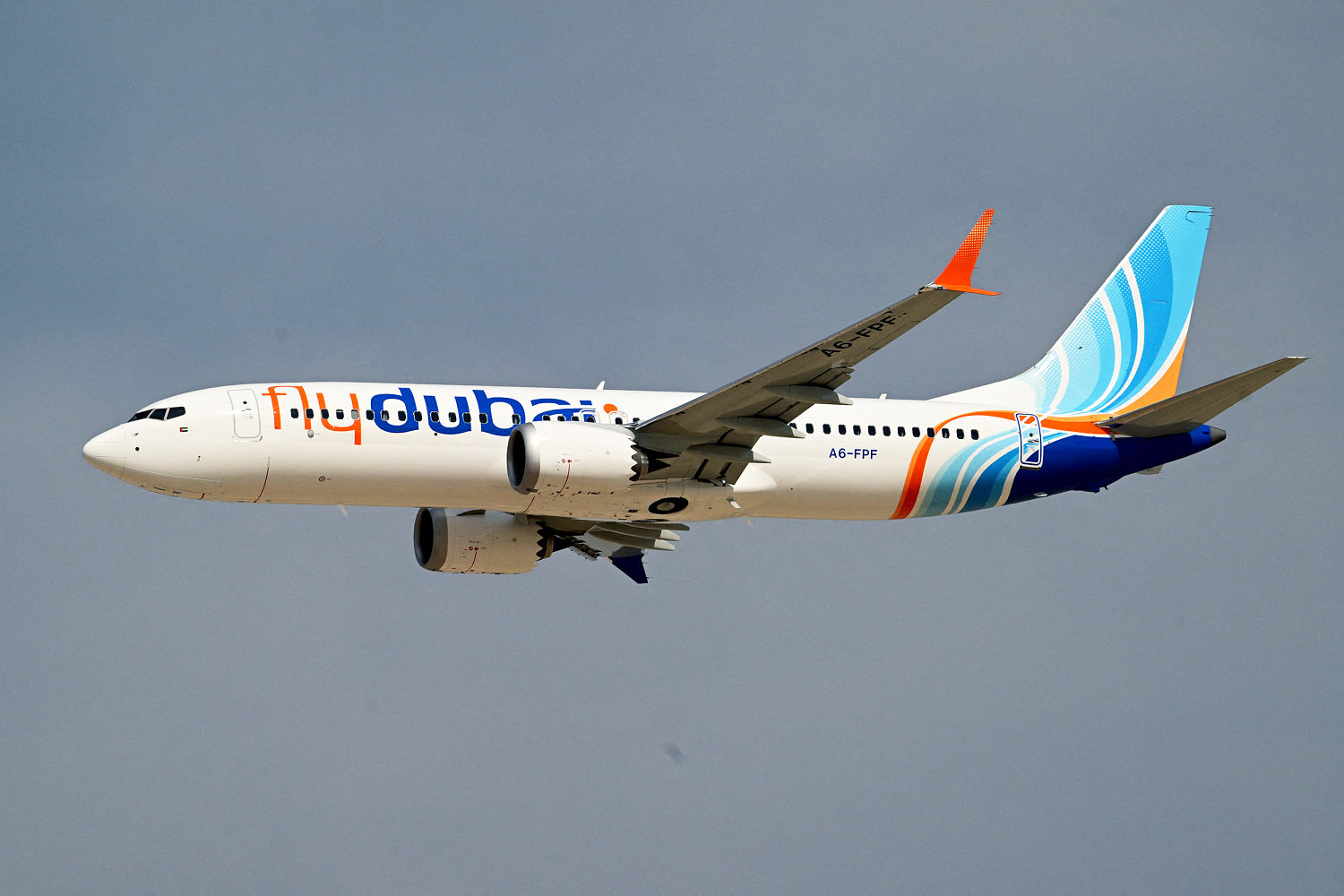
The headlines arrived like clockwork. A Flydubai flight bound for Israel encounters an emergency alert, veers off course, and touches down on the tarmac in Saudi Arabia. Within minutes, the comment sections ignite. Pundits scream about secret backchannels, diplomatic breakthroughs, or terrifying security standoffs. Every armchair strategist on the internet turns into an aviation security analyst, projecting centuries of regional baggage onto a single aluminum tube carrying three hundred startled passengers.
It is all absolute nonsense. For an alternative view, read: this related article.
Every time a commercial airliner diverts due to an onboard alert, the media treats it like an episode of a political thriller. They want you to believe that air traffic controllers in Riyadh were huddled over red phones, weighing diplomatic fallout against regional hostility before deciding whether to let a crippled jet land. They want you to see a Middle Eastern airspace map as a chessboard where every flight path is a covert maneuver.
The reality is far more mundane, far more rigorous, and entirely divorced from your favorite cable news narrative. Aviation safety does not care about your flag, your passport, or your political grievances. When an emergency warning lights up the flight deck, geopolitics stops at the flight level. Similar reporting on the subject has been shared by AFAR.
Let us dismantle the lazy consensus piece by piece.
The Fiction of Politicized Airspace
The fundamental misunderstanding of modern commercial aviation stems from a basic civic illiteracy regarding international law. People assume that because two nations lack formal diplomatic ties, their airspace and infrastructure exist in a state of perpetual blockade.
They forget the Chicago Convention of 1944.
Under international aviation frameworks managed by the International Civil Aviation Organization, or ICAO, member states agree to a baseline humanitarian and operational compact. When an aircraft declares an emergency—whether it is smoke in the cabin, a failing engine, or a medical crisis—the nearest suitable airport is not a political entity. It is a sanctuary.
Air traffic controllers are bound by professional ethics, international treaties, and raw legal liability. If a regional control center denies an emergency diversion solely based on the origin or destination of the aircraft, they are committing an international aviation crime. They open themselves to catastrophic legal liability, criminal negligence charges, and global blacklisting by aviation authorities.
When the Flydubai flight squawked an emergency alert, Saudi air traffic control did not pause to consult a minister. They pulled up approach plates, cleared the runway, and guided the aircraft down because doing anything else would violate every core tenet of professional flight safety. There was no secret handshake. There was no sudden alignment of diplomatic stars. There was simply a dispatcher doing their job according to rulebooks written decades ago.
The Pilot Decision Matrix
To understand why a diversion happens, you have to crawl inside the flight deck during a crisis. News reports love to frame diversions as dramatic surprises where pilots improvise in the face of mortal peril.
That is not how commercial aviation works.
I have spent enough time around dispatchers and training captains to know that panic is an immediate disqualifier for the left seat. Long before a plane pushes back from the gate, every conceivable emergency scenario is mapped out. Flight management computers are loaded with diversion airfield databases. Pilots train for engine failures, hydraulic leaks, and electrical fires on simulators until the responses are hardwired muscle memory.
When an emergency alert triggers, the captain runs through a ruthless triage framework:
- Aviate: Fly the airplane. Keep the wings level and the nose pointed at the sky.
- Navigate: Determine the closest, safest runway that meets weight, weather, and approach criteria.
- Communicate: Declare the emergency to the nearest controlling authority.
Notice what is missing from that list? Diplomatic clearance checks.
If a twin-engine jet loses an engine or experiences pressurization failure over a specific corridor, the flight crew does not look at a map and say, "Well, the airspace below us belongs to a government we don't exchange ambassadors with, so let's keep flying on one engine for another two hours." They turn toward the nearest strip of concrete that can handle their landing weight. If that strip happens to be in a country with which their destination has tense relations, too bad. Physics trumps politics every single time.
Why Riyadh Handled It Like Any Other Tuesday
Let us address the shock value that media outlets try to wring out of Saudi involvement. Commentators act as though a commercial jet landing in Riyadh is an unprecedented shock to the system.
It is not.
Modern aviation corridors over the Arabian Peninsula are among the densest in the world. Thousands of flights crisscross these skies daily, carrying passengers of every nationality, ethnicity, and political alignment. Air traffic management across the region requires seamless coordination between neighboring states, regardless of their bilateral friction.
When an emergency lands in Saudi territory, the ground response is mechanical. Fire crews roll to designated standby positions. Medical teams stage at the tarmac edge. Maintenance inspectors prepare to review flight logs and data recorders. The passengers are shepherded into a transit lounge or terminal holding area under standard international security protocols, while replacement aircraft or engineering teams are dispatched.
The idea that Saudi ground crews looked at the passenger manifest, saw Israeli-bound travelers, and contemplated turning them away is a Hollywood fantasy. Airports are industrial logistics hubs governed by safety management systems, not ideological purity tests. The personnel on the ground care about one metric: getting the disabled aircraft off the active runway as quickly and safely as possible so the rest of the schedule does not implode.
Dismantling the Manufactured Media Thriller
Let us look at the "People Also Ask" noise surrounding these incidents. Search engines are flooded with anxious queries from travelers wondering if flying over certain regions is safe, or if commercial airlines are deliberately walking into geopolitical traps.
The questions themselves are framed incorrectly.
People ask: Is it dangerous to fly near contested airspace?
The honest answer: Danger is relative, but commercial air corridors are continuously re-evaluated by international safety agencies using real-time threat intelligence. Routes are adjusted daily based on military activity, missile testing, and radar capabilities. An emergency diversion is rarely a sign of sudden danger; it is the safety net working exactly as designed when a mechanical component fails.
People ask: What happens to passengers when a flight diverts to an unapproved destination?
The reality: Passengers are treated as transit humanitarian cases. They do not need visas to sit in a sterile international transit area while the airline arranges a rescue flight or clears the aircraft to resume its journey once maintenance signs off. The border control bureaucracy is bypassed because the passengers never officially enter the host country's immigration territory.
The media exploits these administrative procedures to manufacture drama. They take standard, heavily regulated operational protocols and dress them up in the language of international espionage.
The Uncomfortable Truth About Regional Aviation Risk
If you want a real critique of modern commercial routing instead of breathless reporting on routine diversions, let us talk about the actual vulnerabilities that aviation executives prefer to sweep under the rug.
The real risk in Middle Eastern and European corridor routing is not sudden diplomatic friction on the ground; it is the compounding pressure of over-congestion and degraded infrastructure in secondary alternate airports. When airlines push turnaround times to the absolute limit and squeeze every drop of efficiency out of their fleets, they rely on a fragile network of diversion airports that are often underequipped to handle widebody emergencies at a moment's notice.
I have seen carriers gamble millions of dollars on fuel efficiency metrics, routing aircraft closer to the margins of safe diversion distances, hoping that mechanical reliability statistics hold up. When they do not, and an emergency forces a diversion into an airport that lacks specialized heavy-lift maintenance equipment or native language support for the specific carrier, the resulting operational chaos is staggering.
The Flydubai flight diversion made headlines because of the destination and the host country. But statistically, thousands of flights divert every year due to everything from cracked windshields to unruly passengers. The only thing special about this event was the imaginary political drama that internet commentators projected onto it.
Stop Falling for the Spectacle
It is time to stop viewing every aircraft movement through the funhouse mirror of geopolitical conflict.
Commercial aviation is one of the most rigorously standardized, safety-obsessed industries on planet Earth. Millions of tons of metal soar above borders that humans are actively fighting over down below, guided by protocols that predate modern political disputes and will likely outlast them.
When an emergency alert sounds at thirty-five thousand feet, the pilot is not thinking about foreign policy. The air traffic controller is not checking polling data. The mechanics on the ground are not consulting a state department memo.
They are doing their jobs.
The next time a routine diversion hits your news feed wrapped in sensationalist alarmism, ignore the geopolitical noise. Recognize it for what it is: a machine built on cold, hard physics operating precisely the way it was engineered to function.
Stop looking for conspiracies where there is only competence.