A frantic voice crackling through a radio transmitter is the last thing any air traffic controller wants to hear. When that voice belongs to a pilot who knows his aircraft is failing just miles from Austin, the situation shifts from a technical challenge to a tragedy in seconds. The recent crash near Austin that claimed five lives isn't just another headline about a small plane going down. It’s a wake-up call about the thin line between a routine flight and a catastrophic engine failure in the general aviation world.
You’ve probably seen the snippets of the ATC audio. It’s haunting. But to understand what actually happened, you have to look past the "frantic" label the media loves to use. You need to look at the mechanics of the flight, the specific pressures of flying into a busy hub like Austin-Bergstrom, and the unforgiving nature of a stall-spin scenario at low altitudes.
The Reality of the Austin Crash Site
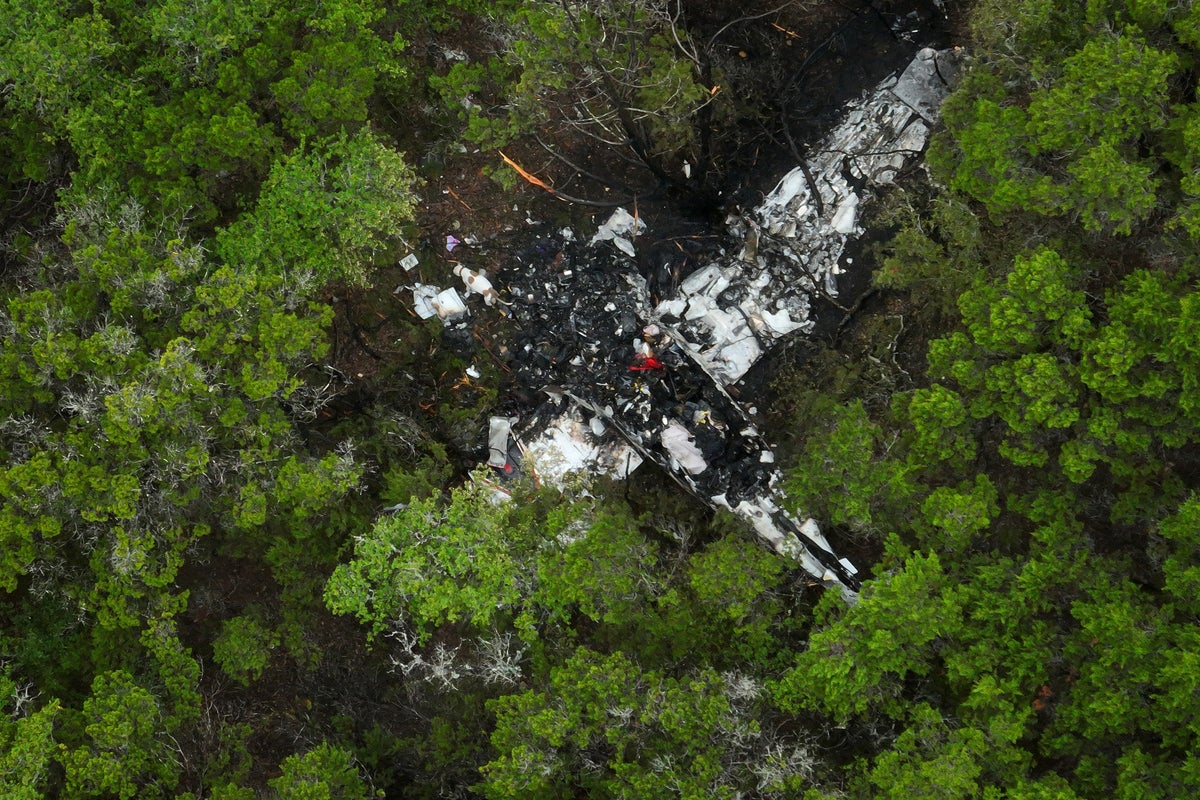
The plane went down in a wooded area, missing residential structures but leaving no survivors. Five people were on board. They weren't just names on a manifest; they were part of a community. When a private aircraft like this crashes, the ripple effects hit hard.
Why did it happen there? Austin’s terrain isn't mountainous, but it’s deceptive. If you’re losing power and trying to stretch a glide to a runway, every foot of altitude is a second of life. The pilot was clearly trying to make it to the pavement. He didn't.
Investigations by the National Transportation Safety Board (NTSB) usually take a year or more to wrap up. However, the preliminary data points to a sudden loss of power followed by a desperate attempt to maintain airspeed. In aviation, speed is life. When you lose the engine, you become a glider. If you try to pull the nose up to "reach" the runway, you lose speed. When you lose speed, the wing stops lifting. You stall. You fall. It’s physics, and it’s brutal.
What the ATC Audio Actually Tells Us
Most people hear the panic. Pilots hear the struggle for control. The pilot’s "frantic" call wasn't just fear; it was a high-speed mental calculation being broadcast in real-time. He was dealing with a "task saturation" event.
Think about the last time you were stressed. Now imagine you're 2,000 feet up, your engine just turned into a heavy paperweight, and you have four lives behind you. You have to:
- Fly the airplane (keep it level and fast enough).
- Navigate (find a place to land).
- Communicate (tell ATC what's happening).
Usually, communication is the first thing that should go out the window. "Aviate, Navigate, Communicate" is the golden rule. In this case, the pilot was trying to do all three under extreme duress. The urgency in his voice suggests that the mechanical failure was total and immediate. There was no "rough running" engine phase. It was likely a "bang and silence" moment.
Small Planes vs Commercial Jets
There is a massive gap in safety between a Southwest flight into Austin and a private five-seater. Commercial jets have redundant everything. Two engines, two pilots, multiple hydraulic systems. Small planes? Not so much.
Many of the aircraft used in general aviation are decades old. They’re maintained well, sure, but they don’t have the safety margins of a Boeing 737. If a single-engine plane loses its power plant, options shrink to zero almost instantly. Even twin-engine small planes are notoriously difficult to handle when one engine fails; they often want to roll over and dive unless the pilot is perfectly trained for that exact second of failure.
This crash highlights a growing concern in the flying community: the aging fleet. We are flying 40-year-old airframes with 40-year-old engine designs. While technology has improved with GPS and glass cockpits, the heavy metal parts spinning the propeller are still subject to the same old wear and tear.
The Danger of the Impossible Turn
In flight training, we talk about the "impossible turn." This happens when an engine fails shortly after takeoff. The instinct is to turn back to the runway. It’s a killer.
Turning creates drag. Drag kills speed. If you’re low and slow, turning back is often a death sentence. We don't know the exact altitude of this aircraft when the trouble started, but the proximity to the airport suggests they were in that "danger zone" where choices are limited to "bad" and "worse."
If you’re a passenger in a small plane, you trust the person in the left seat. But the person in the left seat is fighting a battle against gravity that they sometimes cannot win, regardless of their skill level. The Austin crash shows that even with an airport in sight, the distance can be too far.
Maintenance Records and the Paper Trail
The NTSB will look at the logs. They'll check every oil change, every spark plug replacement, and every annual inspection this plane ever had. Usually, these crashes aren't caused by a single bolt snapping. They’re caused by a chain of events.
Maybe a fuel line was brittle. Maybe a cylinder had a hairline crack that survived the last inspection. Or maybe, just maybe, it was "bad gas." Contaminated fuel is a silent killer in GA (General Aviation). If water gets into the tanks, the engine will cough and quit at the worst possible moment.
How We Should View Aviation Safety Now
Don't let this scare you out of the sky, but let it make you cynical. If you fly private, ask questions. Know the pilot’s experience level. Ask when the last major engine overhaul was.
The five people lost near Austin deserved to get home. The best way to honor that loss is to stop treating these incidents as "freak accidents." They are usually predictable outcomes of mechanical or human limits being pushed too far.
If you're a pilot, practice your power-off landings until they're boring. If you're a frequent flyer, pay attention to the weather and the "vibe" of the flight operations you use. Safety isn't a checklist; it's a mindset that prioritizes the "what if" over the "let's go."
If you want to keep track of the official findings, monitor the NTSB’s aviation accident database. Search for the tail number once it's officially released in the preliminary report. It’ll give you the raw data without the media fluff. Stay informed, stay skeptical, and always have an exit strategy when you’re off the ground.