In the sterile, climate-controlled silence of a specialized facility in the heart of Russia, there are canisters. They are heavy, unassuming, and lead-lined. Inside them sits a substance that possesses the power to light a city or vaporize it: enriched uranium. For years, these canisters have been the physical manifestation of a geopolitical chess match that most of us only ever see as scrolling tickers on a news broadcast. But for a diplomat sitting in a dimly lit office in Tehran or a weary negotiator in Washington, those canisters represent something much more visceral. They represent time.
The clock is ticking.
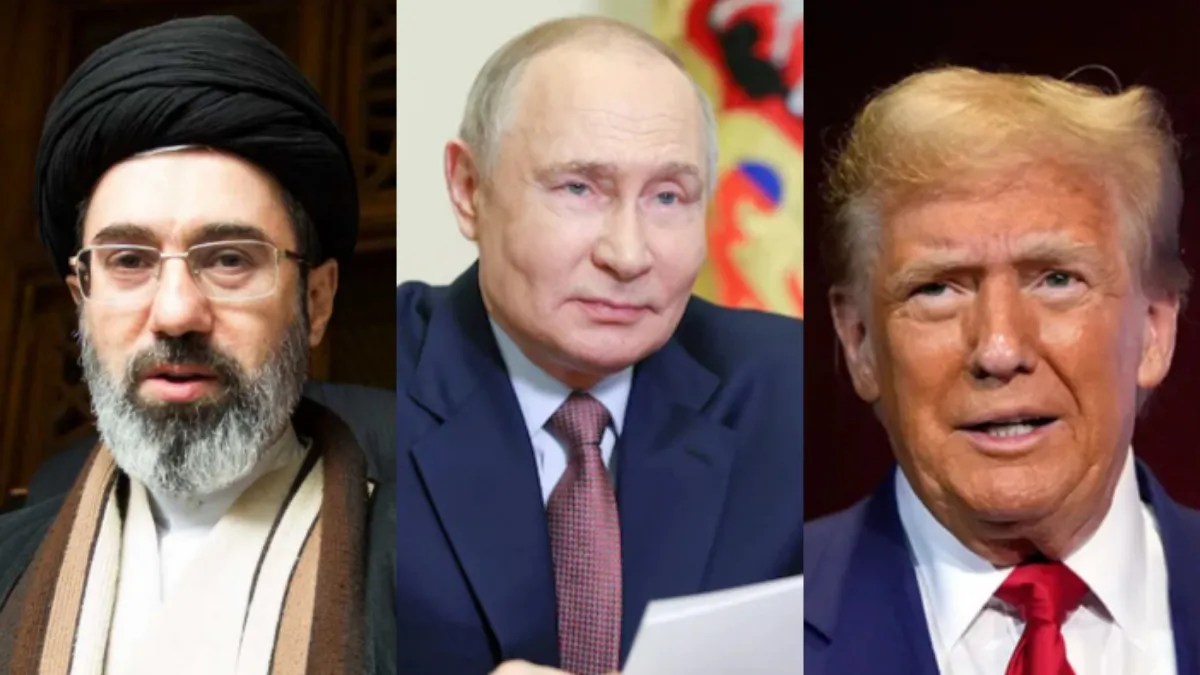
Moscow has stepped back onto the stage with a proposal that feels like a throwback to a more hopeful era of brinkmanship. The offer is deceptively simple. Russia is willing to take Iran’s stockpile of enriched uranium off its hands, effectively "warehousing" the risk. It is a middle-path solution designed to prevent a total meltdown of international relations. To understand why this matters, you have to look past the technical jargon of "centrifuges" and "purity levels" and look at the human exhaustion behind the scenes.
Consider a hypothetical mid-level official in the Iranian nuclear program. Let’s call him Ahmad. Ahmad has spent a decade watching his country’s economy suffocate under the weight of sanctions. He sees the fluctuating prices of bread and the anxious faces of his neighbors. To him, the uranium isn't just a scientific achievement; it is the only leverage his nation has left. Giving it up feels like a surrender. Keeping it feels like an invitation to a storm.
Now, imagine his counterpart in the United States. Sarah is a career analyst who has seen three different administrations try and fail to close this Pandora’s box. She knows that every gram of uranium Iran enriches brings the world closer to a point of no return. She is tired of the rhetoric. She wants a solution that doesn't involve a map covered in strike zones.
Russia’s proposal sits right between Ahmad’s pride and Sarah’s fear.
By acting as the custodian of the uranium, Russia offers a face-saving exit for both sides. Iran doesn't have to "destroy" its work; it simply moves it. The United States doesn't have to trust Tehran blindly; they only have to trust that Russia wants to remain the indispensable power player in the Middle East. It is a cynical kind of trust, built on mutual interests rather than friendship.
But why now?
The timing isn't accidental. The world is currently a jagged mosaic of overlapping crises. The conflict in Ukraine has shifted Russia's standing on the global stage, making its role as a "mediator" in the Middle East a vital piece of its own survival strategy. Moscow wants to prove it is still the adult in the room, the one power capable of talking to everyone when no one else is speaking. This isn't just about nuclear physics. It’s about relevance. It’s about the desire to be the gatekeeper of global stability.
The technical reality is staggering. Iran has been pushing the limits of enrichment, moving closer to the ninety percent threshold that signals a weapons-grade capability. At sixty percent, you are already playing with fire. The math is cold and unforgiving.
$$235_{U} + n \rightarrow \text{Fission} + \text{Energy}$$
That simple equation governs the fate of millions. If the uranium stays in Iran, the pressure on Israel and the West to take "decisive action" becomes an almost unbearable weight. If the uranium moves to Russia, the pressure valve is released. Suddenly, there is room to breathe. There is room for the diplomats to sit down without the immediate threat of a mushroom cloud hanging over the table.
History tells us that these kinds of deals are fragile. They are built on shifting sands. In 2015, the world celebrated the Joint Comprehensive Plan of Action (JCPOA) as a triumph of reason. It felt like the end of a long, dark chapter. Then, the ink dried, the political winds shifted, and the agreement was torn up. The betrayal felt by those who spent years negotiating it was deep and personal. It wasn't just a policy failure; it was a collapse of faith.
When Russia offers to take the uranium today, it is met with a wall of skepticism. Washington wonders if Moscow is simply looking for another bargaining chip to use in its own standoff with the West. Tehran wonders if Russia will actually return the material if the deal falls through, or if they are simply trading one master for another.
The invisible stakes are the lives of people who will never see the inside of a centrifuge hall. It is the student in Isfahan who wants to study abroad but can't get a visa. It is the family in Tel Aviv that looks at the sky with a nagging sense of dread. It is the American taxpayer who is weary of "forever wars" and the trillion-dollar price tags that come with them.
We often talk about these issues as if they are abstract puzzles to be solved by men in expensive suits. They aren't. They are raw, emotional struggles over safety, sovereignty, and the right to a future. The Russian proposal is a bridge. It is narrow, swaying in the wind, and spans a terrifying drop. But it is the only bridge currently standing.
The alternative is a descent into a darkness that we have spent eighty years trying to avoid. We have become comfortable in the shadow of the atom, forgetting how hot the sun actually is. We treat "nuclear proliferation" as a buzzword until the moment it becomes a reality.
If this deal moves forward, it won't be because of a sudden burst of goodwill. It will be because everyone involved looked into the abyss and realized they weren't ready to jump. It will be a victory of pragmatism over passion.
The canisters are waiting. They are cold to the touch, heavy with the weight of potential. Whether they stay in the bunkers of Iran or begin a long journey north to Russia will determine the shape of the next decade.
Silence often precedes a storm, but in the world of high-stakes diplomacy, silence is also the sound of a deal being whispered into existence. The world is leaning in, trying to catch the words, hoping that for once, the courier of the atom is bringing a message of restraint rather than a promise of fire.
In a small room somewhere, a pen is hovering over a map. The ink hasn't touched the paper yet. The air is thick with the scent of old coffee and the hum of a ventilation system. A man looks at a woman across a table. They don't smile. They don't shake hands. They just look at the canisters, and for a fleeting, fragile moment, they agree to wait.