Power does not always arrive with the thunder of falling masonry or the roar of an insurrection in the public square. More often, it arrives in a whisper, slipping quietly down the corridor of an administrative building, locking a deadbolt from the inside, and drawing the blinds against the morning light. In Caracas, that quiet has a name. It is the hum of fluorescent tubes in a basement interrogation cell, the low vibration of a heavy door sealing shut, and the deliberate, calculated erasure of human dignity.
To understand what happens when a state turns its machinery inward against its own people, one must look past the geopolitical ticker tape and the distant applause of ideological assemblies. You have to look at the floorboards.
Consider a hypothetical citizen named Elena. She is not a guerrilla fighter, nor a seasoned politician maneuvering for a coup. She is an accountant who made the fatal error of keeping a ledger that did not match the official fiction of scarcity. In a system built on fragile narratives, a balanced spreadsheet that defies state propaganda is viewed not as an accounting achievement, but as an act of treason. When the authorities came for Elena, they did not present a warrant stamped by an independent judiciary. They presented momentum. They presented the cold, unyielding gravity of an apparatus that had long since forgotten the distinction between governance and possession.
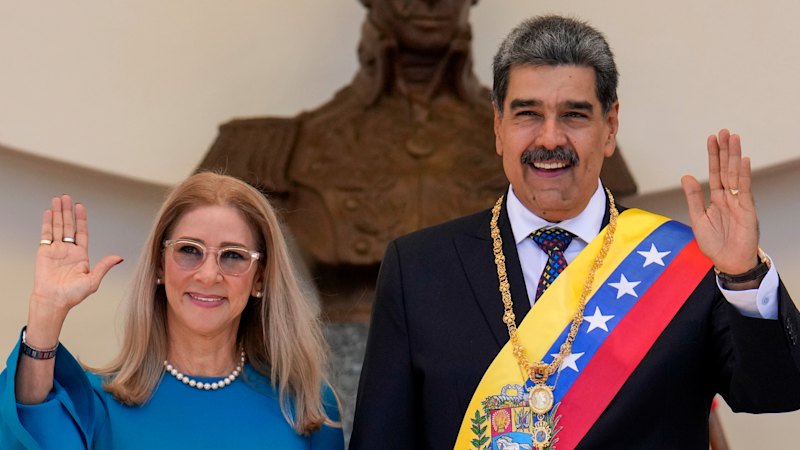
The recent international legal scrutiny focusing on Nicolás Maduro and his inner circle—including documented allegations of systematic torture, electric shocks, and psychological devastation orchestrated as a matter of policy—forces us to confront an uncomfortable truth about modern authoritarianism. It is not merely a failure of policy. It is an architectural design.
When international investigators and human rights monitors piece together testimonies from survivors, a chilling pattern emerges. This is not the chaotic brutality of rogue guards acting out in the heat of a moment. It is bureaucratic. It is structured. It involves medical professionals who check pulses not to save lives, but to ensure a prisoner can endure another round of interrogation. It involves legal frameworks warped into funnels, guiding dissidents into subterranean holding facilities where the outside world ceases to exist.
We struggle to process these realities because our daily lives are insulated by the mundane. We worry about grocery prices, school drop-offs, the weather. We assume that behind every locked door lies a baseline of human rights guaranteed by the invisible social contract of the modern world. But that contract is paper-thin. When a government decides that its own survival is coterminous with absolute obedience, the social contract is shredded, strip-mailed, and burned.
Think about the sensory landscape of such a place. The absence of natural light for weeks at a time. The smell of bleach masking copper. The rhythmic, agonizing unpredictability of a taser applied not to subdue a threat, but to extract a confession about a meeting that never happened. These are not abstract political data points. They are the deliberate snuffing out of individual human consciousnesses, one by one, in rooms designed so that no scream can reach the street.
History teaches us a recurring lesson about regimes cornered by their own economic and moral bankruptcy: as legitimacy erodes, the volume of coercion must increase. When food disappears from shelves, fear must be manufactured in its place. When foreign reserves vanish, paranoia becomes the only currency left in the state treasury.
Yet, beneath the machinery of terror, a stubborn counter-narrative persists. It lives in the whispered phone calls of families trying to locate a vanished relative. It lives in the meticulous smuggling of medical records across heavily guarded borders. It lives in the quiet defiance of ordinary citizens who refuse to let the names of the disappeared fade into administrative ledgers marked "pending."
We are left to grapple with the mechanisms of accountability in a fractured global order. How do you judge a regime that views international law as a polite suggestion from a foreign theater? How do you restore dignity to those who have been systematically unmade in the dark?
There is no neat resolution to this story, no comforting paragraph that ties the threads into a tidy bow. The machinery of oppression, once set in motion, grinds heavily against the human spirit long after the headlines have shifted to the next crisis. But the light does not die easily in the basement. It lingers in the memory of those who survived, in the unyielding persistence of the truth, and in the quiet, terrifying knowledge that no wall, no matter how thick, can permanently lock out the reckoning that eventually comes for the architects of silence.