The operational efficacy of international security frameworks depends entirely on their structural alignment with contemporary distributions of state power. When the United Nations Security Council fails to adjust its historical directives to match shifts in regional dynamics, a functional disconnect occurs. This gap transforms obsolete institutional mandates into instruments of regional friction rather than mechanisms for conflict resolution. The diplomatic confrontation between New Delhi and Islamabad at the United Nations on June 23, 2026, highlights this dynamic, exposing a deep systemic vulnerability within the architecture of the UN Charter itself: the unmonitored persistence of legacy mandates.
To evaluate why historical security frameworks deteriorate over time, we must analyze the structural mechanics of the UN Charter. The foundational error in contemporary multilateral diplomacy lies in treating non-binding, context-specific dispute recommendations as permanent international law. This analytical failure stems from conflating Chapter VI and Chapter VII of the UN Charter.
The Dual-Track Framework of Security Council Mandates
The Charter separates the preservation of peace into two distinct legal and operational tracks, each carrying entirely different levels of authority and enforcement capability.
Chapter VI: Pacific Settlement of Disputes
This chapter operates on the principle of consent-based mediation. Under Chapter VI, the Council recommends specific pathways for dispute resolution, including negotiation, inquiry, mediation, conciliation, and arbitration. Crucially, these frameworks are designed to be temporary, flexible, and dependent on the political context that generated them. They do not possess enforcement mechanisms. When local political realities evolve or are altered by bilateral treaties, the underlying baseline for mediation shifts, rendering older recommendations practically obsolete.
Chapter VII: Action with Respect to Threats to the Peace
This track governs binding enforcement actions. Resolutions passed under Chapter VII address active breaches of peace or overt acts of aggression. These mandates apply structural economic sanctions, travel bans, asset freezes, or direct military intervention. Because Chapter VII interventions react to immediate, measurable breakdowns of international security, non-implementation carries clear, systemic costs to the credibility of global governance.
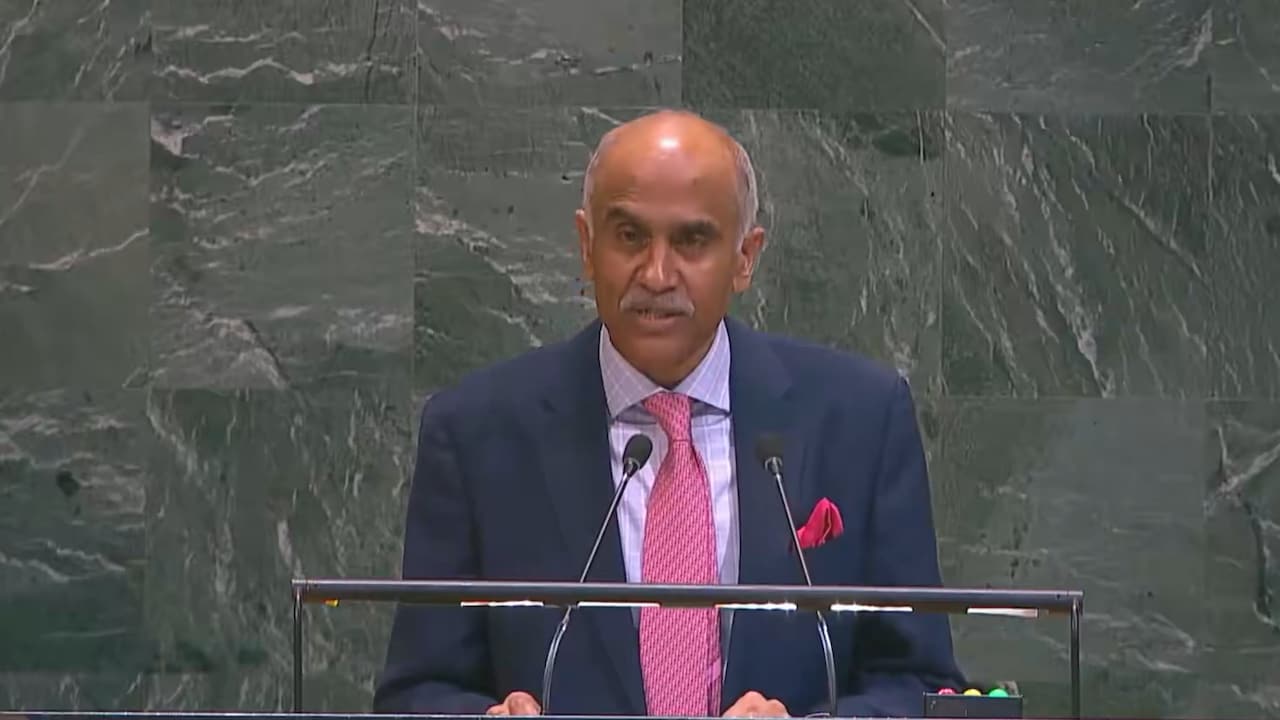
The strategic friction between India and Pakistan during the UNSC Arria-formula meeting on June 23, 2026—co-chaired by Pakistan and China—illustrates the structural risk of failing to separate these two tracks. By attempting to use decades-old UN references to question the status of Jammu and Kashmir, Islamabad relied on a common diplomatic error: trying to apply historical Chapter VI mediation frameworks to an internal territory that has been consolidated through domestic constitutional evolution and subsequent bilateral agreements.
The Cost Function of Institutional Inertia
The accumulation of obsolete mandates creates a continuous drag on the efficiency of global security organizations. This systemic decay occurs through three distinct operational bottlenecks.
- The Dilution of Diplomatic Capital: When international bodies dedicate floor time and resources to legacy disputes that have been overtaken by domestic legal realities, they reduce their capacity to address active, modern conflicts.
- The Incentivization of Revisionist Rhetoric: The absence of a formal expiration or review mechanism for historical resolutions allows state actors to leverage outdated text to avoid direct bilateral negotiations.
- The Structural Double Standard: The UN-80 framework enforces strict mandate implementation reviews across General Assembly initiatives to maximize efficiency. Excluding Security Council mandates from these identical review standards insulates historical security decisions from modern operational realities, creating a permanent accountability gap.
This institutional inertia is compounded when a state actor serving as an elected, non-permanent member of the Council misuses a neutral chairing position to pursue a specific geopolitical agenda. Such actions undermine the perceived neutrality required for effective multilateral dispute resolution.
The Strategic Path toward Structural Re-indexing
Resolving the structural mismatch within the UN Security Council requires shifting from ad-hoc diplomatic rebuttals to a systematic update of institutional governance.
A realigned multilateral strategy must establish an explicit review process for all legacy Chapter VI mandates. If a mediation framework remains unexecuted for a designated multi-decade period, it must automatically face a high-threshold re-authorization vote by the current Council membership. This mechanism forces historical resolutions to earn their continued legal relevance under modern geopolitical configurations.
Furthermore, stabilizing regional security in South Asia requires an explicit return to bilateral framework agreements, such as the Simla Agreement. Bilateralism internalizes the costs and benefits of negotiation between the primary stakeholders, removing the structural distortion introduced when external, unaligned actors use international forums for domestic political messaging.
Ultimately, international security architectures cannot maintain authority if their legal mandates remain frozen in the power distribution of 1945. Lacking systematic reform to phase out obsolete mandates, global forums risk becoming performance spaces for historical grievances rather than practical instruments for maintaining international stability.