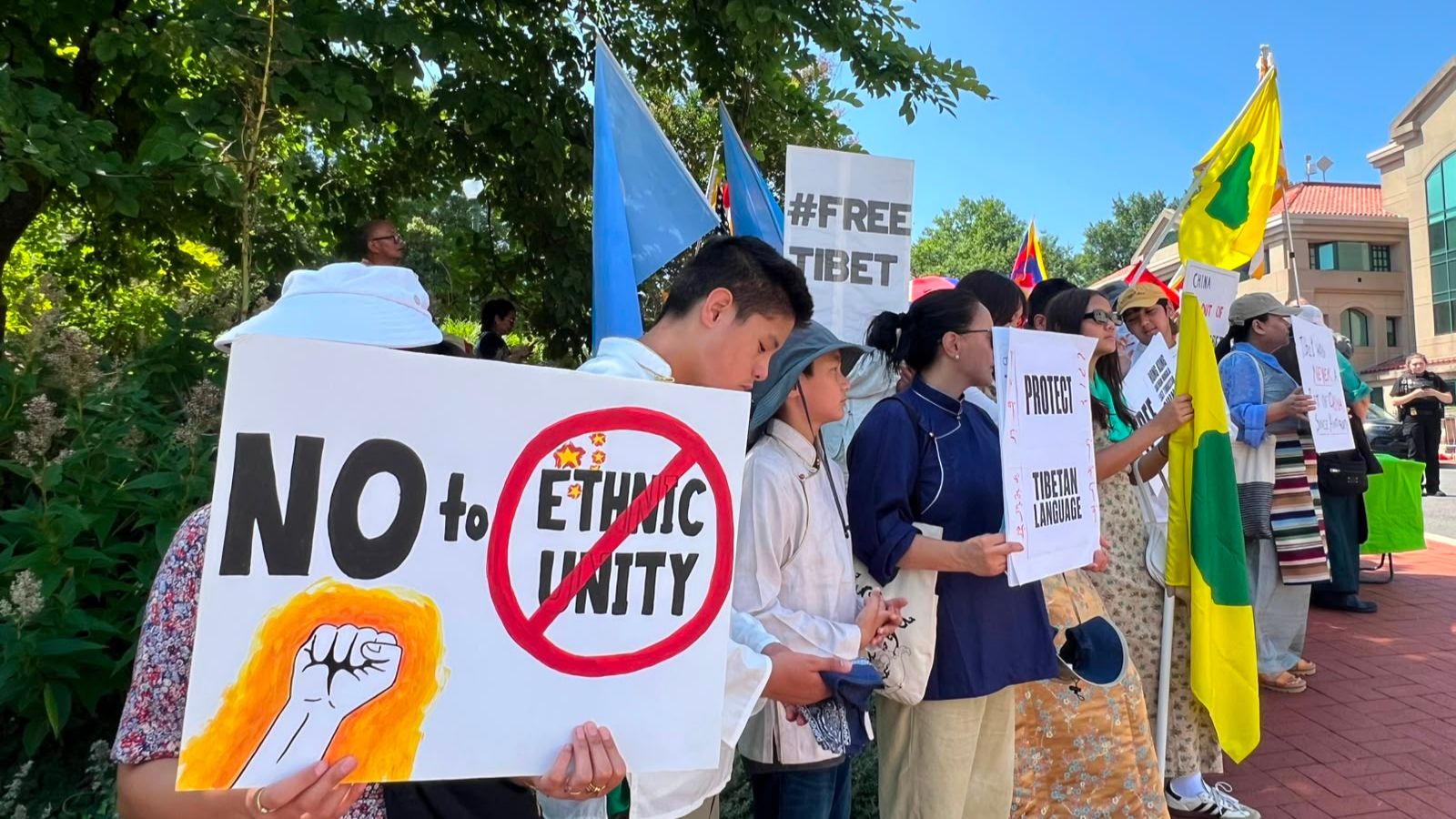
The enactment of the Law on Promoting Ethnic Unity and Progress marks a structural pivot from de facto assimilation strategies to a codified, statutory architecture of state-enforced monocultural integration. Historically, governance of the autonomous regions—predominantly Xinjiang, Tibet, and Inner Mongolia—relied on regional directives, targeted security campaigns, and localized economic incentives. The current legislative framework elevates these disparate mechanisms into a unified national security mandate, creating binding legal obligations for individual citizens, corporate entities, and global diaspora networks.
By analyzing the specific mechanisms of this statute, we can deconstruct the strategic intent of the Chinese Communist Party (CCP) and identify how the law institutionalizes structural control, changes the risk profile for international enterprises, and formally expands state jurisdiction beyond geographic borders. Also making headlines in related news: Why the Latest Kyiv Barrage Changes Everything for Ukraine and Russia.
The Tripartite Framework of Statutory Sinicization
The law operates through three highly integrated operational vectors designed to systematically dismantle localized cultural infrastructure and replace it with a centralized state identity.
1. Mandatory Pedagogical Realignment
The statute codifies preschool and primary education as the primary engine for cultural homogenization. It mandates that Mandarin Chinese serve as the structural foundation for all educational instruction, public administration, and civic discourse. More details regarding the matter are covered by NBC News.
- The Separation Mechanism: By institutionalizing state-run boarding school systems, the state disrupts the intergenerational transmission of minority languages and cultural values.
- The Ideological Mandate: Parents face explicit legal obligations to instruct children to support the ruling party and internalize the centralized national identity. Failure to comply shifts parental guidance from a private domain into an actionable legal violation under community surveillance frameworks.
2. Demographic and Structural Integration
Rather than relying purely on administrative coercion, the law utilizes structural urban planning and economic levers to dilute concentrated ethnic minority enclaves.
- Socio-Spatial Engineering: Local authorities are legally directed to use housing allocation, public infrastructure development, and community design to enforce residential cohabitation between the Han majority and minority groups.
- Economic Alignment: Access to capital, employment opportunities, and corporate advancement is structurally tied to proficiency in the national language and active alignment with state-defined "unity metrics."
3. Digitized Peer-to-Peer Surveillance
The framework formalizes community-level monitoring by creating a legal right—and effectively a civic duty—for individuals to report conduct deemed harmful to ethnic solidarity. This legalizes a crowdsourced surveillance apparatus. By embedding reporting mechanisms into daily digital interactions and neighborhood structures, the state lowers the operational cost of monitoring while increasing the psychological penalty for non-conformity.
Legal Extraterritoriality and the Mechanics of Transnational Suppression
The most significant structural escalation within the statute is found in provisions targeted at entities outside the borders of mainland China. The law asserts jurisdiction over international organizations and individuals deemed to have insulted, suppressed, or undermined the state's vision of ethnic cohesion.
+---------------------------------------------------------------------------------+
|                             GLOBAL DIASPORA & INGOs                             |
|  (Engage in advocacy, documentation, or public criticism of minority policies)  |
+---------------------------------------------------------------------------------+
                                        |
                                        v  [Triggers Article 63 Jurisdiction]
+---------------------------------------------------------------------------------+
|                         CROSS-BORDER REPRISAL MECHANISM                        |
|                                                                                 |
|  1. Transnational Coercion: Proximate intimidation of domestic family members   |
|  2. Jurisdictional Capture: Extradition risks via third-party treaty nations     |
|  3. Financial Invalidation: Asset freezes and commercial blacklisting           |
+---------------------------------------------------------------------------------+
                                        |
                                        v
+---------------------------------------------------------------------------------+
|                           TARGETED BEHAVIORAL SHIFT                             |
|         (Enforced self-censorship and systemic reduction of oversight)         |
+---------------------------------------------------------------------------------+
This structural expansion functions through two distinct operational bottlenecks.
The first bottleneck leverages family ties within the mainland. Because domestic family members remain within the immediate enforcement jurisdiction of the state, international advocacy by diaspora members triggers immediate local exposure for their relatives. The law provides an explicit statutory mandate for local law enforcement to treat domestic families as legally accountable nodes for the behavior of their overseas kin.
The second bottleneck targets corporate and academic entities operating internationally. By leaving the definitions of "undermining unity" deliberately broad, the law forces self-censorship across global research institutions, non-governmental organizations, and commercial enterprises. An international analyst publishing an objective critique of regional labor dynamics faces structural exclusion from the mainland, potential asset freezes, or detention risks when traveling through nations bound by bilateral extradition treaties with Beijing.
Strategic Implications for Multinational Enterprise Risk
For global organizations, the codification of this law alters the operational equilibrium across three distinct pillars: compliance, human resources, and supply-chain transparency.
Corporate Compliance Disalignment
International enterprises operating within mainland China face irreconcilable compliance mandates. Western jurisdictions increasingly enforce strict human rights due diligence and supply-chain auditing standards, such as the Uyghur Forced Labor Prevention Act (UFLPA). Conversely, the new ethnic unity law criminalizes actions or statements that categorize distinct minority groups as exploited or marginalized. Corporate compliance officers are forced to choose between international regulatory non-compliance or direct violation of domestic Chinese national security statutes.
Human Capital and Geopolitical Exposure
The risk profile for foreign nationals and cross-strait personnel has shifted significantly. The law explicitly targets efforts to disrupt national integration, a clause that the state applies to cross-strait relationships involving Taiwan. International personnel conducting standard corporate due diligence, market research, or social governance reporting face elevated risks of exit bans, arbitrary administrative detentions, or state security investigations under the guise of counter-separatism enforcement.
Structural Supply-Chain Vulnerability
Because the statute mandates the integration of minority workers into state-directed housing and labor systems under the banner of progress, identifying independent, uncoerced labor allocation becomes mathematically and logistically improbable within these regions. Western enterprises can no longer rely on traditional third-party supply-chain audits, as local auditors risk immediate prosecution under the law for documenting structural labor anomalies.
The Long-Term Equilibrium
The enactment of the Law on Promoting Ethnic Unity and Progress represents the final phase of transition from situational crisis management to systemic, legal institutionalization. By establishing an expansive legal framework that treats cultural distinctiveness as a structural threat to state sovereignty, Beijing has formalized its long-term objective of total domestic alignment. The strategic calculus for global policy makers and multinational executives must shift: the operational environment within the region is no longer defined by fluctuating political enforcement, but by a permanent, statutory mandate of absolute integration.
Human Rights Watch sounds alarm over China's new draft 'ethnic unity' law provides an analytical breakdown by human rights experts regarding the legal mechanics and international policy implications of this legislative framework.