Philanthropic longevity rarely survives the transition from charismatic founder-driven funding to institutionalized, decentralized operations. Most celebrity-backed initiatives suffer from high capital burn rates, transient community engagement, and fragile distribution models that collapse when public attention shifts. The exception to this economic failure mode is the philanthropic framework engineered by Dolly Parton through the Dollywood Foundation. Evaluating her lifetime of charitable output requires stripping away the media narrative of folksy goodwill to examine the underlying structural mechanics: a decentralized co-funding model, localized matching incentives, and clear early-childhood intervention metrics.
The Co-Funding Distribution Engine
The primary operational challenge of mass book-gifting programs is the cost function of logistics and last-mile delivery. Scaling a program that distributes millions of physical units monthly without incurring insurmountable overhead demands a specialized economic design.
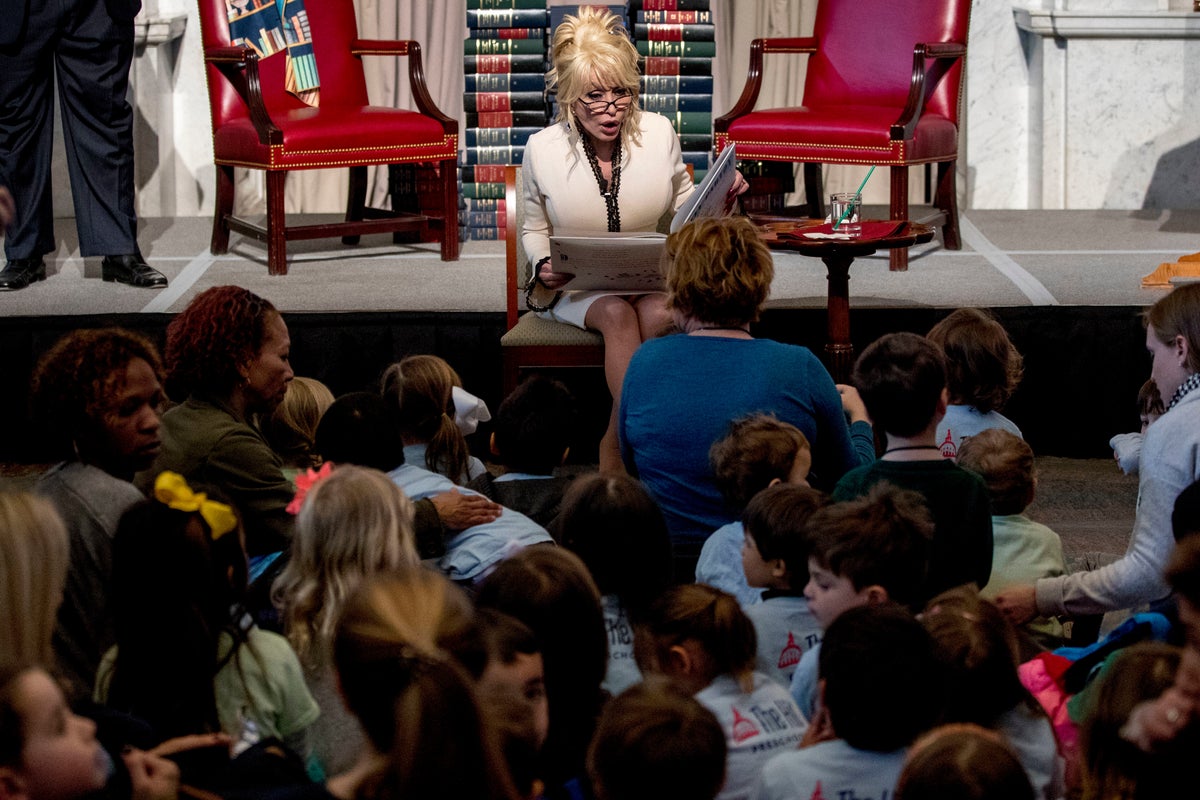
The mechanism behind Dolly Parton's Imagination Library bypasses traditional centralized charity distribution bottlenecks by utilizing a localized co-funding model.
- Central Infrastructure: The Dollywood Foundation maintains the core database, handles publisher negotiations for wholesale book procurement, and manages intellectual property and administrative scaling.
- Local Partner Nodes: Regional partners—ranging from local non-profits and school districts to corporate chambers of commerce—assume financial responsibility for the wholesale cost of the books and mailing fees within their designated geographic boundaries.
- Universal Access Protocol: Enrolled families receive books entirely free of charge, entirely decoupled from household income thresholds, removing the social friction and stigma often associated with means-tested assistance programs.
This architecture distributes financial liability across thousands of independent economic actors rather than concentrating risk within a single balance sheet. Consequently, the foundation avoids the scaling wall that typically halts non-profit expansion.
Early Intervention Economics and the Literacy Pipeline
Evaluating the return on investment in early childhood literacy requires tracking longitudinal educational indicators. The operational theory driving the Imagination Library targets a specific developmental window: birth to age five. Cognitive development literature demonstrates that vocabulary acquisition and pre-literacy exposure during these formative years establish the baseline for subsequent academic retention and high school completion rates.
The foundation's early structural experiment, the Buddy Program initiated in Sevier County in 1991, established a proof of concept for localized accountability. By pairing students to incentivize grade retention and offering direct financial completion milestones, the program dropped local high school dropout rates from 35 percent to 6 percent.
When translated to the macro-level operations of the Imagination Library, the intervention strategy relies on predictable compounding returns:
- Input: Regular delivery of age-appropriate physical assets directly to a child's home builds a domestic print-exposure culture.
- Behavioral Shift: Monthly deliveries establish a tangible reading ritual between caregiver and child, independent of institutional public library access.
- Systemic Output: Longitudinal studies consistently correlate early print ownership with elevated kindergarten readiness scores, mitigating downstream remedial education costs for municipal school districts.
Crisis Response Velocity and Capital Allocation
Beyond long-term educational infrastructure, the operational footprint of Parton’s philanthropic network demonstrates high capital allocation velocity during acute regional emergencies. The deployment of the My People Fund following the 2016 Great Smoky Mountains wildfires illustrates a distinct crisis-management framework.
When hundreds of families lost their primary residences, the foundation bypassed bureaucratic grant-application friction. Within two weeks, the organization designed, funded, and initiated a distribution channel providing 1,000 displaced families with $1,000 per month for six months. By the conclusion of the cycle, the fund had channeled over $12 million directly to affected households without the administrative lag characteristic of traditional disaster relief agencies.
This speed relies on pre-existing local administrative trust and an organizational culture optimized for rapid deployment. Capital is gathered through immediate public-private appeals and funneled through streamlined municipal registers, proving that decentralized networks can pivot from long-term educational programming to emergency economic stabilization within days.
Strategic Execution and Structural Limitations
Despite its operational successes, the model operated by the Dollywood Foundation is bound by specific structural dependencies. The sustainability of any local chapter is strictly tethered to the fundraising capacity of its community partners. If a local partner fails to sustain its revenue stream, the geographic coverage collapses, creating localized literacy deserts within an otherwise expanding global network. The system lacks an automated economic backstop to subsidize underfunded rural or economically depressed zip codes independently of external donor participation.
The strategic blueprint demonstrated here offers a replication model for modern institutional philanthropy: decouple core administrative infrastructure from localized funding execution, leverage bulk procurement economics, and align program milestones with quantifiable developmental metrics. Future systemic scaling of early-childhood interventions will depend entirely on adopting these distributed co-funding topologies rather than relying on top-down philanthropic grants.