The tea in the paper cup grew cold long before the sun cleared the skeletal birch trees outside.
Inside Gymnasium Number Four, the air smelled of floor wax, damp wool, and the distinct, ozone-like crispness of overheating computer terminals. Elena Ivanovna adjusted her wire-rimmed glasses and smoothed a stray lock of gray hair. For twenty-two years, she had sat behind tables like this one across provincial Russia, watching her fellow citizens perform the quiet, heavy ritual of casting a ballot. She knew the rhythm of it. She knew the way elderly couples shuffled in at eight in the morning, dressed in their Sunday best despite the mud; she knew the heavy, sullen silence of the middle-aged men who signed their names and dropped their folded slips into the plastic urns as if paying a tax they despised.
This year, however, the air felt different. It hummed with invisible static.
Outside, the physical world was jittery. Rumors of drones intercepted miles away rippled through telephone group chats before dawn, brief digital whispers that vanished under the weight of state-approved feeds. Inside the precinct, the digital boundary line was under siege. Technicians in the corner—young men with pale faces and oversized hoodies—kept their eyes glued to flickering monitors, fighting a quiet, relentless war against waves of distributed denial-of-service attacks originating from servers thousands of miles away. Millions of attempts to breach the voting portal. Millions of phantom clicks designed to freeze the machinery, to throw sand in the gears of the state, to prove to the world that the digital walls were porous.
Yet the lines remained open. The paper ballots still dropped with a muffled thud into the transparent boxes. And everyone in the room, from Elena to the young men staring at the glowing screens, knew how the story would end before the first page was even turned.
United Russia would win. It always won. The parliamentary majority would remain intact, immovable as a granite block in a flooded river.
To understand modern political dominance in Russia, one must abandon Western assumptions about elections as contested battlegrounds where the future hangs in the balance. Here, an election is something else entirely. It is a referendum on gravity. It is an exercise in demonstrating that no matter how hard the wind blows—whether from foreign cyberweapons, economic sanctions, or the distant, terrifying buzz of unmanned aerial vehicles—the structure does not yield.
Consider what happens when the state treats stability as its ultimate moral good. Every disruption becomes a justification for tighter control; every cyberattack becomes proof of external hostility, rallying a weary populace around the flag, even if that flag is hoisted by hands they do not entirely trust.
Mikhail walked into the gymnasium around noon. He was forty-two, a mechanic with grease permanently etched into the lines of his knuckles. He wore a heavy leather jacket that smelled of motor oil and cheap tobacco. He didn't look at the posters on the wall detailing the candidates' platforms. He didn't need to. He had lived through the chaos of the nineties, the humiliating scramble for survival when the Soviet Union dissolved into a chaotic yard sale of state assets. He remembered the empty shelves, the worthless rubles, the terrifying sense that history had broken and left ordinary people in the wreckage.
When Mikhail dropped his ballot into the box, he was not voting for an ideology. He was voting for an anchor.
"Does it matter?" a younger reporter whispered to him near the exit, holding a digital recorder like a shield.
Mikhail looked at the young man, then out the window at the gray sky pressing down on the asphalt.
"It matters that things work," Mikhail said, his voice flat, devoid of enthusiasm or rebellion. "The storm is outside. Inside, we vote. Life goes on."
That sentiment is the bedrock upon which political empires are built in the twenty-first century. It is not necessarily passionate love for a party leader or blind faith in a manifesto. It is a profound, marrow-deep fatigue with unpredictability. The state has mastered the art of translating that fatigue into absolute political retention.
As the afternoon waned, the cyberattacks on the central election commission's servers intensified. Digital traffic spiked into the billions of requests, a coordinated electronic blizzard intended to paralyze the electronic voting systems. Across Moscow, experts in windowless basement rooms watched graphs spike into angry red lines. VPNs flickered. Firewalls groaned. For a few tense hours, the digital architecture wobbled, threatening to plunge the process into an embarrassing blackout that would feed headlines around the globe.
But the state’s digital defenses held. They were built for this. Redundancy was piled upon redundancy, layered with domestic software replacements designed specifically to withstand Western technological isolation. By evening, the attacks had receded like waves crashing against a concrete seawall, leaving foam and debris in their wake, but leaving the wall standing.
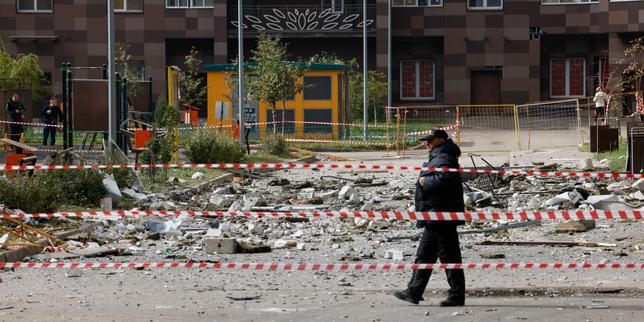
Then came the drones. Reports surfaced of air defense systems activating over western regions, fragments of intercepted aircraft falling harmlessly into fields or empty industrial lots. The physical intrusions were minor in terms of damage, but their psychological payload was heavy. They reminded every voter that the nation was at war, that the borders were bleeding, and that a fractured political house would be swallowed whole by hostile forces.
In times of existential peril, populations consolidate. They circle the wagons. The friction of wartime creates a strange, paradoxical solidarity, binding the citizen to the machinery of power not out of affection, but out of survival instinct.
When the polls finally closed at eight o'clock, the fluorescent lights of Gymnasium Number Four buzzed softly. Elena stood up, her joints popping after twelve hours on her feet. The election commission members gathered around the long tables, breaking the plastic seals on the ballot boxes and dumping the cascading mountains of paper onto the green felt surfaces.
The sorting began. It was tedious, hypnotic work. Stack by stack, the tallies grew.
By midnight, the preliminary results from across the vast, frozen expanse of the country began to congeal into a familiar certainty. The state television channels beamed the figures across eleven time zones. United Russia held its commanding majority. The opposition, fragmented and battered by legal hurdles, digital suppression, and internal exile, remained marginalized. The cyberattacks had been repelled. The drone strikes had been intercepted. The vote had taken place.
Elena folded her papers, locked them into a heavy metal briefcase, and pulled her woolen coat tight around her neck. She stepped out into the crisp night air. The streets were quiet. A wet snow was beginning to fall, dusting the brutalist concrete apartment blocks with a thin layer of white, temporarily softening the hard edges of the city.
She walked home through the dark, her breath pluming in the headlights of a passing Lada. The system had absorbed the shock, as it always did. The ground had shifted slightly under the weight of modern warfare, but the foundation remained. And somewhere in the dark, the machinery of the state was already resting, preparing for the next dawn.