The coffee was cold, but Sarah didn’t notice. She was staring at her phone, watching a microscopic drama unfold three thousand miles away. An acquaintance from college—someone she hadn’t spoken to in a decade—had posted a passive-aggressive update about a local school board meeting. It felt urgent. It felt offensive. Sarah’s thumbs hovered over the keyboard, ready to draft a blistering multi-paragraph response to defend a principle that had absolutely no bearing on her actual life.
Meanwhile, three feet away, her husband was quietly sighing as he looked at a stack of unfiled tax documents. Her daughter was coloring a picture of a cat, occasionally looking up to see if her mother would notice the bright blue sun she had just drawn.
Sarah didn't look up.
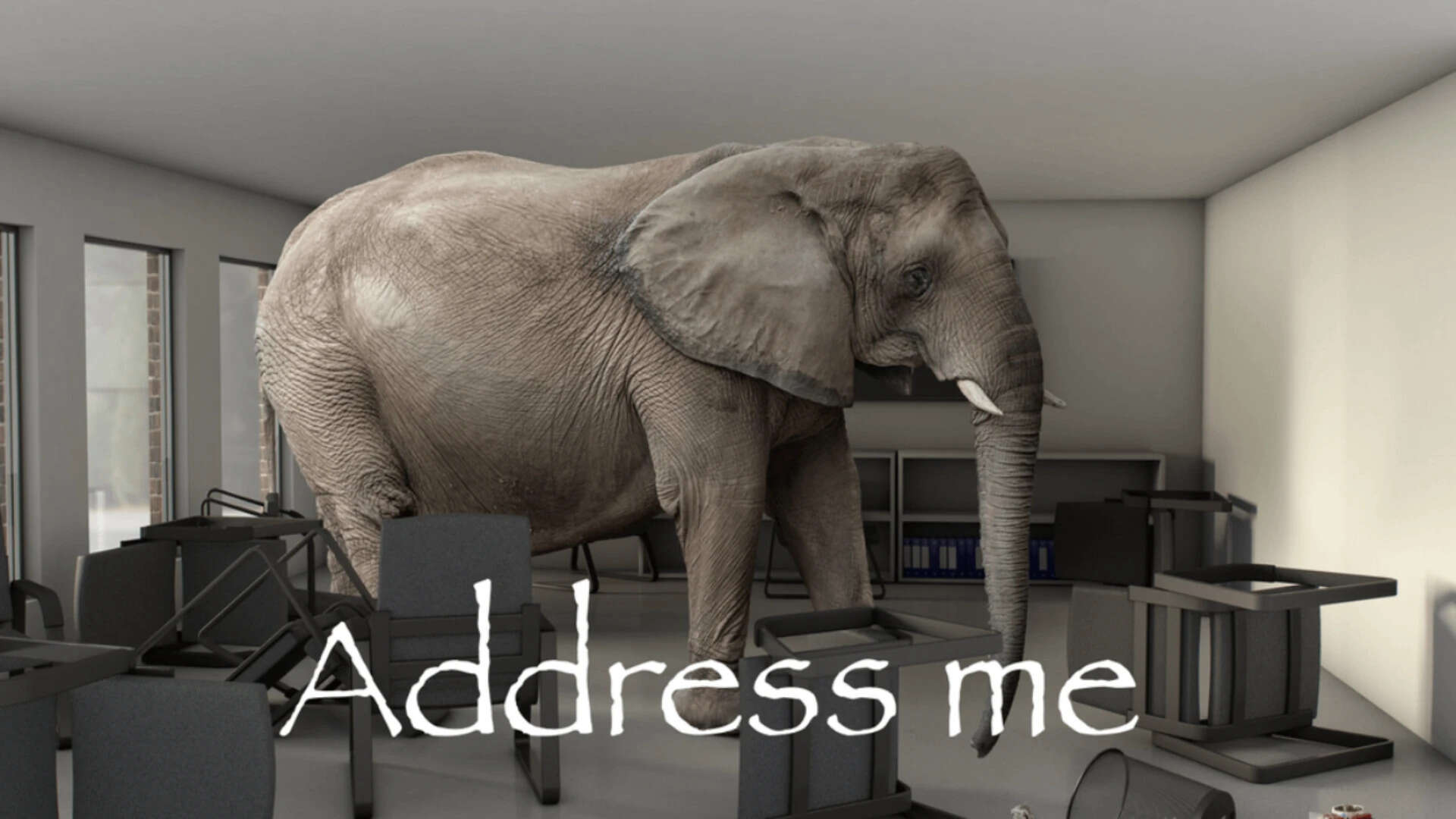
She was completely blind to the elephant sitting on her chest, yet she could see the ant moving across the ocean with perfect, agonizing clarity.
This is not just a modern glitch caused by glowing screens. It is an ancient human trap. Centuries ago, on the islands of Indonesia, thinkers watched this exact behavioral loop play out in village life long before fiber-optic cables existed. They captured it in a proverb: Gajah di pelupuk mata tidak tampak, semut di seberang lautan tampak.
An elephant at the edge of the eye is not seen, but an ant across the ocean is seen.
We are a species obsessed with distant imperfections. We ignore the massive, structural realities threatening to crush us right where we stand, choosing instead to focus our energy on tiny, irrelevant specks on the horizon. Understanding why we do this is the first step toward reclaiming our attention, our relationships, and our sanity.
The Architecture of the Blindspot
To understand the mechanics of the elephant, consider a simple optical reality. If you hold your thumb an inch away from your eye, it can block out the entire sun. The sun is ninety-three million miles wide. Your thumb is less than an inch. Yet, proximity alters perception.
When a problem is too close to us—too intimately woven into the fabric of our daily survival—it stops looking like a problem. It just looks like the room.
Psychologists call this phenomenon habituation. When a stimulus is constant, our brains stop registering it to save energy. If you live next to a train track, you eventually stop hearing the roar of the engines. If you live with a simmering, toxic resentment in your marriage, or a slow-burning financial crisis, or a lifestyle habit that is quietly degrading your physical health, your brain treats it as the baseline. It becomes the background noise of existence.
But an ant across the ocean? That is novel. That is a variable.
The distant ant represents an easy target. When we focus on a minor political scandal in another state, a celebrity’s moral failing, or a stranger’s wrong opinion on the internet, we are engaging in a form of psychological displacement. Dealing with the elephant in our own living room requires immense courage. It requires vulnerable conversations, painful choices, and the distinct possibility of failure.
Chasing the ant requires none of that.
It allows us to feel a intoxicating surge of moral superiority or intellectual engagement without risking a single thing. We get to feel like we are solving something, fighting something, or analyzing something, all while our own house quietly rots from the foundation upward.
The High Cost of the Tiny Spec
Consider what happens when this proverb scales up from individual lives to entire cultures.
A business owner spends six months obsessing over a competitor's minor social media gaffe, analyzing it in meetings and drafting counter-strategies. While his eyes are locked on that distant ant, he fails to notice that his core product has developed a critical security flaw and his top three engineers are actively interviewing elsewhere. The elephant moves, the floorboards groan, but the screen remains fixed on the ant.
In our personal health, the dynamic is even more insidious. People will spend thousands of dollars on exotic supplements imported from across the globe, track minor biomarker fluctuations with wearable tech, and eliminate entire food groups based on a podcast episode they heard last Tuesday. They chase the ant of optimal wellness. Yet, they consistently sleep four hours a night, drink a bottle of wine to cope with stress, and haven't had a meaningful, deep conversation with a friend in six months.
The massive, heavy elephants of sleep deprivation, chronic isolation, and alcohol dependence are ignored because they are too heavy to lift. The supplement capsule is small. It is manageable. It fits neatly between two fingers.
We prefer the small project of critique over the massive project of self-examination.
Turning the Lens Around
Breaking this cycle is not an intellectual exercise; it is a visceral shift in orientation. It requires us to look down at our own feet before we look through the telescope.
Imagine stopping mid-stride during your next moment of frustration. You are upset about a headline. You are angry about an email from a corporate office you don't work for. Ask a brutal question: What is the elephant right behind me that this anger is helping me ignore?
Usually, the answer is waiting in the quiet. It might be the realization that you are lonely. It might be the realization that you are terrified of failing at your actual job, so you are picking fights in digital arenas where there are no scores. It might be the simple, devastating truth that you have forgotten how to sit still with your own thoughts.
The Indonesian proverb survives because it is a mirror that refuses to flatter us. It reminds us that our attention is a finite, sacred commodity. Every moment spent analyzing the stride of the ant across the water is a moment stolen from the massive, breathing reality of our immediate world.
Sarah finally put the phone down. The screen went black, reflecting the quiet room. She looked at her daughter, who was still working on the cat with the blue sun.
"Tell me about the sun," Sarah said, leaning in.
The elephant in the room didn't disappear, but suddenly, it wasn't invisible anymore. And for the first time in a long time, the ocean was just water, and the ant was just a speck, completely devoid of power.