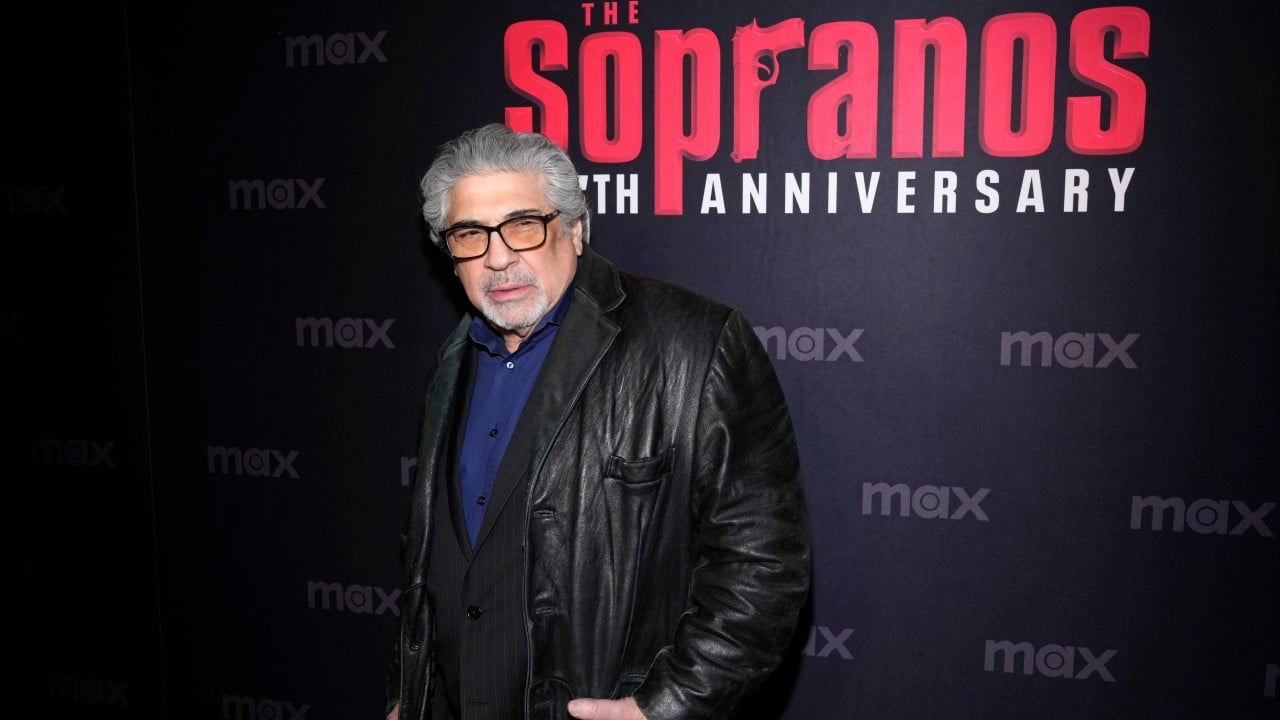
The death of character actor Vincent Pastore at age eighty closes a distinct chapter in media economics: the high-yield utility of the professional cinematic type. While standard journalism reduces Pastore to a familiar face from Mob dramas, a structural analysis of his career reveals an efficient economic engine built on authenticity, niche specialization, and late-stage career timing. The entertainment market does not reward generalists evenly; it rewards hyper-specific functional assets that reduce casting friction for producers. Pastore carved out a multi-decade output across nearly two hundred film and television credits by mastering a singular operational profile.
The Economic Mechanics of Character Specialization
To understand why actors like Pastore sustain long-term careers without landing leading man status, one must examine the supply-demand dynamics of supporting roles. Mainstream narrative production relies on rapid audience orientation. When a script calls for an underworld figure, executive producers face high opportunity costs if they spend weeks auditioning untried talent.
The industry solves this through structural categorization. Pastore positioned himself as a low-risk, high-certainty choice for urban grit and organized crime archetypes. This specialization creates specific market efficiencies:
- Reduced Search Costs: Casting directors immediately match the physical and behavioral template to the requirement.
- Built-In Credibility: Growing up in the Bronx and New Rochelle coupled with years operating New York hospitality venues gave Pastore genuine regional inflection that conservatory training struggles to fabricate.
- Scalable Versatility: The archetype scales from brief cameos in major features like Goodfellas to multi-episode narrative pillars like Salvatore Bonpensiero in The Sopranos.
The Cost Function of Late-Entry Professional Pivots
Most career trajectories in performance arts assume a linear progression starting in youth. Pastore inverted this model entirely. He spent his first two decades running rock and roll bars and discos in Westchester County, entering professional acting in his forties after interacting with film actors who frequented his venues.
This delayed market entry alters the risk-reward matrix. Traditional actors often face immense psychological pressure to accept suboptimal roles early to build a resume. Pastore entered the trade with established life experience and financial maturity, shifting his output from desperation-driven choices to volume-based execution.
[Life Phase 1: Hospitality Management (20 Years)]
        ↓
[Phase 2: Professional Pivot (Age 40+)]
        ↓
[Phase 3: High-Volume Output & Type Specialization (200+ Credits)]
By accumulating roughly two hundred film and television credits, he maximized financial diversification. Rather than depending on a single blockbuster payout, his financial model relied on a high frequency of secondary roles, recurring television guest spots, stage work in productions like Chicago and Bullets Over Broadway, and reality television appearances.
Deconstructing the Breakthrough Catalyst
The inflection point of any character actor's career depends on intersecting with a culturally transformative project. For Pastore, that catalyst arrived in 1999 with the premiere of HBO's The Sopranos.
The show did not merely employ actors; it rewrote the economic structure of television by proving that serialized antihero dramas could command premium subscription revenue. Within this framework, Pastore played a character caught in an inescapable systemic trap: an FBI informant operating inside an inner circle where detection meant execution. The narrative resonance of Salvatore Bonpensiero derived entirely from the friction between his outward warmth and his systemic betrayal.
The performance succeeded because it mirrored the structural realities of operational risk. Characters in high-stakes criminal syndicates face inevitable failure cascades once their loyalty is compromised. Pastore portrayed this psychological erosion without relying on melodrama, grounding the narrative tension in quiet exhaustion.
Market Legacy and Asset Longevity
The passing of performers renowned for specific regional aesthetics signals a broader shift in how media content is localized and produced. Modern casting increasingly favors algorithmic trend-chasing or globalized, placeless casting choices.
Pastore’s career demonstrates that genuine cultural specificity remains a scarce asset. When an actor anchors their work in authentic lived experience, they stop being a replaceable element of the set design and become an irreplaceable narrative anchor. The long-term durability of his body of work proves that specialization, when executed with absolute tactical discipline, outlasts the ephemeral trends of mainstream pop culture.