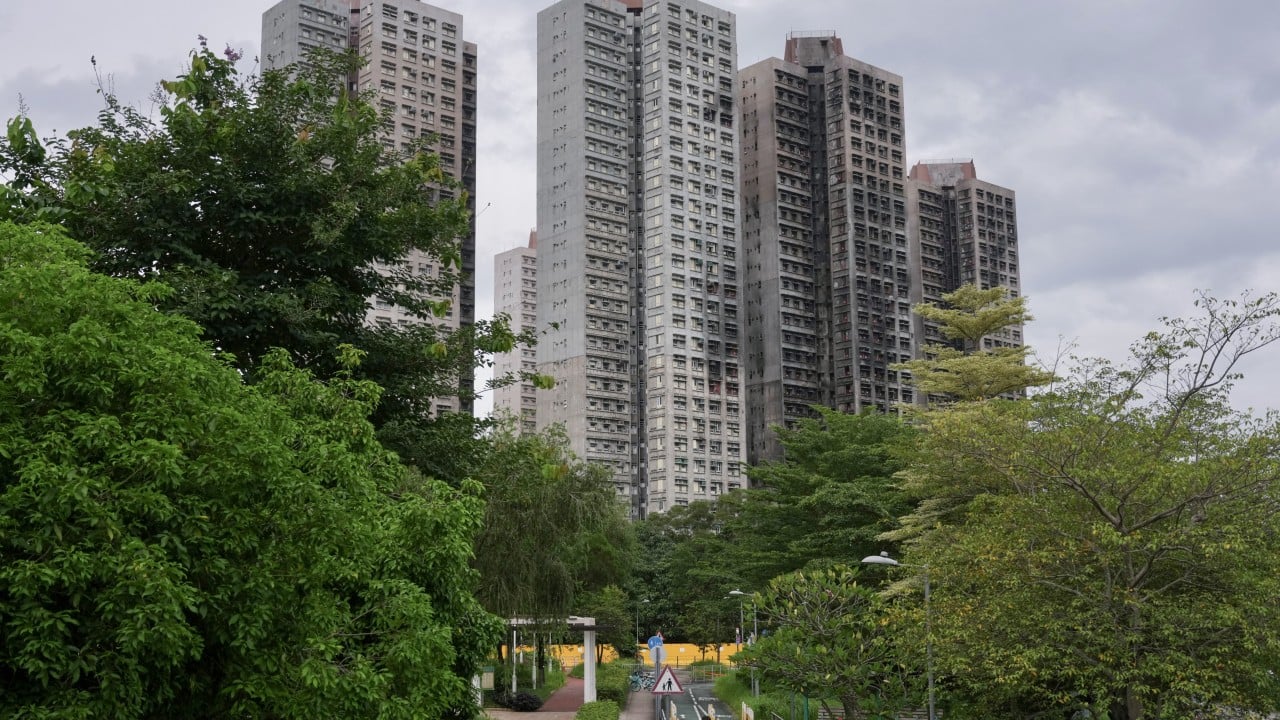
The catastrophic failure of building maintenance oversight at Wang Fuk Court in Tai Po, which resulted in 168 fatalities, exposes a fundamental vulnerability in Hong Kong’s regulatory architecture: the reliance on an unverified honor system for private sector contractors. When regulatory frameworks substitute structural compliance checks with self-policing mechanisms, they incentivize a race to the bottom. Bad actors systematically exploit the asymmetry of information between government bodies, professional consultants, and property owners.
To prevent future systemic collapses, the underlying economic, administrative, and structural vulnerabilities that transformed a routine HK$336 million maintenance project into a mass casualty event must be deconstructed.
The Microeconomic Triad of Bid-Rigging
The collapse of the project began long before the first spark ignited; it originated during the procurement phase via a calculated manipulation of the tender process. The mechanics of this failure operate through three distinct vectors.
Below-Cost Bidding as an Entry Vector
In 2018, the structural engineering consultancy, Will Power Architects Company Limited, secured the initial inspection contract via the Urban Renewal Authority’s "Smart Tender" platform by quoting HK$220,000. This fee sat more than 50% below the market average of HK$500,000 for assets of comparable scale. In isolation, a below-cost bid signals negative economic utility. In practice, it serves as a loss-leader strategy to capture the downstream consulting role, granting the firm unilateral control over the shortlisting process for the main construction contract.
Asymmetric Tender Manipulation
Once positioned as the gatekeeper, the consultant evaluated 57 competing tenders, ultimately shortlisting 14 firms. Independent investigations revealed that the consultant actively scrubbed the legal and litigation history of Prestige Construction & Engineering Company from the evaluation reports presented to the owners' corporation. By artificially inflating the scoring metric and concealing past safety infractions, the consultant engineered a monopoly choice for a project valued at HK$330 million to HK$336 million.
Interlocking Directorates and Proxy Vulnerabilities
The structural integrity of competitive bidding was further compromised by hidden commercial relationships. The contract director involved held undocumented ties to five other bidding entities within the pool, effectively simulating market competition where none existed. This structural collusion was paired with an administrative vulnerability in the estate's governance: the exploitation of proxy voting. At the general meeting approving the plan, 570 votes were cast despite only 200 residents attending in person. This discrepancy was driven by the aggressive collection of proxy votes under the pretext of securing government renovation subsidies, creating an artificial 80.5% supermajority for the compromised tender.
The Rubber-Stamp Multiplier and Supervisory Failure
The second point of failure lies in the complete decoupling of professional certification from physical verification. The regulatory model presumes that Registered Inspectors act as an uncorrupted bulwark against substandard execution. However, the economic incentives within the inspection ecosystem encourage the outsourcing of legal accountability through nominal supervision.
The project utilized a designated inspector who received a monthly retainer of HK$15,000, totaling HK$190,000 over his tenure. Crucially, the individual remained a full-time employee of an unrelated private property firm throughout this period, indicating that active, physical oversight of the site was structurally impossible. WhatsApp records produced during the independent inquiry confirmed an explicit administrative arrangement: intermediaries instructed the inspector to "just sign documents" and backdate compliance certifications without stepping foot on the property.
This creates what can be mathematically defined as the Rubber-Stamp Multiplier:
$$S_m = \frac{P_c}{V_p}$$
Where $S_m$ is the systemic risk multiplier, $P_c$ is the number of projects certified concurrently, and $V_p$ represents the actual capacity for physical verification. In this specific ecosystem, a single registered professional signed off on 56 separate infrastructure projects simultaneously. When $V_p$ approaches zero, $S_m$ scales toward infinity, rendering the entire compliance apparatus a statistical fiction.
This professional abdication is exacerbated by severe talent scarcity. Of Hong Kong’s 600 registered building inspectors, only approximately 100 actively engage in mandatory building inspection schemes. This highly concentrated market yields a critical vulnerability: low supply and high demand incentivize rapid document processing over rigorous safety checks, drastically lowering the cost of corruption for bad actors.
The Compounding Material and Behavioral Flaws
Regulatory evasion directly dictated the physical conditions on the ground. The catastrophic velocity of the fire was not an accident of nature, but the direct result of non-compliant materials operating under a compounding cost-cutting function.
The rapid vertical and horizontal propagation across seven buildings was driven by two material substitutions:
- Polyurethane-Foam Core Boards: The contractor deployed non-flame-retardant polyurethane insulation panels instead of fire-rated alternatives. Polyurethane possesses a highly exothermic decomposition profile, releasing dense, toxic smoke and accelerating thermal feedback loops within enclosed structural spaces.
- Substandard Scaffolding Netting: The bamboo scaffolding surrounding the complex was draped in cheap, non-fire-retardant protective netting. Rather than acting as a containment shield, the netting served as a highly efficient fuel source, carrying the fire rapidly up the building envelopes and bypassing internal compartmentation structures.
This highly volatile environment was paired with an unmonitored labor force. Up to 50 workers operated across three high-rise structures concurrently, with zero active enforcement of basic industrial safety protocols, including smoking bans near volatile materials. The physical trigger for the disaster—likely an discarded cigarette butt in a debris-filled stairwell—instantly interacted with the highly combustible materials, turning a localized ignition into an uncontainable firestorm.
The Diffusion of Institutional Responsibility
The third systemic limitation is the balkanization of regulatory enforcement across disparate government bureaus. This creates an institutional blind spot where agencies look at the same site through isolated mandates, allowing critical risks to fall through the cracks.
| Department | Statutory Mandate | Deficit in the Tai Po Event |
|---|---|---|
| Labour Department | Occupational safety, workforce conduct, and physical site condition inspections. | Conducted 16 distinct site visits prior to the fire, issuing 6 improvement notices, yet dismissed persistent resident complaints regarding worker smoking as "unsubstantiated". |
| Fire Services Department | Verification of active and passive fire protection systems within occupied buildings. | Maintained that checking the flame-retardant specifications of active construction scaffolding fell outside its primary jurisdiction. |
| Independent Checking Unit | Building control and regulatory compliance for modified or managed housing structures. | Operating on a documentation-first model, the unit accepted signed compliance certificates from the "rubber-stamp" inspector at face value. |
This structural fragmentation allows each entity to claim procedural compliance while the system as a whole fails. When residents raised explicit alarms regarding material safety and illicit smoking in September 2024, the Labour Department responded in writing that the "chances of fire breaking out on scaffolding nets are low," demonstrating a complete lack of predictive risk modeling.
Furthermore, when early indicators of financial fraud and bid-rigging were brought twice to the Independent Commission Against Corruption (ICAC) in late 2024, the agency declined to investigate, misclassifying the report as a private "business dispute". This structural barrier prevents early criminal intervention before the physical manifestations of fraud—substandard, life-threatening construction—are concrete.
Restructuring the Oversight Architecture
Vows to tighten monitoring and introduce harsher penalties are reactive measures that fail to address the core issue. To build true structural resilience, the government must shift from a system of retrospective punishment to one of real-time, data-driven verification.
The primary policy play must be the immediate elimination of the self-certification model for high-risk private maintenance works. The current mechanism, which treats professional signatures as absolute truth, must be replaced with a dual-verification matrix. The Buildings Department must establish an independent, state-funded auditing pool. Inspectors from this pool must be randomly assigned via an automated algorithmic lottery to conduct unannounced, physical material testing on site, completely bypassing the main contractor's chosen consultants.
Furthermore, the legal framework must adjust its liability calculations. Financial penalties for safety violations—such as the nominal HK$30,000 fines levied against Prestige Construction in 2023—are easily absorbed as a predictable cost of doing business. The statutory framework must elevate fraud in public safety procurement to strict criminal liability, with mandatory minimum prison sentences for corporate directors, consultants, and inspectors who falsify safety data.
Finally, procurement platforms like "Smart Tender" must integrate automated red-flag anomalies. Any bid falling more than 20% below the independently calculated market mean for a building asset must trigger an automatic, mandatory audit of the bidder's operational capacity, litigation history, and corporate linkages before the tender can be presented to property owners. Until the economic incentives for cutting corners are systematically dismantled through criminal accountability and proactive enforcement, the structural safety of Hong Kong's high-rise inventory remains exposed to catastrophic failure.