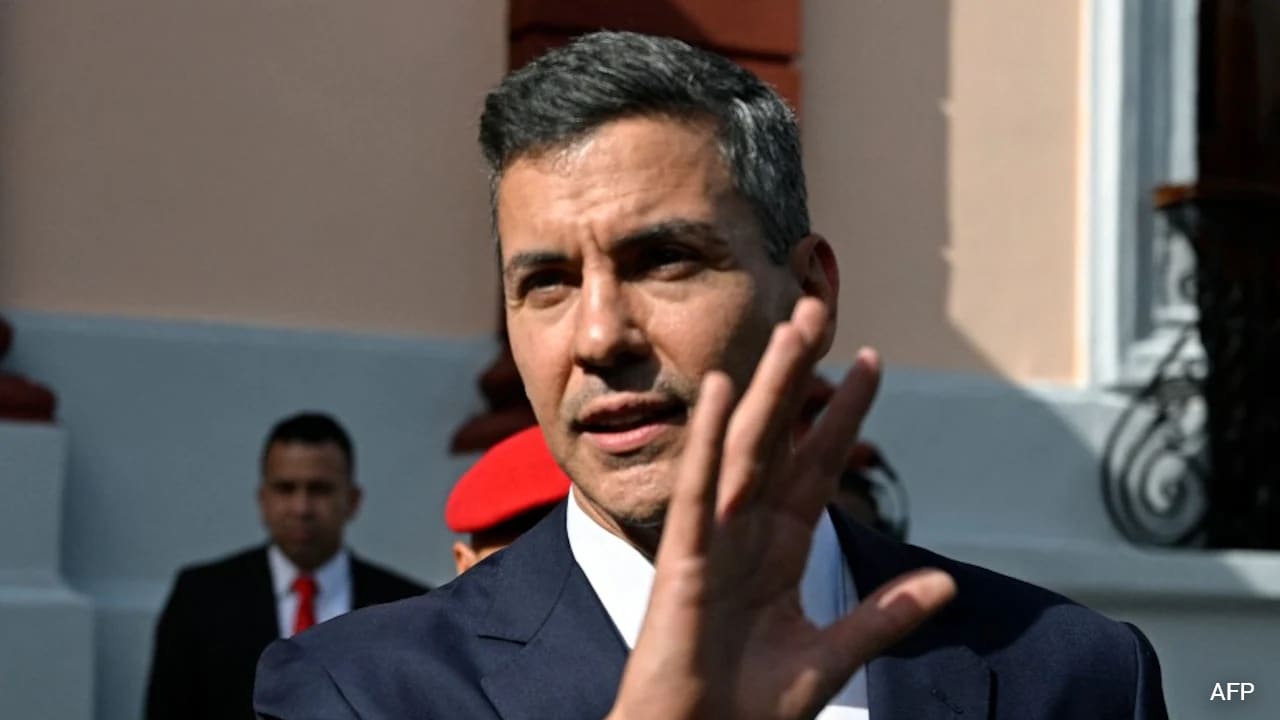
The November 2026 collapse of Paraguay’s Ueno Bank and the immediate impeachment and house arrest of President Santiago Peña represent a textbook failure of institutional ring-fencing, where executive conflicts of interest converted a private fintech lender into an unhedged state-backed vehicle for related-party extraction. Rather than an isolated liquidity crunch, the failure exposed a structural feedback loop between sovereign pension allocation, regulatory capture, and balance-sheet fabrication that left roughly three million retail depositors locked out of liquid capital and put over $800 million in public funds at risk.
To understand how a digital bank servicing over 60% of Paraguay's working adults imploded within seventy-two hours, analysts must separate the surface political drama from the underlying financial mechanics. The crisis unfolded across three distinct operational failures: regulatory capture at the central bank level, state-directed liability concentration, and synthetic capital inflation.
The Three Pillars of Institutional Capture
Standard banking crises emerge from macroeconomic shocks, duration mismatches, or sudden deposit runs. Ueno Bank’s insolvency stemmed instead from deliberate governance dismantling across three intersecting nodes.
1. Executive Equity and Liability Steering
Before assuming the presidency in 2023, Santiago Peña acquired preferred Class K shares in Credicentro S.A.E.C.A., the financial entity that merged into Ueno Holding S.A.E.C.A. under Grupo Vázquez. Peña retained an approximate 1.58% equity stake—valued near $1 million by early 2025—well into his presidential tenure before divesting under public pressure in April 2025. During this overlap, executive influence steered state-owned enterprises and public pension funds into placing massive institutional deposits at Ueno. Public funds eventually comprised roughly 70% of the bank's total deposit volume, including approximately $380 million from public pension entities alone. By concentrating sovereign institutional cash inside a rapidly scaling private lender, the state eliminated Ueno’s natural market discipline; the bank no longer needed to compete for retail yield or maintain conservative liquidity buffers to attract wholesale funding.
2. Regulatory Neutralization
Banking supervision relies on an adversarial relationship between the commercial lender and the prudential regulator. In 2023, Peña eliminated this friction by appointing Carlos Carvallo Spalding—Ueno’s former president—to lead the Central Bank of Paraguay (BCP). Under Carvallo’s administration, warning signals regarding Ueno's loan book and rapid balance-sheet expansion met systematic regulatory forbearance. When opposition lawmakers raised inquiries into Ueno’s lending practices, the executive branch dismissed the scrutiny as partisan interference, effectively blinding the BCP's supervisory apparatus until capital deficits became irreversible.
3. Circular Related-Party Lending
With cheap, sticky public deposits secured and regulatory audits neutralized, Ueno’s management—led by CEO Miguel Vázquez—deployed depositor liabilities into a closed loop of affiliated entities. Prosecutorial filings and central bank post-mortems indicate that Ueno extended substantial credit lines to corporate vehicles tied to Grupo Vázquez and executive associates. In documented instances, identical signatories appeared on both the lending and borrowing sides of credit agreements, alongside simulated real estate transactions where the bank absorbed payment obligations for non-market transfers. Simultaneously, accounting teams misclassified operational expenses as balance-sheet assets, artificially inflating the bank's capital adequacy ratio to mask underlying insolvency.
The Mechanics of the Resolution Shock
When leaked internal audits forced the BCP to intervene on November 3, 2026, the central bank placed Ueno into formal resolution—a statutory mechanism allowing regulators to freeze operations, segregate viable assets, and transfer liabilities to solvent commercial banks prior to liquidation. While technically sound on paper, executing a resolution on a fintech monopoly with a 60% adult penetration rate created immediate payment-system paralysis.
- The Digital Velocity Trap: Unlike legacy brick-and-mortar failures where physical queues meter the pace of panic, Ueno functioned as the primary transactional wallet for informal market vendors and salaried workers. When the mobile application displayed a static error message locking out balances, day-to-day commerce in Asunción seized immediately.
- The Deposit Insurance Asymmetry: Paraguay’s National Deposit Guarantee Fund (FGD) insures individual retail deposits up to 75 times the monthly minimum wage, theoretically covering 97% of personal accounts. However, statutory deposit insurance explicitly excludes institutional and state-owned deposits. Furthermore, operational bottlenecks between the BCP and receiving commercial banks delayed retail payout disbursements for weeks, turning a theoretical guarantee into an acute cash-flow crisis for households living paycheck to paycheck.
- The Sovereign Contingent Liability: Because the roughly $800 million to $850 million in public and pension deposits lacked FGD protection, the state faced a binary choice: allow public school and utility pension funds to absorb catastrophic haircuts, or backstop the uninsured losses using sovereign reserves. Either path transferred private fraud directly onto the public ledger, triggering an immediate 30-basis-point widening in Paraguayan sovereign bond spreads and an 8% depreciation of the guaraní against the dollar.
Why the Impeachment Bypassed Resignation
The political fallout demonstrated how constitutional mechanics interact with elite factionalism. On November 5, facing street blockades and a general strike threat from public sector unions, Peña tendered his resignation. Under Paraguay’s 1992 Constitution, a president who leaves office via standard resignation automatically transitions into the role of senador vitalicio (lifetime senator), a non-voting post that carries parliamentary immunity from criminal prosecution.
Recognizing that accepting the resignation would shield Peña from judicial accountability, the Paraguayan Senate rejected the maneuver on November 6 and voted unanimously to convict him via impeachment. This procedural distinction stripped Peña of his constitutional immunity, enabling prosecutors to execute an immediate arrest warrant on charges of breach of trust, criminal association, and administration for personal gain, culminating in his placement under house arrest.
Crucially, this legislative unanimity did not stem solely from democratic institutional strength. Peña’s political survival depended on the backing of former president and Colorado Party power broker Horacio Cartes. Once Ueno’s collapse evaporated Peña’s financial and popular leverage, Cartes’s legislative bloc withdrew protection to insulate the broader ruling party from the protests, leaving Peña politically isolated while Vice President Pedro Alliana assumed the presidency.
Structural Limitations and Contagion Risks
Evaluating Paraguay’s post-collapse stabilization plan requires acknowledging severe operational constraints that limit recovery speed:
- Asset Recovery Illiquidity: While interim central bank leadership estimates total losses near $1 billion, recovering value from Ueno’s loan book depends on liquidating seized luxury assets, real estate, and closely held corporate shares. Distressed asset sales in a shallow domestic capital market rarely yield more than 30 to 40 cents on the dollar, ensuring a permanent capital hole that taxpayers or pension beneficiaries will ultimately absorb.
- Biometric and Data Governance Vacuum: Ueno’s aggressive customer acquisition relied on harvesting extensive biometric data—including facial scans and fingerprints—across millions of citizens and event attendees. With Grupo Vázquez executives under criminal indictment and the holding structure fractured, regulators lack a clear legal framework to secure or transfer this sensitive identity infrastructure without compromising citizen privacy.
- Fintech Inclusion Reversal: The failure of Paraguay’s flagship digital bank risks driving informal workers back into cash-only transactions. Rebuilding trust in formal financial intermediation will require years of demonstrated supervisory enforcement, stalling the country's broader tax formalization and foreign investment goals.
Tactical Playbook for Institutional Recovery
To prevent systemic contagion across Paraguay’s remaining commercial banks and restore sovereign creditworthiness, incoming leadership under President Pedro Alliana and newly nominated BCP head Jorge Schreiner must execute four immediate structural interventions:
- Enforce Hard Caps on Public Deposit Concentration: Pass binding legislation prohibiting any state-owned enterprise, municipality, or public pension fund from holding more than 10% of its liquid reserves—or accounting for more than 15% of total deposits—within a single private financial institution.
- Mandate Real-Time Interbank FGD Settlement: Overhaul the National Deposit Guarantee Fund’s operational architecture so that retail account transfers during a bank resolution execute automatically within 48 hours via existing payment rails, eliminating the multi-week liquidity freeze that sparked civil unrest.
- Institute Cooling-Off Periods for Financial Regulators: Amend central bank governance statutes to bar any executive, board member, or major shareholder of a supervised financial institution from holding a senior BCP regulatory post for a minimum of five years post-divestment.
- Ring-Fence and Audit Biometric Databases: Place Ueno’s identity verification servers under immediate central bank trusteeship, prohibiting the sale or transfer of customer biometric records during asset liquidation until independent cybersecurity audits verify data integrity.