Aggregate macro travel metrics frequently mask structural plateaus beneath headline records. The domestic projections for the Independence Day holiday travel period—spanning nine days from Saturday, June 27 through Sunday, July 5—reveal a projected record of 72.2 million Americans traveling at least 50 miles from home. While this figure technically eclipses the previous record of 71.8 million travelers set in 2025, the absolute marginal increase of 0.5% demonstrates that traditional travel modalities have entered a structural ceiling.
Understanding the underlying mechanics of this holiday peak requires evaluating infrastructure capacity constraints, localized macroeconomic pressures, and changing consumer allocation strategies across three core modalities.
       TOTAL FORECASTED TRAVELERS: 72.2 MILLION (June 27 – July 5)
                                  │
         ┌────────────────────────┼────────────────────────┐
         ▼                        ▼                        ▼
     BY CAR                    BY AIR                 OTHER MODES
  61.4 Million               5.85 Million             4.93 Million
 (85% of total)             (8% of total)            (7% of total)
 Growth: Flat YoY          Growth: +0.2% YoY        Growth: +5.3% YoY
The Macroeconomics of the Road-Trip Bottleneck
The overwhelming majority of holiday transit remains tethered to personal vehicles, with 61.4 million individuals—representing approximately 85% of total holiday travelers—projected to drive. This baseline is effectively flat compared to the 61.3 million road trips recorded during the equivalent period in 2025. This volume stagnation aligns with severe microeconomic headwinds.
The Fuel and Asset Cost Equation
Road travel volume persists despite significant inflationary strain at the pump and at rental counters:
- Gasoline Price Pressures: The national average for a gallon of regular gasoline has reached a four-year high, sitting more than a dollar higher than the previous year's average of $3.15. However, consumer demand has not broken because fuel prices remain structurally lower than the historic peak of $4.80 observed on Independence Day in 2022.
- The Household Substitution Effect: For multi-member households and families with children, the cost-per-mile math of a personal vehicle still beats air travel. Total trip expenditure scales linearly by seat on a flight, but scales near-elastically in a personal vehicle, making driving the rational economic alternative.
- The Fleet Rental Squeeze: Travelers attempting to circumvent vehicle wear by utilizing rental services face an acute supply-demand imbalance. Domestic car rental expenditures have increased by 10% year-over-year. Data indicates that Thursday, July 2 serves as the global peak pickup bottleneck for the rental fleet ecosystem.
Urban Congestion Vectors and Time-Delay Mechanics
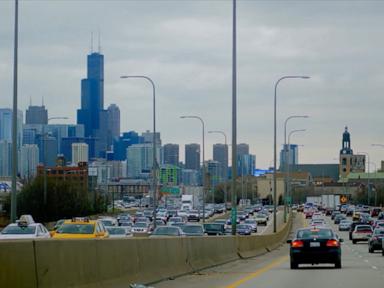
The injection of 61.4 million vehicles onto domestic highways triggers severe urban arterial delays. The primary driver of this friction is a structural modification enacted in 2024: the expansion of the official holiday evaluation tracking window to a nine-day, two-weekend model.
While this expansion was designed to distribute peak loads across a wider temporal plane, data from transportation analysts at INRIX confirms that congestion clusters heavily around precise infrastructural choke points. The second weekend of the holiday window experiences the highest aggregate vehicle density, commencing on Thursday, July 2.
Localized anomalies distort this macroeconomic timeline. In major metropolitan corridors—specifically Boston, Los Angeles, and Philadelphia—the peak system strain manifests significantly earlier, on Saturday, June 27. During these peak intervals, travel times along key exits, lake channels, and beach corridors swell by predictable multi-hour multipliers. Conversely, the optimal windows for highway velocity occur early in the morning or during the mid-week trough of Monday and Tuesday.
Air Transit Elasticity and the $830 Pricing Floor
Commercial aviation metrics show a similar structural stagnation. A projected 5.85 million passengers will utilize domestic air travel over the nine-day window. While this sets a nominal volume record, it marks a mere 0.2% increase over the previous year's performance. Air transit holds a rigid 8% share of the aggregate holiday travel distribution.
This stagnation is a direct function of pricing elasticity and supply limits:
$$Cost_{Flight} \approx $830 \text{ per round-trip ticket}$$
Domestic flight expenditures to primary holiday hubs average approximately $830 per roundtrip ticket. For core transit destinations such as Chicago and Denver, booking data reflects a 5% year-over-year pricing inflation.
Industry analysis traces part of this pricing surge to compounding geopolitical and operational realities. Jet fuel cost volatility—amplified by global refining pressures and regional supply strains—has forced carriers to preserve margins through aggressive yield-management pricing algorithms. Tickets booked during the immediate run-up to the summer peak are seeing raw pricing escalations of 16% to 17% over historical baselines. Because commercial aviation is operating at near-maximum asset utilization, the system lacks the physical capacity to expand seat inventory, creating a hard ceiling on total passenger throughput.
The All-Inclusive Hedge: The Shift to Fixed-Cost Travel
The only segment demonstrating genuine statistical growth is alternative transit, comprised of buses, trains, and maritime cruises. This category is projected to capture 4.93 million passengers, a definitive 5.3% increase over the prior year, surpassing the pre-pandemic historical benchmark of 4.79 million set in 2019.
       GROWTH VELOCITY BY MODALITY (Year-over-Year Change)

       Alternative Modes (Cruises/Trains) █ 5.3%
       Air Travel                         ▏ 0.2%
       Automobile Transit                 ▏ 0.1%
This structural shift is driven primarily by an unprecedented post-pandemic boom in maritime cruising, catalyzed by clear economic positioning:
- Elimination of Variable Cost Variance: In an inflationary environment where domestic air tickets hover at $830 and rental cars are up 10%, cruises act as a predictable macroeconomic hedge. The core value proposition relies on upfront, all-inclusive pricing models that lock in lodging, transit, dining, and entertainment costs, neutralizing the threat of vacation cost-creep.
- Geographic Concentration: The surge in alternative transit lines up perfectly with top holiday destinations. Geographically, domestic demand is heavily concentrated in cruise infrastructure gateways like Seattle, Anchorage, and Fairbanks—fueled by peak Alaska cruise season—alongside traditional Florida maritime hubs and major theme park centers.
Operational Safeguards for High-Density Systems
Deploying human or financial capital into this high-congestion infrastructure requires active risk mitigation rather than passive observation.
First, logistical operators and personal travelers must exploit the temporal asymmetries of the nine-day window. Shifting long-distance departures to Monday, June 29, or Tuesday, June 30, bypasses the dual-weekend congestion waves that cripple regional highway velocities on Saturday, June 27, and Thursday, July 2.
Second, fleet and personal transport operations must account for extreme roadside system strain. Historical service patterns indicate that emergency roadside assistance infrastructure experiences massive volume spikes during this specific nine-day window, driven by battery failures, tire blowouts, and fluid depletion under high thermal loads.
Pre-trip vehicle diagnostics and mechanical validation are mandatory structural steps to prevent catastrophic time losses. Given that the volume of teen drivers and celebratory transit increases significantly during the holiday week, defensive scheduling—specifically avoiding nocturnal transit windows when impaired driving metrics spike—is critical for asset protection.


/President_Barack_Obama_with_the_Nobel_Prize_medal_and_diploma-592621825f9b58595058906b.jpg)