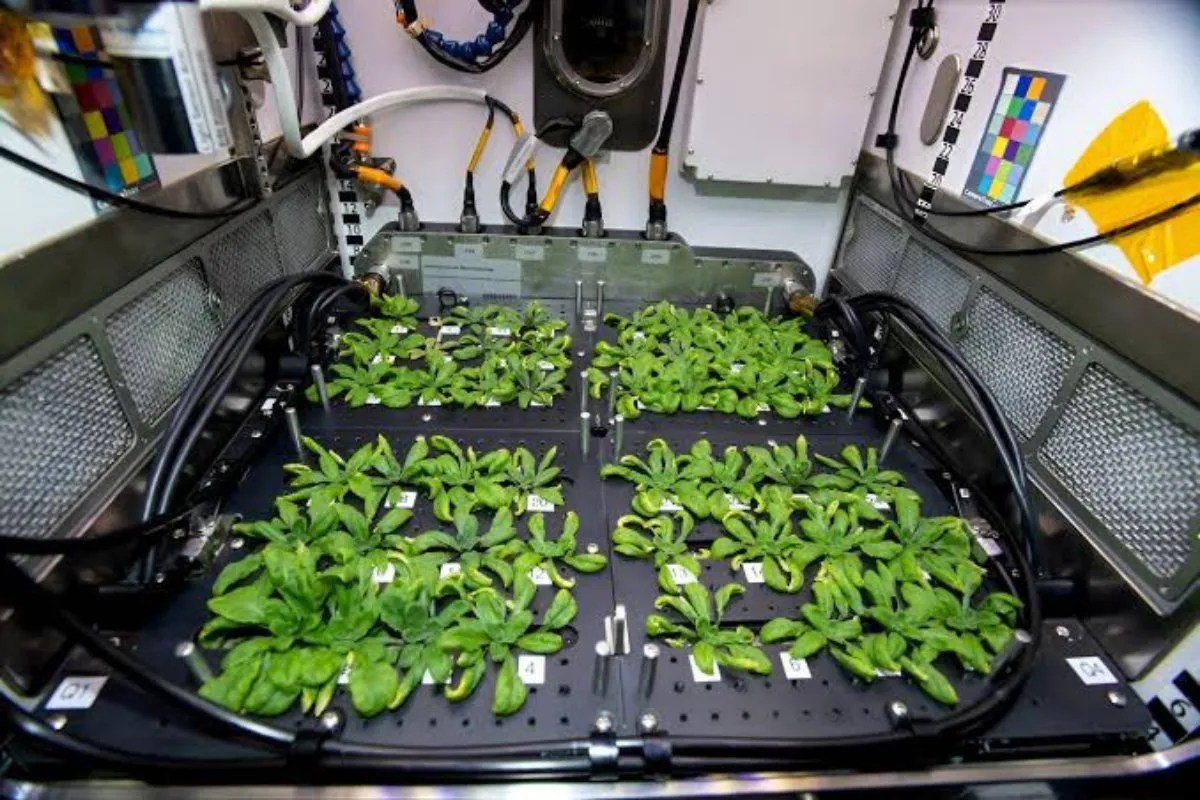
Long duration crewed spaceflight creates an acute logistical bottleneck. Traditional pharmaceutical stabilization protocols degrade rapidly in high radiation environments outside low Earth orbit, rendering conventional chemical stockpiles ineffective over multi-year interplanetary trajectories. To bypass this decay vector, biological synthesis via transgenic plants represents a necessary departure from terrestrial supply chains. NASA initiatives investigating molecular farming in microgravity attempt to solve a simple equation: reducing payload mass by replacing static pill inventories with self-replicating, in situ bio-manufacturing units.
Understanding the viability of orbital molecular farming requires breaking down the core operational components into distinct variables: photon efficiency, genetic expression stability under cosmic radiation, and down-stream extraction friction.
The Thermodynamic and Radiation Constraints of Orbital Cultivation
The primary variable limiting terrestrial pharmaceutical production in space is not biology, but physics. Microgravity alters fluid dynamics, mass transfer, and gas exchange at the cellular level. Without buoyant convection, nutrient delivery solutions form stagnation zones around root structures, starving the plant of vital ions unless forced-air or active-hydroponic systems are introduced. This introduces mechanical failure points and energy overhead.
Concurrently, ionizing radiation in deep space acts as a persistent mutagenic agent. Cosmic rays and solar particle events fracture DNA strands, causing high rates of somatic mutations in actively dividing plant tissues. When plants are engineered to express complex recombinant proteins or pharmaceutical precursors, genomic instability threatens the yield fidelity of the target compound.
[Cosmic Ionizing Radiation] --> [Somatic DNA Mutagenesis] --> [Recombinant Protein Yield Degradation]
To mitigate this, engineered expression vectors must utilize tight promoter controls. Inducible promoters activated by specific chemical or thermal triggers ensure the plant only transcribes the target pharmaceutical compound under controlled conditions, preventing metabolic exhaustion and reducing the likelihood of deleterious mutations during the vegetative growth phase.
The Plant Molecular Farming Mechanism
Manufacturing biologics inside a greenhouse module aboard a spacecraft replaces factory floors with living cellular machinery. The process relies on transient or stable transformation techniques to insert specific genetic sequences into host plants such as Nicotiana benthamiana or microgreens.
The production cycle operates through three distinct operational phases:
- Upstream Biomass Accumulation: Optimizing photosynthetic rates and carbon fixation within closed-loop LED-illuminated growth chambers. Spectral composition must be tightly tuned to maximize quantum yield while minimizing thermal output.
- Target Synthesis: Inducing the expression of the pharmaceutical protein of interest, utilizing the plant's endogenous ribosomes and endoplasmic reticulum for folding and post-translational modifications.
- Downstream Extraction and Purification: Isolating the active pharmaceutical ingredient from green tissue mass. In microgravity, solid-liquid separation and chromatography present severe engineering challenges, requiring novel microfluidic processing units that do not rely on gravity-settling.
Economic and Logistical Cost Functions
Evaluating the utility of space-grown pharmaceuticals requires a strict cost-benefit analysis measured in payload mass versus bioreactor complexity. Launch costs per kilogram to low Earth orbit and beyond establish a high threshold for capital expenditure.
Total Mission Cost = Launch Mass Penalty + Processing Energy Overhead + Extraction Failure Risk
If a standard pharmaceutical stabilization protocol yields a shelf life of eighteen months, the break-even point for orbital bio-manufacturing occurs only when mission durations exceed that threshold, or when the specific biologic cannot be stabilized against radiation degradation in a dry state. Monoclonal antibodies and complex vaccines degrade rapidly in storage, making them primary candidates for on-demand biological synthesis despite the high initial mass penalty of the cultivation hardware.
Downstream Purification Bottlenecks
Growing the plant is only the initial hurdle. The concentration of the target therapeutic protein within total soluble protein is typically low, necessitating a rigorous downstream separation pipeline. On Earth, centrifugation and large-scale column chromatography dominate this space. In a resource-constrained orbital environment, these methods consume excessive electrical power and generate hazardous liquid waste streams.
The alternative involves affinity-based membranes and magnetic separation protocols that operate independently of gravity vectors. Engineering these systems requires miniaturization and high reusability to prevent resupply bottlenecks. If an extraction membrane fouls after three cycles, the maintenance overhead negates the mass-saving advantages of the initial biosynth system.
Strategic Forecast and Implementation Vectors
The successful transition from terrestrial pharmaceutical dependency to in situ orbital production hinges on three interdependent developments.
First, genetic engineers must prioritize host species with accelerated lifecycle parameters and high transformation efficiency, minimizing the volume of growth media required per unit of active pharmaceutical ingredient.
Second, hardware designers need to decouple biological processing units from gravity-dependent fluidics, integrating closed-loop centrifugal bioreactors that scale linearly with crew size.
Finally, regulatory frameworks governing space-manufactured therapeutics must establish standardized validation metrics for purity and potency, ensuring that cosmic radiation does not induce structural anomalies in the final molecular product that could compromise patient safety during deep space missions.


.jpg)