On November 20, 2026, two Russian cruise missiles—identified by Poland’s Defense Ministry as including a Kh-101—and a jet-powered drone impacted Polish territory during a massive overnight bombardment of Ukraine involving over 400 drones and 110 missiles. Polish Prime Minister Donald Tusk rejected the framing of an accidental spillover, characterizing the event alongside NATO allies as an "intentional provocation". Analyzing this incident purely as a border violation misses the underlying strategic calculus. The breach represents a calibrated test of NATO's integrated air defense architecture, timed precisely to disrupt European military exercises preparing for a postwar stabilization mission in Ukraine.
To understand why Moscow risks kinetic contact with a treaty-bound alliance, strategists must separate tactical execution from coercive signaling. Standard news coverage treats airspace violations as binary events—either war or accident. In operational reality, modern gray-zone warfare functions on a spectrum of plausible deniability, forcing defenders to expend disproportionate political and military capital to counter low-cost probes. If you enjoyed this post, you might want to read: this related article.
The Three Vectors of Coercive Signaling
When a state launches long-range precision munitions into the territory of a neighboring defensive alliance without causing mass casualties, the objective is rarely territorial conquest. Instead, the operation targets the decision-making loop of the opposing coalition across three distinct dimensions.
1. Spatial and Temporal Synchronization
The physical coordinates of the November 20 impacts reveal deliberate operational planning rather than guidance failure. The Kh-101 cruise missile landed in a forested area roughly 60 kilometers inside Poland from the Ukrainian border, just 75 kilometers from southeastern Polish staging grounds where thousands of European troops were conducting unprecedented drills. For another look on this development, check out the latest update from NBC News.
A random malfunction during a strike on western Ukraine typically results in a ballistic trajectory decay near the border—within 5 to 15 kilometers—or an erratic flight path caused by electronic warfare jamming. Penetration of 60 kilometers by multiple distinct platforms (two cruise missiles and a jet-powered drone) timed to the exact night preceding allied stabilization exercises indicates pre-programmed waypoints. By placing kinetic impacts within operational earshot of European expeditionary forces, Moscow signaled that staging areas inside NATO territory remain within its engagement envelope.
2. The Cost-Asymmetry of Air Defense Activation
Modern air defense economics favor the attacker in gray-zone scenarios. During the November 20 incursion, NATO and allied forces scrambled high-value assets, including Polish F-16s, Swedish JAS 39 Gripens, and a Dutch A330 Multi Role Tanker Transport (MRTT), alongside alerting ground-based air defense batteries.
- Attacker Expenditure: A single Kh-101 cruise missile and a jet-powered decoy or strike drone represent sunk costs already allocated to a 500-munitions saturation raid against Ukraine. Diverting three airframes across the Polish border added negligible marginal cost to the overall strike package.
- Defender Expenditure: Activating multi-national combat air patrols (CAP), aerial refueling tankers, and ground radar networks burns flight hours, accelerates airframe fatigue, and exposes electronic emissions profiles to Russian intelligence-gathering platforms in Belarus and Kaliningrad.
- Intelligence Harvest: Every time NATO scrambles fighters and illuminates tracking radars in response to a border breach, Russian signals intelligence (SIGINT) maps response times, radar frequencies, and rules-of-engagement thresholds.
3. Political Wedge Exploitation
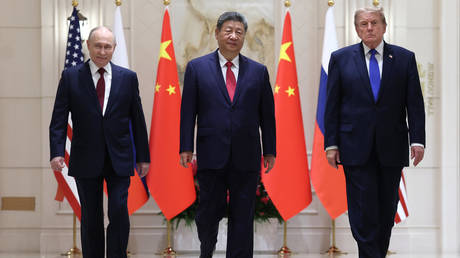
The incident occurred immediately following high-level diplomatic maneuvering in China involving Russian, Chinese, and U.S. leadership, alongside ongoing European anxiety regarding the trajectory of U.S.-Russian negotiations over Ukraine's territorial integrity. Ukrainian President Volodymyr Zelenskyy framed the strike as compensation for diplomatic failure, while Foreign Minister Andrii Sybiha noted the contradiction between Moscow's calls for a "new security architecture" and its violation of existing borders.
From Moscow's perspective, dropping inert or forest-targeted munitions into Poland tests alliance cohesion. It forces NATO Secretary-General Mark Rutte and European capitals to choose between two suboptimal responses:
- Escalatory Retaliation: Invoking Article 4 or Article 5 mechanisms over uninhabited forest impacts risks fracturing coalition unity, as more cautious member states resist kinetic escalation when zero allied casualties occurred.
- Rhetorical Containment: Issuing strong condemnations—such as Rutte’s characterization of a "grave violation"—while refraining from kinetic retaliation validates Moscow's assumption that NATO's red lines are elastic below the threshold of mass casualties.
Technical Mechanisms: Accident Versus Deliberate Penetration
Distinguishing an intentional provocation from a technical failure requires examining the guidance architecture of the munitions involved. Media accounts often conflate mechanical failure with electronic interference, yet each leaves a distinct forensic signature.
The Russian Kh-101 is an air-launched cruise missile utilizing an inertial navigation system (INS) supplemented by GLONASS satellite updates and an optical-electronic terrain contour matching system (Otblesk-U) for terminal guidance. Unlike unguided rockets, a Kh-101 does not simply "drift" 60 kilometers off course due to wind or minor propulsion variances. For three separate platforms—two cruise missiles and a jet-powered drone—to cross the border simultaneously, one of three mechanisms must occur:
- Deliberate Waypoint Programming: Mission planners input turning points inside Polish airspace to approach western Ukrainian targets (such as energy infrastructure in Lviv Oblast) from an unexpected northwestern vector, bypassing Ukrainian air defenses oriented eastward.
- Coordinated Electronic Warfare (EW) Spoofing: Intense GPS/GLONASS jamming along the Ukrainian-Polish border corrupts satellite navigation, forcing the missile's INS to rely on dead reckoning. While EW can degrade accuracy, simultaneous identical drift across three distinct airframes without triggering self-destruct protocols points away from random jamming.
- Terminal Decoy Routing: Jet-powered drones are frequently deployed alongside cruise missiles to saturate defender radar screens and draw surface-to-air missile (SAM) fire. Routing decoys across an international border deliberately forces the neighboring state to reveal its air defense posture.
Polish Prime Minister Tusk’s assertion that the crash "does not look like an accident" rests on this multi-platform correlation. A single stray missile suggests a guidance fault; a synchronized package of cruise missiles and drones penetrating 60 kilometers on the eve of allied exercises indicates intentional route planning.
The Deterrence Trap in Alliance Air Policing
NATO’s current defensive posture along its eastern flank suffers from a structural vulnerability: peacetime rules of engagement (ROE) applied to wartime border proximity. Under standard peacetime air policing protocols, allied aircraft—such as the Polish F-16s and Swedish Gripens scrambled during the November 20 raid—operate under strict visual identification and weapon-release constraints to prevent accidental escalation.
This creates an operational blind spot. A subsonic cruise missile traveling at 700 to 900 kilometers per hour covers 60 kilometers in roughly four to five minutes. If an incoming munition crosses the border at low altitude to evade ground-based radar horizons, the window between radar detection, command authorization, fighter intercept, and kinetic engagement collapses.
Furthermore, shooting down a Russian missile over Polish territory introduces secondary hazards. Intercepting a Kh-101—which carries a 400-kilogram warhead—over populated areas risks raining high-explosive debris onto civilian infrastructure. Conversely, allowing the missile to overfly uninhabited areas until fuel exhaustion or terminal impact, as occurred in the forested crash site, cedes sovereign airspace control to the adversary.
Limitations of Diplomatic and Defensive Countermeasures
Standard policy responses to gray-zone airspace violations exhibit severe operational limits:
- Diplomatic Condemnation and Summons: Summoning ambassadors and issuing joint statements imposes zero material cost on Moscow. In Russian strategic doctrine, Western diplomatic outrage without kinetic consequence is interpreted as confirmation of deterrence dominance.
- Episodic Scrambles: Launching quick reaction alert (QRA) fighters after a border breach occurs is inherently reactive. By the time tankers like the Dutch A330 MRTT are airborne and fighters establish patrol orbits, subsonic missiles have already impacted or exited airspace.
- Static Ground Batteries: Deploying Patriot or SAMP/T batteries strictly inside Polish borders protects specific high-value bases, such as the Rzeszów-Jasionka logistics hub, but cannot provide continuous low-altitude coverage along the entire 535-kilometer Polish-Ukrainian border without exhausting interceptor inventories.
Strategic Restructuring for Forward Air Defense
To eliminate the gray-zone advantage Moscow exploited on November 20, NATO must shift from reactive airspace policing to integrated forward denial. Relying on post-impact forensic investigations and weekend diplomatic visits by alliance leadership guarantees that Russia retains the initiative in setting escalation thresholds.
Alliance planners must execute three immediate operational adjustments:
- Establish a Forward Buffer Engagement Zone: Negotiate bilateral agreements with Kyiv allowing NATO ground-based air defenses and combat air patrols to engage Russian munitions inside a designated 50-to-100-kilometer buffer zone over western Ukraine whenever trajectories threaten allied borders. Neutralizing threats prior to border crossing eliminates debris hazards over NATO territory and removes Moscow's ability to use Polish airspace as an attack vector.
- Pre-Delegate Kinetic Engagement Authority: Revise eastern flank rules of engagement to grant autonomous weapon-release authority to Air Policing commanders for any unannounced, non-transponding aerial target crossing into NATO airspace during active Russian strikes on Ukraine. Eliminating political clearance bottlenecks compresses the sensor-to-shooter timeline from minutes to seconds.
- Deploy Persistent Low-Altitude Sensor Networks: Supplement high-altitude AWACS patrols with networked acoustic sensors, passive radars, and tethered aerostats along the Bug River border. Detecting low-flying cruise missiles and jet-powered drones prior to border penetration denies Russia the element of surprise and preserves high-value interceptor stockpiles for confirmed threats.
For more context on how Polish officials characterized the airspace breach, watch Tusk: Russian missile's crash in Poland was likely a provocation, which covers Prime Minister Donald Tusk's immediate response linking the impacts to ongoing European military exercises.