The air inside a network television studio is always deceptively cold. It is a calculated temperature, designed to keep the heavy machinery from overheating and to prevent the people under the brutal glare of the broadcast lights from visibly sweating. But on a Sunday morning, inside the quiet sanctuary of the Meet the Press set, the chill had nothing to do with the air conditioning.
Political interviews are usually a choreographed dance. There is a silent, unwritten contract between the journalist and the politician. The journalist pushes; the politician pivots. The journalist probes; the politician rehearses. It is a predictable tug-of-war that audiences have watched for decades.
Then, the music stopped.
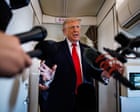
Donald Trump’s abrupt decision to stand up, remove his microphone, and walk away from his interview with NBC News was not just a dramatic television moment. It was a fracture in the very infrastructure of political communication. When the former president clashed with the moderator over familiar, deeply entrenched claims regarding past election results, the collision did not result in debate. It resulted in an empty chair.
To understand why this happened—and why it matters far beyond the political horse race—we have to look at what happens when two entirely different languages are spoken in the exact same room.
The Collision of Two Worlds
For the journalist, the studio is a courtroom of record. The tools of the trade are transcripts, court rulings, verified data, and audio recordings. The goal is to bind the subject to the factual record, to find the objective truth and hold it up to the light.
For Donald Trump, the arena has always operated on a different set of physics. His language is narrative, momentum, and audience connection. To him, a relentless focus on dry, institutional facts is not a neutral act; it is an adversarial tactic.
Consider what happens when these two philosophies meet under the studio lights. The interviewer brings a stack of paper—official certifications, legal dismissals, statements from election officials. Trump brings his conviction, a deeply internalized story of grievance and triumph that his supporters find intoxicating and his critics find exhausting.
The tension builds slowly. A question is asked. An answer is deflected. The interviewer presses, citing a specific date or a specific court ruling.
This is where the machinery of modern political discourse begins to grind. The interviewer is operating on the assumption that if you present enough evidence, the subject will eventually have to engage with it. But Trump does not play by the rules of traditional debate. When the factual wall closes in, the strategy shifts from defense to deconstruction.
The clash over election claims was not a misunderstanding. It was a fundamental rejection of the interviewer's right to set the ground rules. When the pressure reached a critical mass, the response was not a sharper argument. It was an exit.
The Sound of Silence
Silence on television is terrifying. Networks spend millions of dollars ensuring that there is never a dead second, that the screen is always filled with color, motion, and sound. Yet, the most powerful moment of that morning was the absence of a voice.
The image of a politician walking off a set is an indelible one. It cuts through the noise of the standard news cycle because it represents a total breakdown of the system. We are used to seeing politicians dodge questions. We are used to seeing them get angry. We are rarely prepared to see them simply remove the microphone and reject the venue entirely.
Think about the physical reality of that moment. The heavy rustle of the lavalier mic being unclipped. The footsteps echoing on the studio floor. The crew members standing frozen behind the cameras, unsure whether to keep rolling or to cut to a commercial. In those few seconds, the illusion of total control vanished.
This walkout was a calculated message sent directly to a polarized public. To his base, the exit was an act of strength. It was a refusal to submit to what they perceive as a hostile, biased media apparatus designed to trap and discredit their leader. It said, I do not need to sit here and be questioned by these people, and neither do you.
To his detractors, it was the ultimate admission of defensiveness. It was proof that when stripped of a roaring rally crowd and confronted with the cold, unyielding reality of verified facts, the narrative cannot hold itself up. It was a retreat from accountability.
The Invisible Stakes of the Empty Chair
The real casualty of the studio walkout isn't a television network's ratings or a politician's media strategy. It is the very concept of shared reality.
We live in an era where we no longer just disagree on policy; we disagree on the baseline of what is real. When a major political figure walks out of an interview because they refuse to engage with established facts, it signals to millions of people that facts themselves are optional. It suggests that if you do not like the questions being asked, you can simply change the room.
Imagine a courtroom where the defendant can simply dissolve the walls and walk out into the street when the cross-examination becomes too difficult. That is the precedent being set. It turns the press from a vital pillar of democratic accountability into just another optional entertainment channel that can be switched off at will.
The interview format relies entirely on a mutual agreement to participate in a grueling, sometimes unpleasant exercise. It requires a degree of vulnerability from the politician and a degree of persistent respect from the journalist. When that agreement is torn up on national television, the space for meaningful public discourse shrinks just a little bit more.
Beyond the Spectacle
It is easy to get bogged down in the immediate fallout of the event. The social media clips will circulate for weeks. The pundits will dissect the body language, the tone of voice, and the precise moment the interview turned sour. Talk radio will argue about who "won" the encounter.
But looking at the event through the lens of winning and losing misses the deeper, more unsettling truth.
The empty chair left behind on the Meet the Press set is a monument to our current political moment. It is a symbol of a culture that has grown so fractured, so deeply isolated into weaponized silos of information, that we can no longer even sit across a table from one another and agree on the rules of engagement.
The lights in the studio eventually went down. The crew packed up the cables, the cameras were turned off, and the cold air continued to circulate through the empty room. The broadcast ended, but the silence left in the wake of that departure remained, heavy and unresolved, hanging over a nation wondering how it will ever find its way back to a common conversation.