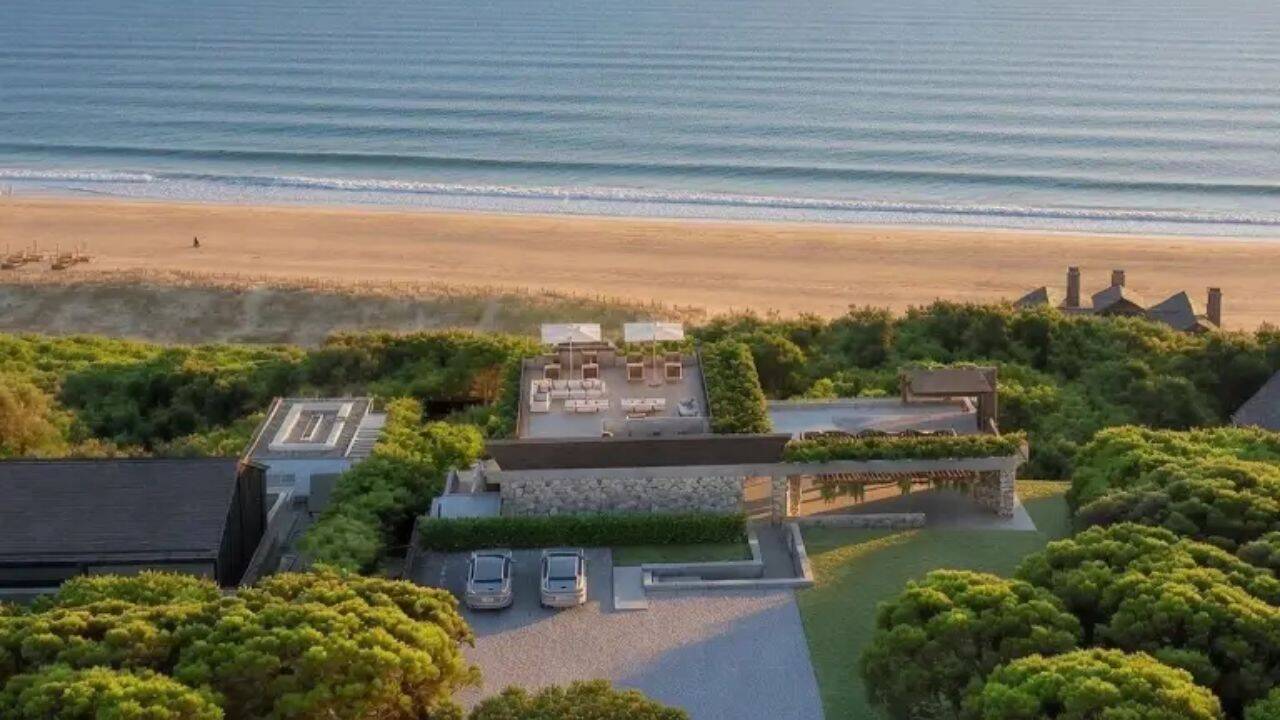
Purchasing an uninhabitable 1,800-square-foot structure built in 1960 for $22.5 million sounds like financial madness. When that structure sits on a 1.1-acre oceanfront parcel on Old Montauk Highway, however, the financial model shifts from residential real estate to institutional-grade regulatory arbitrage.
The primary driver of this valuation is not physical space, nor is it the social utility of living adjacent to Robert De Niro’s historic 1.5-acre estate. The value is entirely derived from a grandfathered structural envelope. In high-end coastal markets, municipal zoning laws and environmental protections act as artificial supply constraints. Buying this property is not an acquisition of wood and dirt; it is the acquisition of an irreplaceable legal loophole.
The Economics of Municipal Entitlement Scarcity
To understand how a "shack" commands an eight-figure valuation, one must analyze the local regulatory framework. The Town of East Hampton, which governs Montauk, has progressively tightened building codes, bluff setback requirements, and maximum gross floor area (GFA) limits over the past several decades.
This regulatory compression creates a stark divergence between two asset classes:
- Unpermitted Land: Subject to current, highly restrictive zoning, which limits construction size, mandates massive setbacks from the crest of the ocean bluff, and requires lengthy environmental reviews.
- Entitled Land: Properties paired with active, legally binding municipal approvals that bypass contemporary restrictions.
The listing at 250 Old Montauk Highway includes fully approved, grandfathered plans designed by global architecture firm SAOTA. These plans permit the construction of a 7,100-square-foot, two-story modern estate featuring four bedrooms, four bathrooms, two powder rooms, and an expansive outdoor program including a cantilevered infinity pool.
[Traditional Permitting Path: 24 to 36 Months] ---> [Environmental Review] ---> [Zoning Board Approvals] ---> [Strict Modern GFA Limits]

[Pre-Approved Permit Path: Immediate Execution] ---> [Grandfathered 7,100 SQFT Footprint] ---> [Bluff Setback Exemptions]
Under modern zoning regulations, securing a permit for a 7,100-square-foot home on a 1.1-acre blufftop lot in Montauk is nearly impossible. A fresh application would be capped at a significantly smaller GFA, with stringent setbacks pushing the building envelope away from the cliffside, severely degradation-testing the ocean views.
The Time Value of Capital in Ultra-Luxury Development
In real estate development, time is a highly punitive cost variable. The listing agent notes that navigating the contemporary regulatory pipeline to secure oceanfront building permits of this scale would take between two to three years—assuming approval is granted at all.
This multi-year delay introduces three distinct financial friction points:
- Opportunity Cost of Capital: Holding $22.5 million in illiquid, non-yielding land for 36 months while paying carrying costs (property taxes, insurance, and interest) destroys the internal rate of return (IRR).
- Permitting Risk: The risk that local zoning boards or the New York State Department of Environmental Conservation (DEC) demand design concessions that reduce the home’s ultimate market value.
- Inflationary Construction Cost Risk: Labor and material costs for high-end coastal construction fluctuate. Deferring the start of construction by three years exposes the developer to significant cost-escalation risk.
By purchasing pre-approved entitlements, a buyer bypasses these friction points entirely. The premium paid on the purchase price acts as an upfront insurance premium against regulatory failure and a direct buyout of a three-year development delay.
The Geography of Premium Valuation: The Old Montauk Highway Slope
The physical topography of Old Montauk Highway contributes to its valuation premium. Unlike the flat, dune-dominated landscapes of East Hampton or Southampton, this corridor features dramatic, sloping bluffs.
This specific topography yields two distinct structural advantages:
Elevated Sightlines
The natural gradient ensures unobstructed, elevated panoramic ocean views that cannot be blocked by future construction. The elevation mitigates the visual impact of public beaches below, preserving strict visual privacy.
Tiered Architectural Design
Slopes allow architects to design stepped, multi-level structures that integrate into the hillside. The SAOTA plans leverage this slope by positioning a cantilevered infinity pool at the edge of the bluff, maximizing the drama of the drop-off while utilizing the grade to conceal structural foundations.
The De Niro Case Study: The Limits of Local Influence
The adjacent property, 242 Old Montauk Highway, highlights the limits of wealth and influence when facing modern municipal zoning. Robert De Niro inherited the 1.5-acre property from his father, who constructed the original 2,278-square-foot cottage in the 1950s.
Despite his global profile and significant resources, De Niro spent years embroiled in local regulatory battles trying to secure approval to demolish the aging structure and build a larger, modern residence. His initial proposals faced fierce resistance from local planning boards, demonstrating that even ultra-high-net-worth individuals cannot easily bypass contemporary environmental and zoning codes once they have expired or require fresh variances.
This precedent proves that purchasing a property with pre-secured, active permits is the only guaranteed way to build a modern megastructure on this stretch of coast. The $22.5 million price tag reflects a market pricing mechanism that accounts for De Niro's public permitting struggles, extracting a premium for certainty.
Structuring the Pro Forma: The Arbitrage Equation
For an institutional developer or a private family office, the investment thesis is simple. The financial viability of this acquisition relies on a clear spread between total development cost and post-construction enterprise value.
$$Enterprise Value > Acquisition Cost + Construction Cost + Carrying Costs$$
Assuming a conservative pro forma:
- Acquisition Cost: $22,500,000
- Estimated Construction Cost (Ultra-luxury finish at $1,500/sqft for 7,100 sqft): ~$10,650,000
- Soft Costs, Financing, and Carry (3 years): ~$4,000,000
- Total Capital Outlay: ~$37,150,000
On a pure cost-basis, the developer is all-in at approximately $37 million. Given recent comps for turn-key, modern oceanfront estates of similar scale along Old Montauk Highway—which frequently command north of $45 million to $55 million—the built-in equity spread sits comfortably between $8 million and $18 million.
The strategy is clear: acquire the paper asset, immediately break ground to preserve the grandfathered status of the permits, construct the SAOTA-designed masterpiece, and capture the liquidity premium of a turn-key asset in an inventory-starved market.