The front door of a suburban home looks remarkably ordinary. It features a brass handle, perhaps a coat of weather-worn paint, and a standard deadbolt. To the neighbors walking by on a crisp morning in Béziers, France, the house appeared to be just another quiet sanctuary. They saw a husband. They saw a wife. They assumed they were witnessing a shared life.
They were wrong.
Behind that ordinary door, a calculated horror unfolded over a decade. A woman named Caroline was not living a life; she was surviving an execution of her autonomy. Her husband, a man she trusted, drugged her systematically, offering her body to strangers on the internet. More than 487 men accepted the invitation. For years, she woke up with unexplained bruises, a profound, heavy exhaustion, and a terrifying sense that her mind was slipping away.
"I felt like I was dying," she would later tell a courtroom.
Her words were literal. When the body is subjected to repeated, unknown trauma, it shuts down. The mind, desperate to protect itself, fractures. This is the reality of severe trauma and systemic abuse: it leaves no physical prison bars, yet it creates a confinement so absolute that the victim cannot even trust their own senses.
The Chemistry of Compliance
We often ask the wrong question when we hear about prolonged abuse. We ask why she didn’t leave. We ask how she could not have known.
To understand how a person can be sold hundreds of times without their conscious awareness, we have to look at the terrifying precision of chemical control. Caroline’s husband utilized powerful anxiolytics and sedatives. These are medications designed to calm the nervous system, but in high, unregulated doses, they induce anteraograde amnesia.
Consider how the brain forms memories. When you experience an event, your hippocampus acts like a scribe, writing the details into the permanent record of your mind. Sedatives like the ones used against Caroline snatch the pen from the scribe’s hand. The event happens. The body experiences the pain, the terror, the invasion. But the brain is prevented from recording the data.
Waking up the next morning feels like climbing out of a thick, toxic mud. Your muscles ache. Your head throbs. You feel a deep, instinctual sense of dread, but when you search your mind for the cause, you find only blank space.
Imagine waking up every day with the physical hangover of a nightmare you cannot remember. You complain to your doctor. You complain to your spouse. The spouse, who is the architect of the nightmare, smiles sympathetically and tells you that you are just tired. He tells you that you are imagining things. He may even suggest you see a psychiatrist.
This is gaslighting elevated to a chemical art form. It dismantles a person's relationship with reality. When your own body tells you something is deeply wrong, but your mind and your partner tell you everything is fine, reality breaks. You stop trusting your instincts. You begin to believe that you are, indeed, losing your mind.
The Myth of the Monster
Society prefers its villains to look like monsters. We want them to have cruel eyes, a menacing sneer, and a presence that radiates danger. It makes us feel safe to believe we can spot evil from a distance.
Dominique, Caroline's husband, did not look like a monster. He was a retired employee, a husband, a neighbor. He used online forums, dark corners of the internet where predatory behavior is normalized through coded language and digital anonymity, to market his wife.
The men who came to the house were not shadowy figures lurking in alleys. They were ordinary citizens. They were truck drivers, accountants, neighbors, and fathers. They arrived at a quiet suburban home, walked through a standard front door, and participated in the destruction of a human being.
This is the most chilling aspect of the case. It reveals how easily the thin veneer of civilization can be stripped away when accountability is removed. These men were given permission by a husband, and that permission was enough for them to silence whatever moral compass they possessed. They chose not to see the limpness of the woman on the bed. They chose not to ask why she was completely unresponsive. They chose to believe a lie because the lie served their desires.
The human capacity for compartmentalization is vast. A man can commit an act of monstrous cruelty at 2:00 AM and sit at a breakfast table with his children at 8:00 AM, passing the butter, asking about homework. The horror is not that these people are different from us; the horror is that they are among us.
The Long Journey Back to the Self
The awakening did not happen all at once. It began with a police investigation into a completely separate incident. Dominique was caught filming women surreptitiously in a local supermarket. When authorities seized his computer, they expected to find voyeuristic videos.
Instead, they found a digital ledger of agony.
They found thousands of photos and videos documenting the abuse of Caroline. When the police finally showed her the evidence, her world did not just change; it shattered. The vague fears, the unexplained illnesses, the years of feeling like she was dying—they were suddenly given a shape. And that shape was the man sleeping next to her.
Healing from this level of betrayal is not a linear process. It is a slow, agonizing reconstruction of a demolished identity.
When a person is subjected to chronic trauma, their nervous system becomes permanently dysregulated. The amygdala, the brain's alarm system, remains stuck in a state of high alert. Every sudden noise, every shadow, every unfamiliar scent triggers a cascade of stress hormones. The body remembers what the mind was forced to forget.
Psychologists refer to this as the somatic memory. The skin remembers. The muscles remember. The heart remembers. Caroline’s fight was not over when the handcuffs snapped onto her husband's wrists. In many ways, her hardest fight was just beginning: the fight to reclaim her own body from the ghosts of nearly five hundred men.
The Collective Responsibility
It is tempting to view this story as an anomaly, an extreme case of domestic horror that belongs in a true-crime documentary rather than a reflection of society. But anomalies do not happen in a vacuum.
This case exposes the systemic failures that allow vulnerable people to disappear while standing right in front of us. It exposes a medical system that often dismisses women's chronic fatigue and physical complaints as psychological issues. It exposes a digital landscape where human beings can be commodified and traded with the click of a button. It exposes a culture that still struggles to understand the true nature of consent.
Consent is not merely the absence of a "no." It cannot exist in the absence of consciousness, freedom, and full awareness. When we fail to teach this clearly, we leave the door open for predators to operate in the gray areas they create.
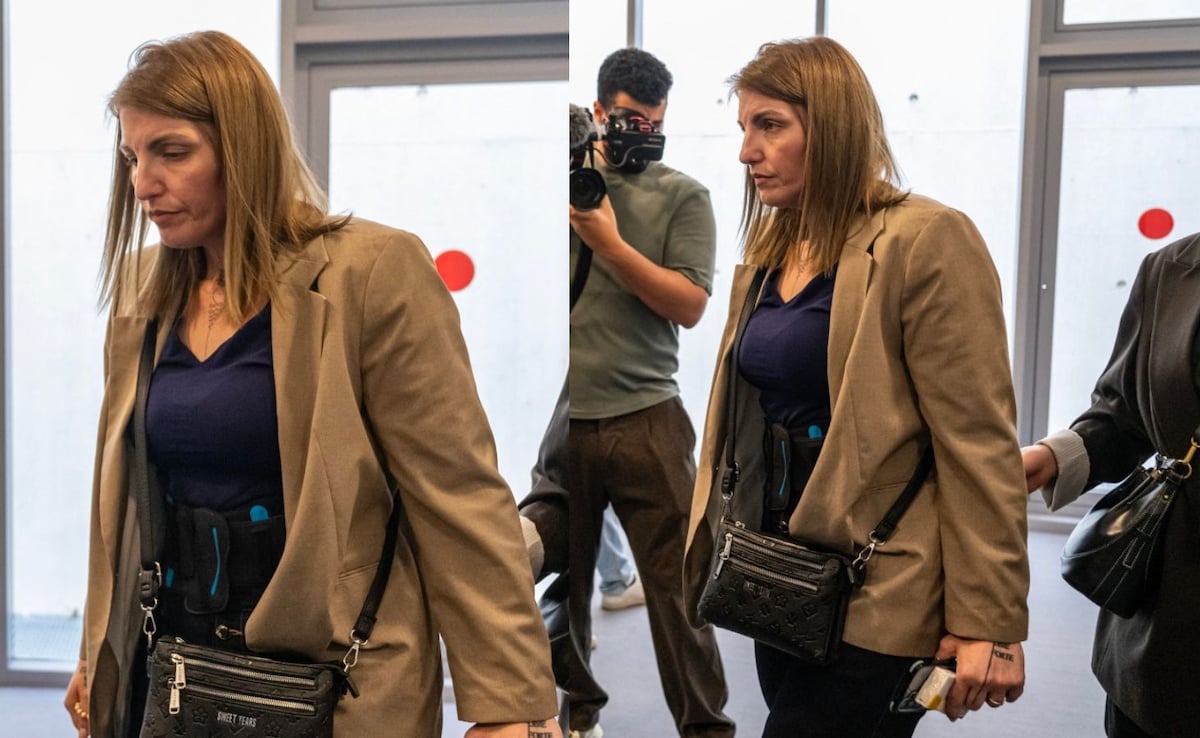
The courtroom in Avignon, where the trial took place, became a theater of raw human pain. Caroline chose not to hide. She refused the protection of anonymity that the law offered her. She wanted the world to see her face. She wanted the world to look at what had been done to her, not as a victim to be pitied, but as a witness to a truth that can no longer be ignored.
By standing in the light, she forced the public to look past the sensational headlines and confront the human cost. She turned a dry statistic—487 men—into a story of survival.
The deadbolt on that suburban door in Béziers has been undone. The house is empty now. But the lesson it leaves behind remains relevant to every community. Evil does not always shout. Sometimes, it operates in absolute silence, relying on our willingness to look away, to mind our own business, and to believe that the ordinary facades around us could never hide a cage.
Caroline survived the disappearance of her own life. Her presence in that courtroom was a declaration that despite the chemicals, despite the men, and despite the husband who tried to erase her, she was still here.