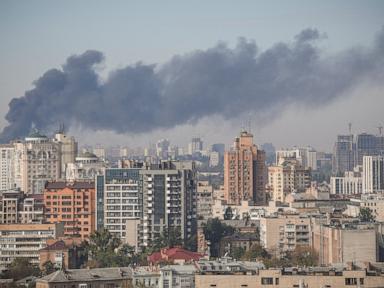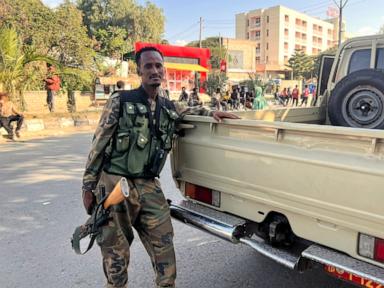
The fragile architecture of the Horn of Africa is fracturing once again. When government-allied commanders and local witnesses confirmed that Eritrean Defence Forces had crossed the border into northern Ethiopian towns like Adigrat and Idaga Hamus, it signaled more than just a tactical skirmish. It marked the collapse of the uneasy post-Pretoria order. Decades of watching statecraft crumble in this region teaches one immutable lesson. Alliances forged in the crucible of mutual convenience rarely survive the morning after.
To understand why troops have moved back across these jagged frontiers, one must look past the immediate denials issuing from Asmara and the urgent diplomatic cables landing in Addis Ababa. The root cause lies in the unhealed wounds of the 2020-2022 civil war and the bitter fallout over sovereign access to the Red Sea. Prime Minister Abiy Ahmed’s push for maritime access rattled Eritrean leadership, while federal repositioning inside Tigray left strategic vacuums that armed actors were all too eager to fill.
The Mechanics of Re-Escalation
Modern military movements in northern Ethiopia rarely happen in a vacuum. When federal forces redeployed to secure central urban centers, auxiliary lines of communication and frontier posts grew vulnerable. Local intelligence operators and regional commanders observed that the withdrawal of federal units acted as an invitation.
In military planning, a vacuum demands occupation. Eritrean forces, deeply invested in neutralizing any resurgence of their historic adversary, the Tigray People's Liberation Front (TPLF), moved quickly to secure buffer zones. Intelligence estimates pointing to thousands of regular troops operating inside the border zone underline a grim reality. This is not merely a border violation. It is a calculated structural intervention designed to dictate the terms of security on Ethiopian soil.
Asmara has consistently rejected these accounts as fabrications driven by an aggressive neighbor, maintaining that the rhetoric emanating from Addis Ababa amounts to a declaration of war. Yet the physical reality on the ground tells a story of deepening entanglement. Checkpoints change hands. Local administrators flee. Civilians caught between federal ambitions, regional proxies, and foreign interventions brace for another cycle of displacement.
Geopolitical Fallout Beyond the Ridge
The crisis refuses to stay local. Every movement along the northern axis sends shockwaves through the Afar region and ripples across the Red Sea basin. External powers watch anxiously as diplomatic channels fray, embassies close, and letters to the United Nations Security Council pile up with accusations of unprovoked aggression.
Consider the broader regional calculus. Somalia, despite diplomatic declarations, finds its alliances strained by the shifting gravitational pull of Addis Ababa and its neighbors. Sudan, consumed by its own catastrophic internal conflict, offers a cautionary tale of what happens when state authority dissolves entirely under the weight of fragmented insurgencies. When multiple fragile states border one another, a localized border infiltration acts like a spark in a dry granary.
The danger now is not just a return to open interstate warfare between Ethiopia and Eritrea—though that risk remains higher than it has been since the 2018 rapprochement. The greater peril is the permanent entrenchment of a shadow war. In this environment, borders become porous fiction, civilian populations become permanent bargaining chips, and sustainable economic development is sacrificed on the altar of perpetual national security paranoia.
Resolving this requires more than rhetorical restraint or temporary diplomatic appeals. It demands a fundamental reckoning with the security dilemmas that have plagued the region for generations. Until leaders in both capitals realize that mutual strangulation achieves nothing, the northern highlands will remain a crucible where peace is perpetually deferred.