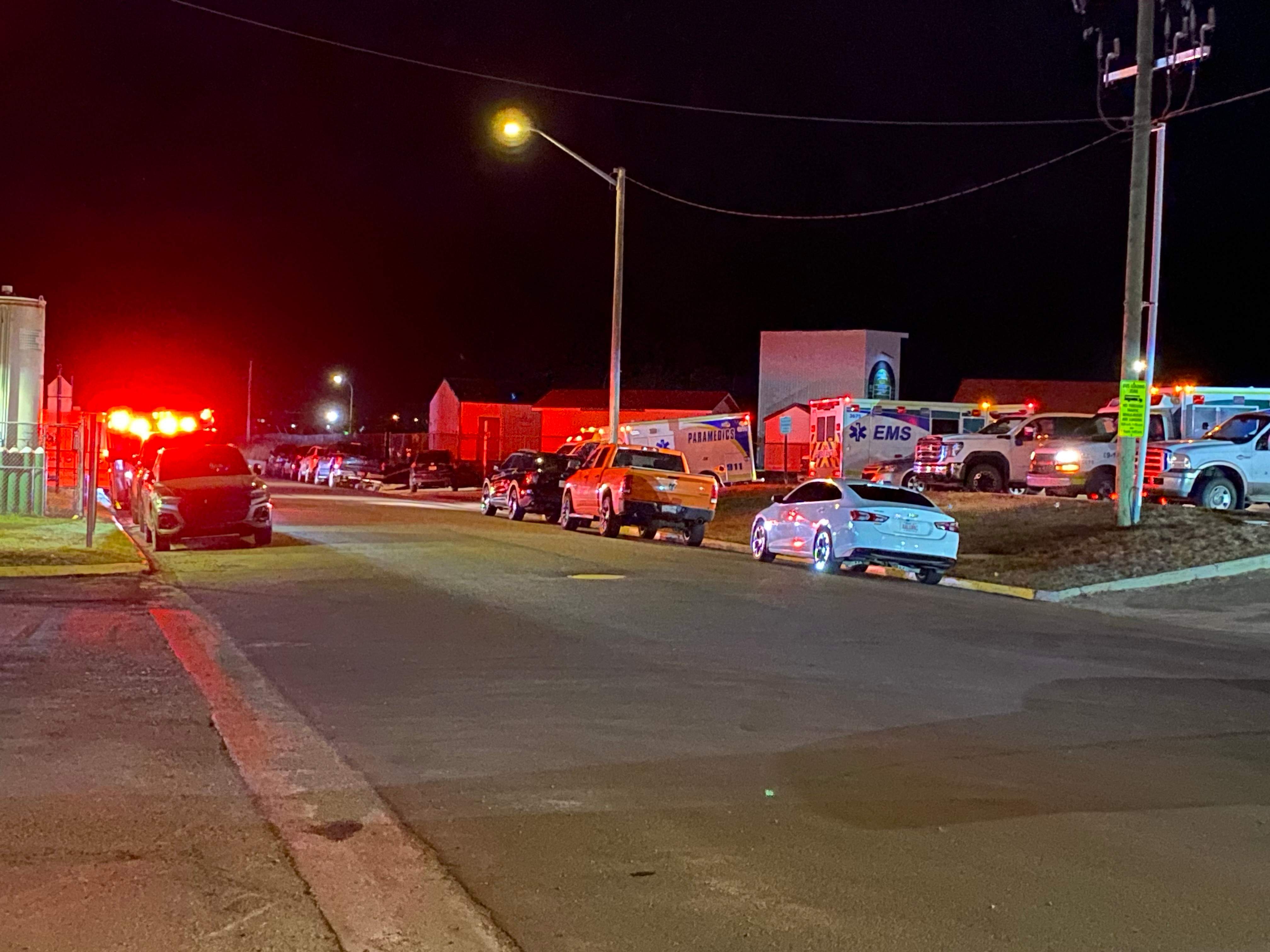
Headline casualty counts from an explosion and fire at CFB Wainwright compress complex failure modes into a single emotional metric that obscures how kinetic energy, confined spaces, and emergency response timelines interact. Because no external source text or verified incident record was supplied with the reference headline, this analysis treats the headline itself as a reporting artifact and establishes a structured framework for evaluating high-severity training base explosions and fires without inventing unverified facts. When a major blast and fire strikes a military installation like CFB Wainwright, operational leaders and analysts need a disciplined breakdown of hazard mechanisms, escalation pathways, and investigation bottlenecks rather than a raw tally of dead and injured personnel.
A headline reporting seven fatalities and dozens of injuries signals a high-energy event with both acute blast or thermal effects and broader secondary casualties. In military training environments, severe explosions and fires typically arise from intersections between energetic materials, fuel or pressurized systems, structural or vehicle confinement, and human proximity during live exercises or maintenance. Separating confirmed operational facts from analytical hypotheses keeps risk assessments grounded. Confirmed facts in a real-world incident are limited to what verified authorities establish on the ground: location, time, casualty counts, active fire status, and immediate containment actions. Everything beyond that—exact ignition source, sequence of propagation, or human error—remains an educated hypothesis until physical evidence, telemetry, and witness accounts are reconciled.
The Four Hazard Mechanisms Behind Base Explosions and Fires
Evaluating an explosion and fire at CFB Wainwright requires mapping the physical mechanisms that convert stored energy into destructive force and thermal load. Raw casualty numbers rarely reveal whether the primary driver was overpressure, radiant heat, toxic smoke, or flying debris, yet each mechanism demands a different immediate response and long-term engineering fix.
- Energetic Material Detonation or Deflagration. Munitions, propellants, pyrotechnics, and range ordnance release chemical energy rapidly. Detonation generates a supersonic shockwave with sharp overpressure peaks that cause barotrauma and structural failure, whereas rapid deflagration produces intense thermal expansion and flame fronts that inflict severe burns and secondary ignition.
- Hydrocarbon and Pressurized Fluid Release. Fuel depots, armored vehicles, generators, and maintenance bays concentrate volatile liquids and compressed gases. A containment breach followed by an ignition source creates pool fires, vapor cloud deflagrations, or boiling liquid expanding vapor explosions (BLEVEs) that sustain high heat flux long after an initial shockwave passes.
- Confinement and Fragmentation Dynamics. Blast waves behave differently in open training areas than inside hangars, bunkers, armored hulls, or dense equipment clusters. Enclosure amplifies reflected overpressure and channels heat and smoke, while nearby metal casings, glass, or loose gear turn into high-velocity projectiles that account for a large share of non-fatal and fatal trauma.
- Secondary Fire Escalation. An initial blast frequently compromises fire suppression lines, electrical distribution, or secondary fuel containers. A manageable localized ignition can escalate into a multi-compartment fire when structural damage blocks access or creates new fuel pathways.
Consider a hypothetical training scenario inside a vehicle maintenance bay or forward staging point. A pressurized fuel line or propellant container ruptures near an active heat or spark source, triggering a flash fire and overpressure wave. Personnel closest to the release face immediate thermal and blast trauma, while those slightly farther away suffer concussion, lacerations, or smoke inhalation as burning fuel spreads across adjacent equipment. The first mechanism explains the initial spike in severity; the fourth explains why injury counts climb into the dozens as heat, fumes, and structural hazards persist.
Cause-and-Effect Chains Standard Reporting Misses
Standard breaking news coverage treats an explosion and fire at CFB Wainwright as a discrete event with a clean start and finish. Operational analysis treats it as a causal chain where upstream conditions set the scale of downstream harm.
The first missed link is exposure density versus hazard magnitude. A moderate energy release in a crowded briefing area, staging yard, or repair bay can produce dozens of casualties, while a far larger release in an isolated sector may injure none. Casualty totals reflect where people were standing and how quickly they could egress as much as they reflect the size of the blast.
The second missed link is triage saturation and casualty classification. "Dozens injured" spans a wide clinical spectrum, from minor inhalation or contusions to severe blast lung, deep thermal burns, and fractures. Emergency medical systems on a military base face a surge dynamic: initial stabilization capacity can tighten rapidly when multiple severe cases arrive simultaneously, making evacuation routing and regional hospital transfer capacity decisive variables in survival.
The third missed link is containment trade-offs during active fire. Fighting a complex fire involving potential ordnance, hazardous chemicals, or lithium and fuel loads forces commanders to balance rapid rescue and fire attack against standoff distances for personnel safety. Waiting for scene stabilization protects responders from secondary blasts, yet any delay in reaching trapped or severely burned victims affects clinical outcomes.
This creates a structural tension between speed and verification. Early reports often state that a fire is contained or under control while hot spots, smoldering debris, or unstable structures remain hazardous. Treating early containment statements as final safety clearances exposes recovery and investigation teams to avoidable risk.
Why Casualty Counts Distort Severity and Risk
Relying on "7 dead, dozens injured" as the primary measure of an explosion and fire at CFB Wainwright distorts how organizations judge risk. High headcount numbers draw immediate attention, but they flatten critical distinctions across injury types, recovery timelines, and systemic vulnerabilities.
- Fatality versus morbidity asymmetry. Seven deaths represent an irreversible loss, while dozens of injuries carry long-term operational and medical costs, including prolonged rehabilitation, surgical care, post-traumatic stress, and temporary or permanent loss of specialized personnel.
- Denominator blindness. Without knowing how many personnel were on site, what task was underway, or how frequently similar operations occur, raw casualty numbers cannot establish whether an event reflects an extreme outlier or a recurring high-exposure pattern.
- Lagging versus leading indicators. Casualties are strictly lagging indicators. Near-misses, equipment faults, safety stand-downs, and supply or maintenance backlogs indicate risk before an explosion occurs, yet they rarely surface in headline incident coverage.
A useful conceptual lens here is the cost function of a major base incident, which combines immediate life loss, acute medical surge demand, asset destruction, operational downtime, and investigation overhead. Minimizing one term—such as rushing to resume training tempo—can inflate another if root causes remain unaddressed.
Investigation Bottlenecks and Operational Limits
Investigating an explosion and fire at CFB Wainwright involves layers of technical, military, and regulatory scrutiny that move more slowly than public demand for answers. Scene preservation is the first bottleneck: investigators must document blast vectors, debris patterns, thermal signatures, and equipment states before cleanup or rebuild efforts erase physical evidence.
Evidence reconstruction faces practical limits even under disciplined protocols. High-order blasts and intense fires consume key components, distort metal metallurgy, and damage electronic logs or sensor feeds. Witness recall under acute stress and noise also varies sharply, requiring cross-checks against physical damage and procedural records rather than relying on single accounts.
No analytical framework or investigation checklist removes uncertainty overnight. Complex incidents often involve overlapping mechanical, environmental, and human factors where no single cause explains the entire outcome, and premature conclusions can send safety reforms in the wrong direction.
Tactical Framework for Post-Incident Analysis and Response
Analysts, commanders, and safety teams reviewing an explosion and fire at CFB Wainwright can apply a structured sequence to separate noise from actionable findings without overstepping verified facts.
- Lock the verified baseline. Record only confirmed facts—location, timestamp, verified fatalities and injury counts, active hazard status, and participating response units—and tag every unconfirmed detail as pending verification.
- Map energy sources and confinement. Identify all energetic materials, fuels, pressurized vessels, and enclosed spaces within the affected footprint to narrow plausible ignition and propagation pathways.
- Audit egress, triage, and surge flow. Trace how personnel moved away from the hazard zone, how initial first aid was delivered, and where medical surge bottlenecks occurred from scene to definitive care.
- Separate immediate triggers from latent conditions. Distinguish the final spark or failure from upstream maintenance gaps, procedural workarounds, staffing strain, or safety-margin erosion.
- Gate operational resumption on verified controls. Require concrete risk mitigations—revised procedures, hardware checks, or hazard isolation—before restarting comparable high-risk activities rather than relying on time elapsed alone.
Applying this sequence turns a raw headline into a disciplined operational review. Rather than chasing speculation around an explosion and fire at CFB Wainwright, decision-makers can focus attention where evidence exists, protect personnel during recovery, and test whether existing safeguards actually hold under stress.
The decisive strategic move after a severe base explosion and fire is to treat the incident investigation as a system-wide stress test of hazard isolation and medical surge capacity rather than a hunt for a single scapegoat. Enforce a strict evidence gate before resuming parallel high-risk operations, audit every adjacent facility that shares similar fuel, ordnance, or confinement profiles, and publish clear milestones for verified findings so operational readiness recovers on solid ground.