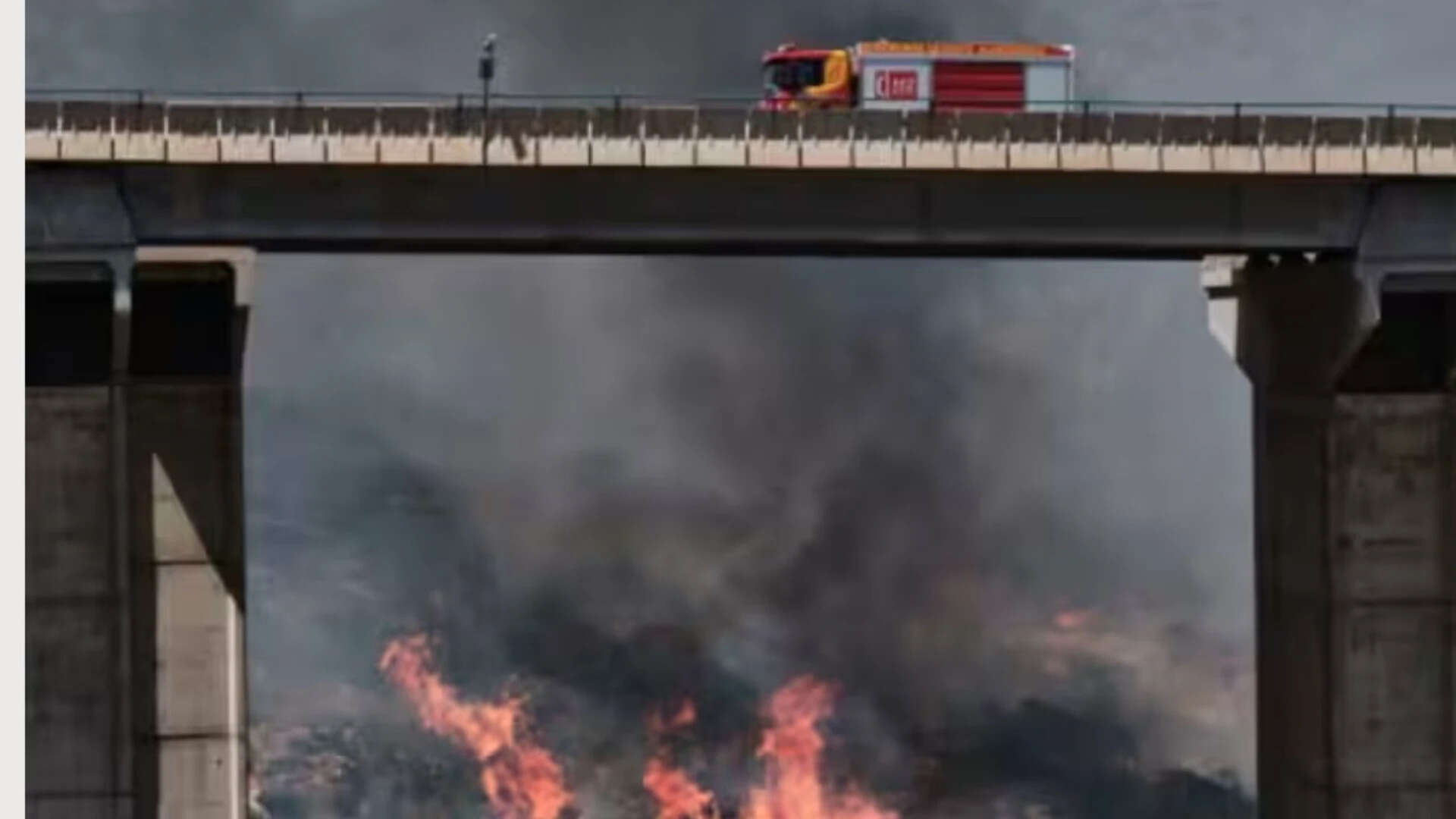
The catastrophic loss of 13 lives in Spain’s Almería province demonstrates that natural disasters are not merely ecological anomalies; they are structural failures at the intersection of climate shifts, demographic sorting, and infrastructure bottlenecks. Twelve of the thirteen casualties in the Los Gallardos fire—including seven British nationals, three Belgians, one French citizen, and one American—were foreign nationals. This disproportionate outcome reveals a systemic vulnerability specific to northern European retirees and expatriates living in the Mediterranean wildland-urban interface (WUI).
The tragedy was not a random act of nature, but the predictable consequence of a specific thermal and infrastructural hazard function. Analyzing this event requires looking beyond grief to dissect the mechanical failures in evacuation logistics, micro-geographic risk factors, and the compounding variables that turn a localized ignition into a fatal demographic trap. In related developments, take a look at: The Real Reason Chinese Airports Are Building Luxury Villas for Stray Cats.
The Pyrogenic Catalyst: Fire Behavior Under Extreme Thermal Loads
The wildfire in Almería, which consumed approximately 7,000 hectares (more than 17,000 acres) of forest and scrubland, was ignited by a mechanical failure—a fallen electrical utility cable on a dry road. The rapid escalation from a localized spark to a lethal regional conflagration can be modeled through three distinct physical pillars.
[Mechanical Spark: Fallen Utility Cable]
                │
                ▼
[Fuel Load: Desiccated Biomass (Southeastern Spain Scrubland)]
                │
                ▼
[Atmospheric Forcing: High Winds + Sustained >40°C Temperatures]
                │
                ▼
[Result: Rapid-Onset, Highly Unpredictable Fire Behavior]
- Sustained Thermal Forcing: Spain’s Southern and Eastern regions have faced systemic, compounding heatwaves, with temperatures consistently exceeding 40°C. This extreme heat operates as a moisture-stripping mechanism, accelerating the transition of local vegetation (scrubland and pine forests) into highly combustible fuel.
- Atmospheric Wind Coupling: High local winds fanned the flames, driving the fire's rate of spread beyond the threshold of standard municipal suppression capabilities. This wind-driven spread reduces the warning window for downwind communities from hours to minutes.
- The Combustible Terrain of Almería: The province features rugged, undulating topography characterized by steep ravines and dry riverbeds. In wildfire dynamics, steep slopes act as natural chimneys, preheating upslope fuels and exponentially increasing the rate of fire climb.
The Expat Demographic Trap: Why Foreign Nationals Bore the Brunt
The critical question raised by the post-mortem data is why 92% of the fatalities were foreign nationals in a country where they represent a minority of the population. The explanation lies in a structural phenomenon known as the "Expat Demographic Trap," which is defined by three compounding variables. Lonely Planet has also covered this important subject in extensive detail.
1. Geographic Isolation and the Appeal of High-Risk Topography
Foreign retirees in Spain actively seek picturesque, isolated villages like Bédar and the rural valleys of Los Gallardos. These locations are characterized by low-density housing integrated directly into dense wildland vegetation (WUI zones). While native populations have historically concentrated in dense, urbanized municipal centers with minimal immediate fuel loads, the expat preference for rustic isolation places them directly in the path of maximum fuel accumulation.
2. The Information and Communication Deficit
During a rapid-onset disaster, the latency of communication determines survival. Non-native residents frequently experience a structural bottleneck in information flow:
- Linguistic Barriers: Official emergency alerts, local radio broadcasts, and civil protection instructions are primarily disseminated in Spanish.
- Social Isolation: Expats are often disconnected from informal local communications networks, such as neighborhood WhatsApp groups or word-of-mouth warnings from municipal workers.
- Conflicting Directives: In the Los Gallardos incident, conflicting instructions emerged. While local municipal authorities advised some residents to shelter in place, others attempted late, spontaneous evacuations. Without precise, native-level comprehension of real-time official updates, expat groups are highly susceptible to making delayed, high-risk decisions.
3. Mobility and Age Vulnerability
The demographic profile of the victims skewed heavily toward older adults, including a 93-year-old British national who later succumbed to 20% surface area burns in the hospital. Reduced physical mobility, age-related sensory decline, and pre-existing health conditions significantly degrade an individual's capacity to execute a rapid self-evacuation under high-stress, low-visibility conditions.
The Logistics of Escape: Vehicular Entrapment and the Ravine Phenomenon
The physical evidence from the Almería fire—specifically the presence of burned-out vehicles lining the escape routes out of Bédar—illustrates a classic failure in evacuation physics.
[Decision Delay: Pet Retrieval / Packing / Info Deficit]
                │
                ▼
[Delayed Evacuation: Simultaneous Vehicular Outflow]
                │
                ▼
[Bottleneck: Single-Lane Mountain Roads (Bédar / Almería)]
                │
                ▼
[Radiant Heat Exposure: Vehicle Combustion & Air Intake Oxygen Depletion]
                │
                ▼
[Fatal Entrapment]
The primary cause of death in high-intensity wildfires is rarely direct contact with the flame front; instead, it is asphyxiation from carbon monoxide, superheated air inhalation, or radiant heat exposure.
When a fire threatens an isolated hillside community, residents naturally flee via the primary access road. However, the transport infrastructure of historic Mediterranean hillside villages is structurally incapable of handling sudden, high-volume evacuation traffic. Narrow, single-lane roads quickly bottle-neck.
As the fire front approaches the road, the radiant heat is sufficient to combust vehicles even without direct flame contact. Vehicles traveling through dense smoke suffer engine failure due to oxygen depletion in the air intake, trapping occupants in a metallic thermal conductor. In this specific disaster, multiple victims died inside their cars as they attempted to flee. One victim became trapped and perished while attempting to rescue domestic pets, illustrating how minor decision-making delays can close the narrow survival window.
Conversely, those who attempted to flee on foot without clear visibility faced topographical traps. The rescue of a British couple found badly burned and semi-conscious in a ravine highlights the danger of off-road evacuation. Ravines act as accumulation points for dense, toxic smoke and superheated gasses, while their steep sides make physical escape nearly impossible once exhaustion and smoke inhalation set in.
Operational Recommendations for Mediterranean WUI Communities
To mitigate the systemic risks exposed by the Almería disaster, regional governments and expat associations must transition from reactive recovery to proactive, structural hazard mitigation.
Decentralized Emergency Alerting Systems
Municipalities with high foreign populations must implement multi-language, localized cell-broadcast alerts that bypass standard SMS networks to avoid network congestion. Emergency communications must be broadcast simultaneously in Spanish, English, French, and German, utilizing clear, non-ambiguous action directives (e.g., "Evacuate immediately via Route A" vs "Shelter in place inside a closed masonry structure").
Infrastructure and Fuel Modification Zones
Local authorities must enforce aggressive defensible space ordinances around isolated villas. This includes a mandatory 30-meter radial clearing of all pyrophytic vegetation (such as pine and eucalyptus) and the installation of automated, high-volume external sprinkler systems supplied by dedicated gravity-fed water tanks. Additionally, single-access mountain communities must identify and clear secondary emergency-only egress routes to prevent vehicular bottlenecks.
Community-Led Expat Warden Networks
Given the limitations of formal civil protection services during simultaneous multi-point ignitions, expat enclaves must establish structured, community-led warden systems. These networks should map vulnerable, low-mobility residents, manage localized emergency communication trees, and conduct annual, pre-summer evacuation drills. Relying on spontaneous heroic intervention—such as the Civil Guard team that found survivors in a ravine based on an intuitive hunch—is an unsustainable strategy for disaster management.


