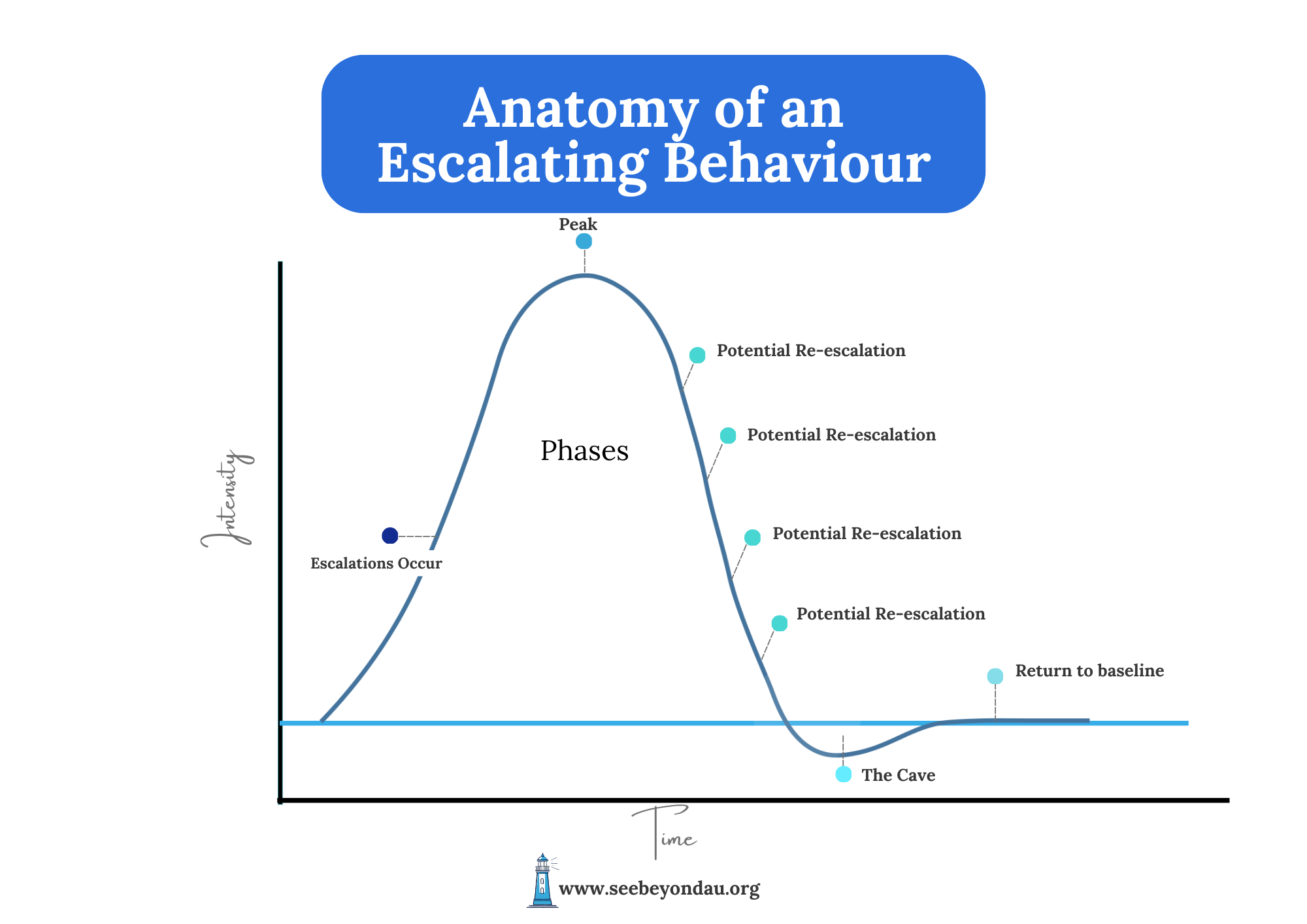
Military escalation between the Internationally Recognized Government of Yemen and the Houthi movement represents a structural shift in a protracted conflict frozen by years of international mediation. When state-aligned factions abandon defensive postures for offensive maneuvering, the underlying mechanics of the war change. Observers tracking these developments frequently misread the kinetic spikes as isolated border skirmishes, missing the larger realignment of resources, regional incentives, and logistical constraints that dictate state survival in a fractured territory.
Understanding this escalation requires deconstructing the operational capabilities, economic vulnerabilities, and strategic bottlenecks facing both belligerents. The Yemeni state must project force across fragmented internal lines while managing severe fiscal depletion. Simultaneously, the Houthi administration relies on decentralized asymmetric defense, sustained revenue extraction from urban centers under its control, and maritime disruption leverage to offset conventional military disadvantages. This analysis maps the structural vectors driving the current confrontation, the economic cost functions governing both sides, and the systemic limits constraining total victory. For a different look, see: this related article.
The Dual-Front Operational Matrix
To evaluate the Yemeni government's recent offensive posture, analysts must examine the operational environment through a three-tiered framework: conventional force concentration, territorial control economics, and supply chain vulnerability.
State-aligned forces have historically suffered from structural fragmentation. Military units in Yemen often operate under disparate command structures, ranging from the Southern Transitional Council to regional brigades loyal to the presidential leadership council. When these disparate elements coordinate offensive operations against Houthi defensive perimeters in contested governorates such as Al-Bayda, Marib, or Taiz, the primary friction point is not tactical bravery but logistical synchronization. Further reporting on this matter has been published by The Guardian.
The Houthi defensive architecture relies on depth and fortification. Over years of static warfare, Ansar Allah has embedded command nodes within civilian infrastructure and constructed complex tunnel networks across mountainous terrain. This architecture forces state-aligned attackers into high-cost frontal engagements unless they can achieve complete air superiority and electronic warfare dominance—both of which remain constrained.
Consequently, the Yemeni government's escalation strategy is less about achieving an immediate, total military conquest of Sanaa and more about shifting the bargaining threshold. By pressuring Houthi supply lines and contesting strategic economic corridors, the state aims to degrade the adversary's internal resource distribution network.
The Economic Cost Function of Protracted Conflict
Military capacity is a direct derivative of fiscal health. Both factions operate under extreme financial constraints, yet their revenue models differ fundamentally, dictating their endurance thresholds.
The Internationally Recognized Government depends heavily on hydrocarbon exports, primarily crude oil from Marib and Shabwah, alongside customs revenues collected at select southern ports. However, Houthi drone and missile strikes targeting export infrastructure have historically crippled state export capacity. Without stable foreign currency inflows, the state struggles to sustain public sector payrolls, resulting in currency depreciation in government-held areas and subsequent civil unrest. The decision to escalate military operations is therefore an economic necessity disguised as a tactical maneuver; failing to challenge Houthi hegemony risks the permanent erosion of state territorial claims and the loss of remaining revenue-generating assets.
Conversely, the Houthi fiscal model is consolidated through internal taxation, fuel import duties managed via the port of Hodeidah, and the systematic extraction of capital from commercial entities operating within their territory. While this centralized control grants them short-term operational cohesion, it creates deep societal vulnerability. The population under Houthi administration endures severe economic deprivation, relying on international humanitarian aid distribution systems that remain prone to diversion and taxation by local authorities.
When state-aligned forces increase pressure on transport routes connecting Hodeidah to central highlands, they directly target the Houthi administrative budget. The cost function shifts: the Houthis must divert resources from external military adventures to internal security and subsidy management, straining their administrative capacity.
Regional Signaling and International Constraints
No domestic military action in Yemen occurs within a vacuum. Regional actors and international stakeholders exert continuous gravitational pull on local decision-making, shaping the boundaries of acceptable escalation.
The primary external variable is the stance of neighboring regional powers, particularly Saudi Arabia and the United Arab Emirates. Saudi Arabia's overarching strategic objective remains securing its southern border and achieving a durable exit from the Yemeni quagmire via a negotiated settlement. A sudden, aggressive campaign by the Yemeni government threatens to derail fragile bilateral de-escalation talks between Riyadh and Sanaa. Therefore, state-aligned offensives are frequently subject to external pacing mechanisms. If allied sponsors restrict logistical support or intelligence sharing due to fears of regional destabilization, state forces quickly stall, exposing the limits of their independent operational reach.
Simultaneously, international maritime security dynamics in the Red Sea and the Bab el-Mandeb strait tie the internal conflict directly to global trade networks. Houthi actions against international shipping lanes have drawn retaliatory kinetic strikes from Western coalitions. This dynamic creates a paradoxical environment for the Yemeni government. On one hand, international condemnation and military degradation of Houthi missile arsenals weaken the movement. On the other hand, the generalized state of regional crisis hardens Houthi internal mobilization narratives, allowing the leadership to frame domestic state offensives as foreign-backed aggressions.
Systemic Bottlenecks and Strategic Horizons
Evaluating what comes next requires mapping the structural bottlenecks that will truncate either side's ambitions. Total military victory remains a statistical impossibility for both factions. The Yemeni state lacks the manpower and logistical unity to occupy and pacify the densely populated northern highlands. Conversely, the Houthi movement lacks the economic foundation and international legitimacy required to govern a unified, globally integrated Yemeni state without triggering catastrophic structural collapse.
The current escalation will likely culminate in a compressed equilibrium defined by localized territorial adjustments rather than systemic collapse. State-aligned forces can successfully disrupt Houthi forward positions and complicate their logistical webs, but they cannot permanently neutralize asymmetric retaliation capabilities without sustained, multi-year foreign intervention. The Houthi administration can absorb territorial attrition along contested peripheries, but protracted economic strangulation will steadily erode their internal social contract.
Future developments depend entirely on the elasticity of local supply chains and the willingness of external patrons to underwrite prolonged hostilities. Decision-makers must abandon the illusion of a clean military resolution and instead focus on managing the kinetic thresholds that prevent total humanitarian collapse while preserving leverage for eventual structural negotiations.