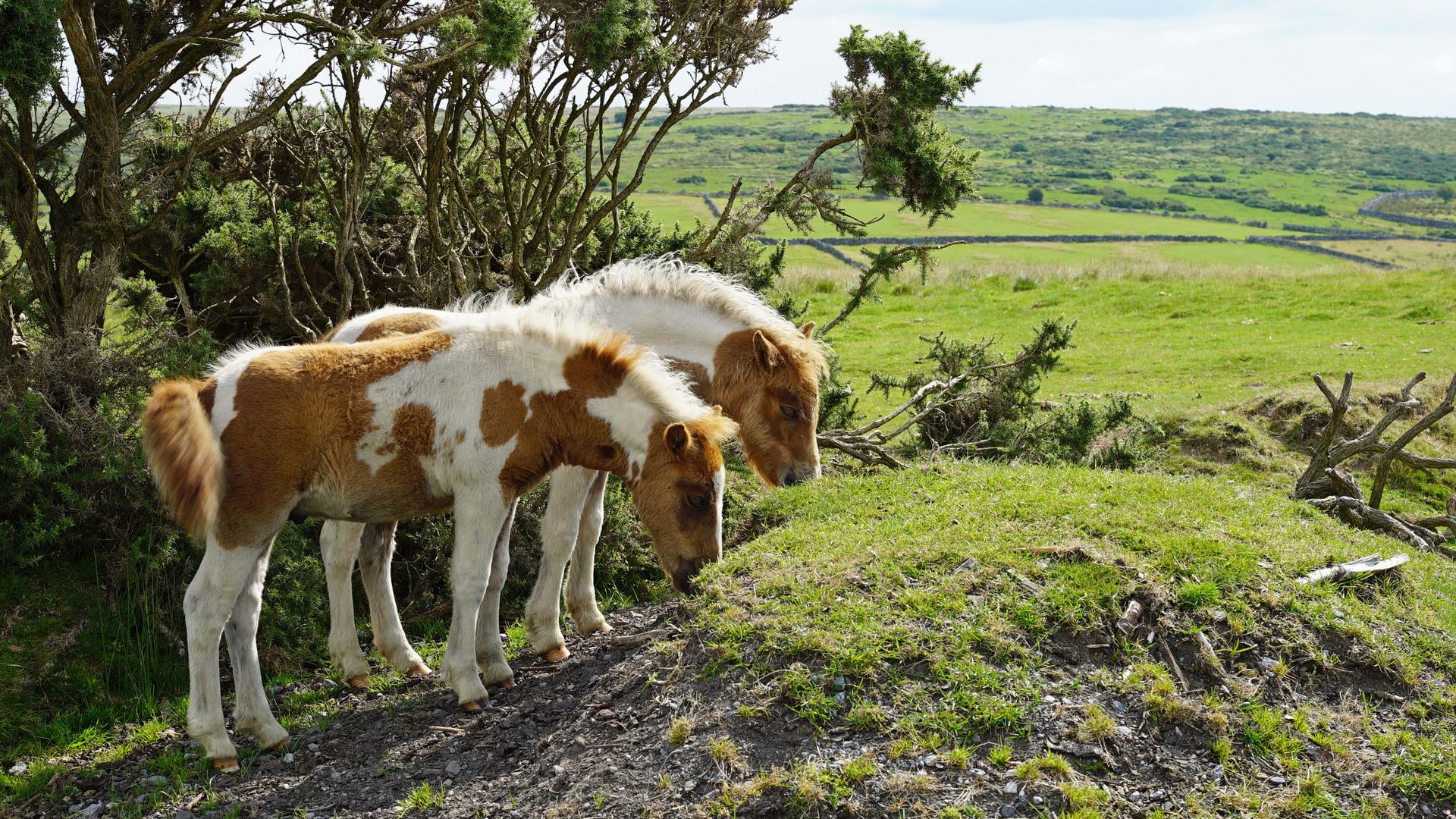
The escalating conflict between UK conservation bodies and Dartmoor commoners highlights a structural flaw in modern agri-environment policy: the misapplication of blunt, single-variable regulatory frameworks to complex, multi-species ecosystems. Media narratives framing the dispute as a planned, state-sanctioned slaughter of the Dartmoor Hill Pony distort the underlying mechanics. The true threat stems from a policy-induced economic bottleneck. By integrating historically exempt semi-wild equines into uniform livestock grazing quotas under new Countryside Stewardship and Environmental Land Management schemes, regulatory frameworks inadvertently trigger market incentives that make the preservation of these herds financially unviable for local land managers.
To evaluate the long-term survival of the Dartmoor Hill Pony—a population that has declined from roughly 7,000 in 1999 to fewer than 1,000 breeding mares—one must dissect the systemic intersection of ecological carrying capacities, public funding mechanisms, and livestock economics.
The Grazing Substitution Model
The core driver of the projected 56% to 89% reduction in Dartmoor livestock numbers is the transition from Higher Level Stewardship (HLS) agreements to stricter land management frameworks overseen by Natural England. The regulatory body’s directive aims to address severe overgrazing across degraded protected sites by reducing total biological grazing pressure.
The structural failure of this model lies in its treatment of livestock units. By accounting for ponies within the same aggregate biomass ceiling as commercial sheep and cattle, the framework establishes a zero-sum competition for limited grazing allocations. The economic consequence of this accounting mechanism can be modeled through a standard substitution function based on relative market returns.
The Profitability Disparity
Commoners operate as private businesses utilizing communal grazing rights. To maximize marginal returns per livestock unit under strict total volume caps, capital must flow toward high-yield assets.
- Commercial Livestock (Cattle and Sheep): Possess robust downstream supply chains, predictable meat and wool commodity pricing, and established livestock market infrastructure.
- Equine Populations (Dartmoor Hill Ponies): Yield near-zero or negative commercial market value upon extraction during the annual autumn "drift." Training, taming, and domestic rehoming operations require significant labor inputs that exceed the market value of the unhandled animal.
Because the new regulatory framework does not isolate or carve out equines from the global stocking density cap, commoners face a binary operational choice. They must either reduce revenue-generating cattle and sheep numbers to retain non-revenue-generating ponies, or liquidate pony herds to protect the commercial viability of their agricultural enterprises.
The Regulatory Disconnect
Natural England operates under standard statutory limitations; the agency lacks the legal authority to mandate an animal cull, nor has it explicitly recommended one. The anticipated population collapse is an unintended behavioral response to economic constraints. If commoners choose to preserve their commercial herds, the surplus ponies gathered during the autumn drift cannot legally return to the moor. Without an external, subsidized market to absorb hundreds of unhandled, low-commodity-value equines annually, the default operational outcome for displaced stock becomes private processing or euthanasia.
The Ecological Asymmetry of Multi-Species Grazing
The uniform reduction of livestock numbers rests on a flawed ecological assumption: that all grazing pressure is functionally homogenous. In reality, the dietary mechanics and dental anatomy of equids introduce unique land-management behaviors that cannot be replicated by bovines or ovines.
       [Uniform Stocking Quota Imposed]
                      │
         ┌────────────┴────────────┐
         ▼                         ▼
[Commercial Cattle/Sheep]   [Dartmoor Hill Ponies]
(High Market Value)         (Low/Negative Market Value)
         │                         │
         ▼                         ▼
  [Stock Retained]          [Stock Liquidated]
         │                         │
         └────────────┬────────────┘
                      ▼
       [Loss of Equine Grazing Mechanics]
                      │
                      ▼
       [Molinia Monoculture Expansion]
                      │
                      ▼
         [Net Biodiversity Collapse]
Dental Mechanics and Sward Architecture
Cattle are ruminants that utilize a prehensile tongue to tear vegetation, leaving a higher, coarse sward structure. Sheep graze intensely close to the root, targeting fine, high-nutrient grasses. Ponies possess both upper and lower incisors, allowing them to selectively clip tough, fibrous, low-palatability vegetation across varied terrain.
The Molinia Conundrum
An independent review of protected site management on Dartmoor identified widespread habitat degradation driven by the expansion of Molinia caerulea (purple moor grass). Molinia forms dense, dominant monocultures that smother native flora, choke out nesting habitats for rare birds, and reduce invertebrate biodiversity.
Ponies are one of the few native livestock species capable of digesting coarse Molinia as a primary forage source. Their selective consumption breaks down dominant tussocks, clears paths through dense vegetation, and creates micro-habitats that allow subordinate native plant species to recover.
Reducing the equine population to meet an aggregate biomass target accelerates the expansion of Molinia. The policy creates an ecological paradox: a destocking initiative designed to restore biodiversity removes the primary biological mechanism required to control the landscape's most destructive invasive monoculture.
Fiscal Interventions and Their Structural Limitations
The Department for Environment, Food and Rural Affairs (Defra) and Natural England have sought to mitigate the substitution effect by deploying targeted subsidies within the Environmental Land Management scheme. These supplements aim to artificially adjust the profit functions of native breeds.
The current financial architecture includes three distinct moorland grazing supplements:
| Scheme Option | Operational Requirement | Payment Rate |
|---|---|---|
| CUP15 | Minimum 30% Grazing Livestock Units (GLU) from cattle/ponies | £7 per hectare |
| CUP16 | Minimum 70% Grazing Livestock Units (GLU) from cattle/ponies | £18 per hectare |
| CUP17 | 100% Grazing Livestock Units (GLU) from cattle/ponies | £23 per hectare |
While these fiscal levers attempt to incentivize the retention of equines, their real-world efficacy is constrained by structural design flaws.
The primary limitation is that these supplements aggregate cattle and ponies into a single payment tier. Because a bovine generates substantial market revenue at sale while a pony yields a net loss, the land manager will logically satisfy the 30%, 70%, or 100% GLU thresholds using cattle rather than equines. The subsidy fails to decouple the pony from commercial competition.
The second limitation involves the classification of the breed itself. The Rare Breed Survival Trust recognizes the registered, pedigree Dartmoor Pony as endangered, making it eligible for specific native breed financial supplements. However, the vast majority of the free-roaming population consists of semi-wild Dartmoor Hill Ponies.
While genetically distinct and uniquely adapted to the harsh moorland climate, these hill herds lack the uniform administrative registration required to automatically trigger premium rare-breed subsidies. Although Defra is currently reviewing whether to extend these supplements to the unregistered hill populations, the existing delay creates an environment of financial uncertainty that accelerates destocking decisions ahead of the autumn livestock cycles.
Definitive Strategic Reconfiguration
Resolving the Dartmoor impasse requires abandoning aggregate biomass quotas in favor of a dual-track regulatory and economic framework. To prevent a catastrophic genetic bottleneck and subsequent ecosystem collapse, policy must be updated prior to the conclusion of the Land Use Plan scheduled for 2027.
The primary strategic adjustment requires Defra to decouple semi-wild equids entirely from standard agricultural livestock unit calculations. Ponies must be legally reclassified from commercial livestock assets to living conservation tools. By establishing a dedicated, moor-wide minimum herd baseline—independent of shifting sheep and cattle stocking calendars—regulators can eliminate the financial substitution effect that forces commoners to liquidate equine stock.
Financially, the current aggregated supplements must be dissolved. A isolated, ring-fenced "Equine Conservation Supplement" must be introduced, paying commoners a direct per-capita stipend specifically for the maintenance of free-roaming hill mares. This payment must be set at a level that offsets the opportunity cost of lost cattle allocations and covers the operational expenses of the annual welfare drifts.
Operationally, the state must capitalize downstream value-added supply chains. Funding should divert from reactive compensation toward proactive market development, expanding programs that gentle, train, and certify Dartmoor Hill Ponies for off-moor conservation grazing contracts across the UK. By transitioning the excess annual offspring from a liability into a high-demand ecological management tool, the system can stabilize the wild population size on the moor while maintaining the genetic lineage essential for long-term habitat restoration.