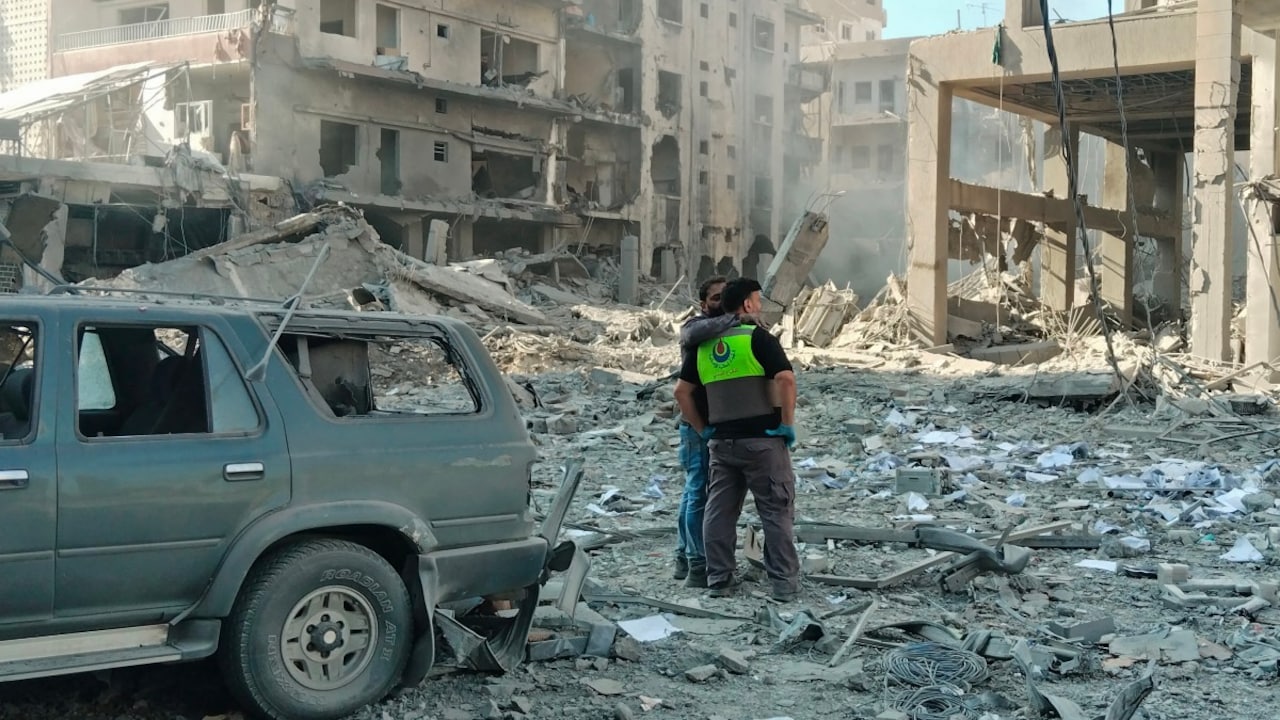
The unilateral declaration of a diplomatic breakthrough by a head of state rarely aligns with the operational realities of verification and ratification. When Washington announced that a comprehensive "settlement of the war with Iran" had been approved in concept and detail—averting a scheduled wave of military strikes—the immediate counter-response from Tehran’s semi-official state apparatus was entirely predictable. Fars News Agency, citing sources close to the Iranian negotiating team, flatly denied that an initial memorandum of understanding (MoU) had been finalized.
This divergence is not a simple communication breakdown. It is a structural feature of asymmetric conflict resolution.
The primary friction points preventing an immediate, binding agreement are driven by contrasting institutional mechanics, divergent sequencing models for sanctions relief, and the physical reality of validating degraded nuclear infrastructure under military blockade. To understand why a deal remains unsigned despite executive declarations, the problem must be deconstructed into its component strategic functions.
The Institutional Ratification Asymmetry
Negotiations between Washington and Tehran do not occur in an institutional vacuum; they are bound by highly disparate domestic approval mechanisms that dictate each side's bargaining elasticity.
[Executive Declaration] ---> [Domestic Ratification Bottleneck] ---> [Verification Phase]
       |                                     |                              |
(Washington: Unilateral/Fast)       (Tehran: Supreme Leader/IRGC)     (IAEA: Physical Audit)
The Executive Velocity vs. Consensus Bottleneck
The American executive branch operates with high velocity regarding military deterrence and preliminary diplomatic signaling. The cancellation of immediate kinetic strikes via executive order represents a fluid, reversible tactical leverage point.
Conversely, the Iranian state apparatus relies on a complex, multi-tiered consensus framework to ratify any international binding agreement. The Supreme Leader, Ali Khamenei, holds absolute veto power, but the Supreme National Security Council, parliament, and senior echelons of the Islamic Revolutionary Guard Corps (IRGC) must structurally align before any formal text is initialed.
For Tehran, signing an MoU prematurely carries immense domestic risk, particularly if the document is perceived as an unconditional capitulation under the pressure of a US naval blockade. The denial issued by Iranian state media serves as an institutional shield, preserving bargaining leverage and signaling to domestic hardliners that the regime has not conceded to unilateral American terms.
The Problem of Reversible Commitments
A fundamental imbalance exists in the structural durability of the concessions on the table. Tehran is being asked to commit to deep, verifiable, and largely irreversible or highly costly structural changes to its nuclear program, alongside the immediate, physical opening and demining of the Strait of Hormuz.
Washington’s primary offerings—the suspension of planned air strikes and conditional, staggered financial relief—are highly fluid. An executive decision to halt a bombing campaign can be reversed within hours. Because the underlying US naval blockade remains in full force and effect until a final transaction is signed, Iran faces an acute security dilemma. Acknowledging a final agreement before the precise legal mechanics of the blockade’s lifting are codified would strip Tehran of its remaining defensive posture without guaranteeing economic reciprocity.
The Strategic Sequence Function
The core obstacle to finalizing the draft framework is the mathematical and chronological sequencing of reciprocal actions. Successful de-escalation models require perfect alignment between compliance milestones and relief mechanisms. The current impasse can be modeled through three distinct operational phases.
Phase 1: The Maritime Security Constraint
The first operational gate requires establishing freedom of trade through the Strait of Hormuz. This is not merely a political concession; it is an engineering and military challenge requiring the active demining of shipping lanes and the formal cessation of hostile kinetic actions against commercial vessels.
The economic cost function of the current maritime disruption impacts both parties symmetrically but through different channels:
- Global Supply Chain Cost: The closure of the Strait spikes marine insurance premiums and reroutes global energy tankers, inflicting macroeconomic strain on Western allies.
- Domestic Sovereign Starvation: The ongoing naval blockade systematically deprives Tehran of vital commodity export revenues, creating a hard financial ceiling beyond which the domestic economy cannot sustain basic functions.
Phase 2: The Nuclear Lockout Period
The secondary phase demands that Iran commit to a structural lockout period of 15 to 20 years. Under this provision, Tehran must halt all uranium enrichment activities and permit the systematic dismantling or deep modification of its remaining nuclear sites.
The technical parameters outlined by Western negotiators demand the total cessation of enrichment above civilian power-generation thresholds (3.67%) and the relocation or destruction of high-speed centrifuge cascades. For Iran, this represents the liquidation of its primary geopolitical asset—nuclear threshold status—which it has cultivated as a strategic deterrent against foreign intervention.
Phase 3: The Sequenced Financial Reciprocity
In exchange for these structural concessions, the proposed framework integrates a staggered financial relief mechanism. The unfreezing of Iranian capital held in international accounts and the lifting of primary and secondary banking sanctions are explicitly sequenced to correspond with independent verification milestones.
The primary breakdown in negotiations occurs here: Iran demands front-loaded, legally binding economic normalization to offset decades of lost investment, while the United States demands verifiable, physical nuclear compliance before releasing substantial capital.
The Physical Verification Bottleneck
Even if political alignment is achieved on the sequencing of a 60-day transitional framework, a massive technical challenge remains regarding the physical audit of Iran's degraded nuclear infrastructure.
Following previous kinetic actions that targeted key facilities at Fordow, Natanz, and Isfahan, a significant volume of enriched nuclear material and processing equipment is currently assessed to be buried under structural debris. This introduces a profound verification bottleneck for the International Atomic Energy Agency (IAEA).
[Kinetic Damage at Sites] ---> [Enriched Material Under Rubble] ---> [Physical Audit Impasse]
                                                                             |
                                                                  (IAEA Access & Disposal)
An accurate accounting of the state's enrichment balance sheet cannot be conducted via remote sensing or satellite imagery. IAEA inspectors require unfettered, physical access to conduct localized radiological sampling and to safely extract and dispose of what has been colloquially categorized as legacy nuclear dust.
A formal agreement cannot be executed while the volume, enrichment level, and weaponization readiness of the buried material remain unquantified. The United States and its regional partners require a precise inventory of this material to establish a credible baseline for a 15-to-20-year lockout.
Concurrently, Iran's willingness to grant sudden, highly intrusive inspection rights at sensitive military sectors remains conditional on the complete removal of foreign military threats. This creates a circular dependency: inspection access requires security guarantees, but security guarantees require the verified destruction of the nuclear infrastructure.
Regional Multilateral Complications
The current negotiation framework differs fundamentally from historical bilateral or P5+1 models due to the explicit, structural integration of regional state actors. The explicit inclusion of Israel, Saudi Arabia, the United Arab Emirates, Qatar, Turkey, Pakistan, and other regional states alters the strategic equilibrium.
The Verification-Deterrence Divergence
The inclusion of these regional powers introduces distinct intelligence and security thresholds that must be satisfied before an MoU transitions into an enduring treaty. While the United States intelligence community assesses that Iran’s strategic doctrine has historically aimed at achieving a highly advanced threshold status rather than an active nuclear warhead, regional intelligence agencies operate under tighter survival margins.
Israel and Saudi Arabia view a threshold state as an unacceptable existential threat that triggers an immediate regional counter-balancing strategy—including the potential acquisition of sovereign nuclear capabilities by Riyadh. Consequently, any framework that leaves the structural capacity for rapid re-enrichment intact will face intense resistance from regional partners, complicating Washington’s ability to guarantee long-term treaty compliance.
The Role of Mediators as Financial Custodians
The reliance on regional intermediaries like Qatar and Pakistan highlights the operational complexity of the financial components of the deal. Because direct financial transactions between the US and Iranian banking sectors are legally restricted, these third-party nations must act as sovereign financial custodians.
The mechanics of unfreezing assets require setting up dedicated escrow accounts and specialized trade vehicles designed to ensure that released funds are funneled exclusively toward humanitarian or verified civilian economic reconstruction. Designing, legalizing, and auditing these financial conduits requires weeks of technical drafting by treasury experts, rendering claims of an instant, finalized settlement structurally impossible.
The Strategic Path Forward
The discrepancy between the political declarations of an imminent signing and the rigid denials from Tehran indicates that the negotiations have entered a critical, high-friction drafting phase. The 60-day window intended to follow the signing of an initial MoU will not serve as a period of calm, but rather as an intense technical battleground to define the precise metrics of compliance and relief.
The immediate tactical play rests on whether Vice President JD Vance and top negotiators can formalize the text of the initial memorandum during upcoming European diplomatic tracks without triggering a collapse of the fragile ceasefire. For a durable settlement to occur, the draft must abandon ambiguous political language and explicitly codify the exact ratio of financial tranches released per kilogram of enriched material extracted from the damaged facilities. Until those exact numbers are locked into a legally binding sequence, the naval blockade will continue to dictate terms, and the risk of rapid reversion to kinetic conflict remains high.


