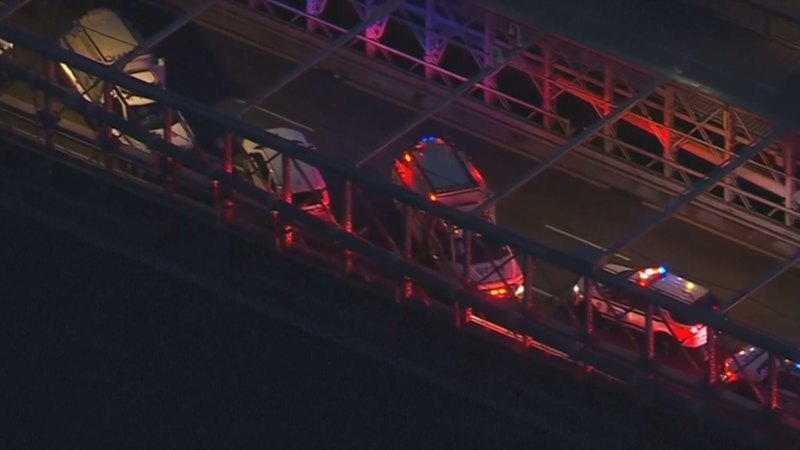
Urban critical infrastructure operates under strict physical and operational thresholds, yet public safety architectures routinely fail when confronted with acute psychiatric crises. The fatal police shooting during a recent incident involving an individual attempting to scale the Brooklyn Bridge is not merely an isolated operational failure; it is a structural symptom of a systemic mismatch between high-density urban environments, rapid-response law enforcement mandates, and mental health intervention capacity. When public infrastructure intersects with behavioral health emergencies, the resulting friction points reveal deep vulnerabilities in resource allocation, tactical deployment protocols, and spatial design.
Deconstructing this systemic breakdown requires examining the mechanics of municipal response systems. Major urban hubs rely on tiered emergency architectures that prioritize speed and containment over psychiatric stabilization. This structural preference for tactical resolution over crisis negotiation creates a cascade of systemic bottlenecks.
The Operational Bottleneck of Urban Containment
Infrastructure bottlenecks dictate the tactical reality of law enforcement response in high-density corridors. Bridges such as the Brooklyn Crossing represent unique topological constraints. They are narrow, heavily trafficked, elevated, and structurally rigid corridors with limited ingress and egress points.
When an individual breaches security perimeters or attempts to scale structural spans, the physical geometry of the site dictates a compression of time and space. Law enforcement units dispatched to these locations operate under severe operational friction. The primary constraints governing these responses include:
Spatial restriction limits maneuverability. Officers cannot deploy standard de-escalation distancing protocols when physical geography restricts movement to narrow pedestrian walkways or suspension cables.
Traffic compression generates immediate public safety hazards and intense psychological pressure on responders. The kinetic energy of surrounding commuter traffic elevates the stakes for rapid clearance, incentivizing speed over methodical negotiation.
Communication latency between field units, dispatch command, and specialized behavioral health teams often exceeds the critical decision window of the subject in crisis.
These constraints transform a psychiatric emergency into an immediate tactical containment problem. Traditional police training emphasizes threat mitigation and site control. When applied to an individual experiencing a psychological crisis, these operational imperatives frequently escalate rather than de-escalate the volatility of the environment.
The Cost Function of Delayed Behavioral Intervention
The economic and social cost of deploying armed law enforcement as the primary response mechanism for behavioral health crises is mathematically inefficient and operationally hazardous. Municipalities allocate the vast majority of their emergency response budgets to traditional police departments, leaving specialized mental health co-responder units underfunded and understaffed.
This resource imbalance creates a skewed cost function. The marginal cost of dispatching a heavily armed tactical unit to a structural crisis is high in terms of financial resources, traffic disruption, and potential loss of life. Conversely, the marginal investment in decentralized, highly mobile psychiatric intervention teams remains low relative to total public safety expenditures.
When law enforcement officers arrive first on the scene of a behavioral health crisis, they carry tools and training optimized for criminal interdiction. The psychological profile of an officer trained to perceive environmental threats contrasts sharply with the profile required to build rapport with an individual experiencing severe psychosis or suicidal ideation. This divergence in operational doctrine produces predictable friction points.
The absence of immediate, on-site psychiatric expertise forces officers to make high-stakes tactical decisions under conditions of radical uncertainty. Without quantitative metrics or real-time diagnostic support from mental health professionals, tactical units rely on visual indicators of non-compliance rather than behavioral assessments of psychiatric distress.
Structural Vulnerabilities in Urban Spatial Design
Physical architecture plays a deterministic role in shaping crisis outcomes. Modern urban design frequently prioritizes flow and aesthetic utility over fail-safe containment features that could mitigate self-harm or unauthorized scaling.
Bridges, elevated transit lines, and high-rise public structures are built with permeable perimeters to accommodate maintenance and preserve historical or visual integrity. However, this permeability transforms public assets into high-risk vectors for crisis events. Retrofitting these structures with physical deterrents, such as anti-climb barriers, integrated suicide prevention nets, or smart sensor arrays, requires capital expenditure that municipal planning boards often defer in favor of maintenance for vehicular throughput.
The absence of passive architectural safeguards shifts the entire burden of intervention onto active human response teams. When architecture fails to provide a buffer, time compresses. An individual attempting to scale a bridge span achieves tactical leverage within minutes, while a specialized crisis negotiation team may require hours to establish operational readiness on site. This temporal mismatch guarantees that law enforcement will attempt physical intervention before dialogue can be established.
The Mechanics of Escalation Dynamics
Understanding how a standard crisis response deteriorates into a fatal encounter requires tracking the sequence of operational triggers. Each phase of the intervention introduces specific variables that alter the psychological state of the subject and the tactical posture of the responders.
Phase one involves initial detection and perimeter lockdown. First-responding patrol units arrive, establish a physical cordon, and attempt verbal commands. For an individual in acute psychiatric distress, authoritative commands and flashing emergency lights frequently serve as environmental stressors, intensifying paranoia or feelings of persecution.
Phase two involves tactical positioning. As specialized units or supervisors arrive, the physical presence around the subject increases. The deployment of non-lethal deterrents or containment gear signals an impending physical intervention, prompting a defensive or flight response from the subject.
Phase three is the critical decision window. If the subject makes a sudden movement toward an exposed edge or attempts to breach a final security barrier, the perceived threat to life transitions from abstract to immediate. Responders operating under split-second threat-assessment parameters must determine whether the subject's action constitutes an immediate danger to themselves or others. In environments with zero margin for error, such as the narrow girders of a suspension bridge, the threshold for utilizing force collapses.
The outcome is a tragic convergence of structural inadequacy, institutional training limitations, and environmental pressure. The system operates precisely as it is designed to operate under current parameters: it secures the perimeter, clears the corridor, and neutralizes the perceived threat, but it fails to preserve human life.
Strategic Restructuring of Crisis Response Architecture
Transforming urban safety outcomes requires abandoning the assumption that law enforcement can universally absorb the responsibilities of mental health crisis management. Municipalities must decouple tactical security operations from behavioral health interventions through institutional redesign.
The primary structural requirement is the implementation of tiered dispatch algorithms. Emergency communications centers must possess the diagnostic capability to route calls involving psychiatric distress directly to integrated health teams, bypassing traditional police dispatch unless weapons or violent crimes are explicitly reported.
Secondary infrastructure investments must focus on physical hardening combined with passive safety engineering. Retrofitting critical spans with physical barriers does not eliminate the root causes of psychological distress, but it fundamentally alters the time-to-incident metric. By extending the window of physical access, architecture buys time for trained negotiators and mental health clinicians to arrive and establish meaningful communication before physical intervention becomes necessary.
Finally, training protocols for law enforcement units operating in transit and bridge corridors must incorporate mandatory joint simulations with psychiatric specialists. These simulations must test operational responses under conditions of severe spatial constraint and high public visibility, shifting the core performance metric from speed of clearance to successful psychiatric stabilization.
Municipalities that fail to modernize their crisis response architectures will continue to witness the fatal intersection of structural vulnerability and tactical mismatch. The solution lies in engineering systems that respect both the physical realities of urban infrastructure and the complex behavioral realities of human psychiatric distress.