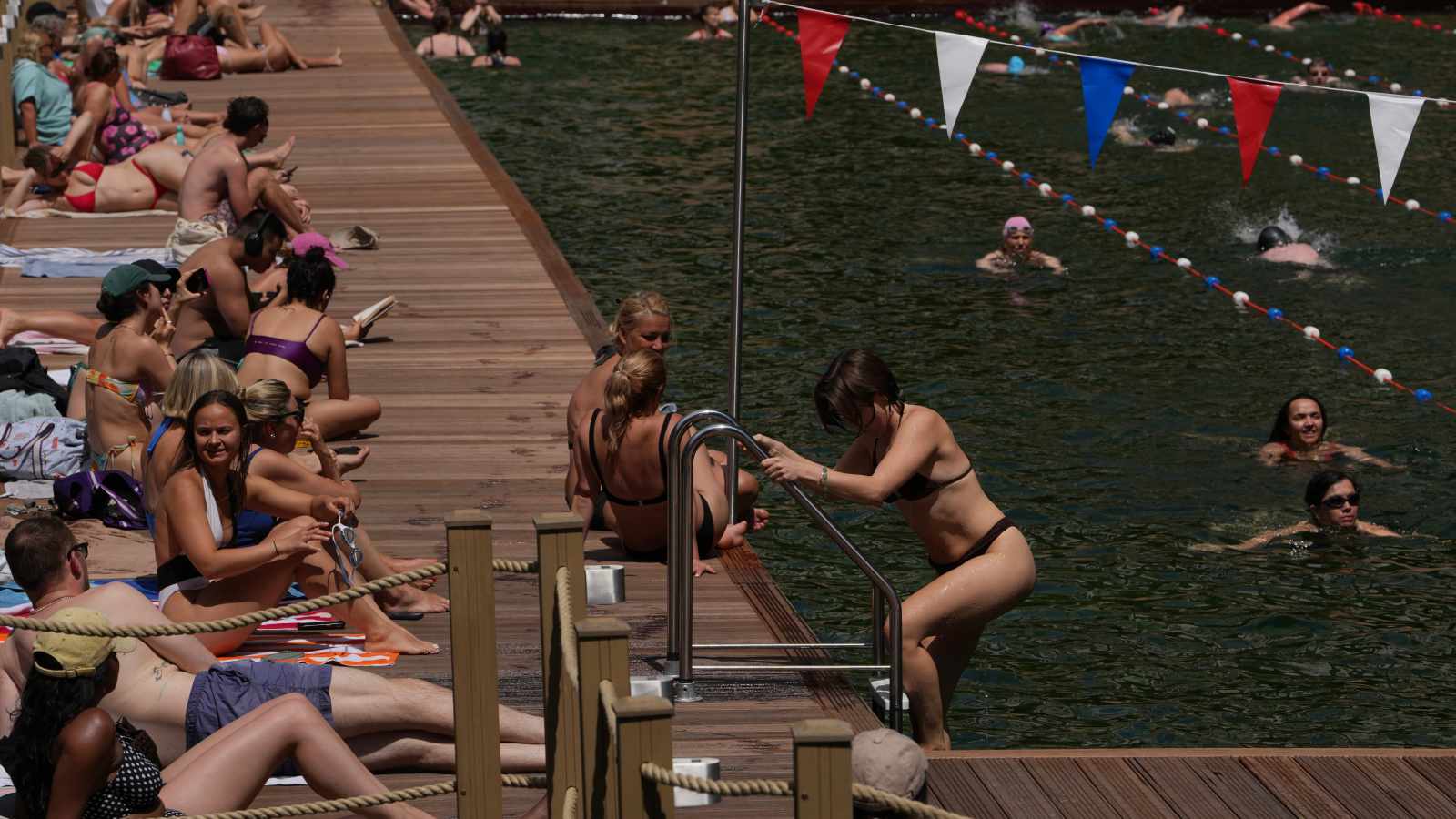
The systemic failure of built environments during extreme thermal anomalies cannot be understood through gross mortality figures alone. Media reporting on the June 2026 European heatwave—which documented 18 early fatalities in France—regularly treats these events as acute natural disasters. This framing is analytically flawed. The lethality of a 41.9°C peak in Bordeaux or a 41.2°C vector in Poitiers is not merely a function of atmospheric temperature; it is the direct output of a structural mismatch between historical architectural design and shifting thermodynamic baselines.
When a region constructed to retain heat faces prolonged, non-linear temperature spikes, the built environment ceases to function as a shelter and begins to operate as a thermal radiator. To quantify the vulnerability of European urban centers, analysis must move past simple temperature readings and isolate the mechanical, meteorological, and behavioral feedback loops that convert an atmospheric event into an institutional crisis.
The Omega Block Mechanism: Meteorological Stagnation
The baseline cause of the June 2026 anomaly is a highly stable atmospheric configuration known as an Omega block. This structural weather pattern occurs when a high-pressure system becomes wedged between two low-pressure troughs, mimicking the shape of the Greek letter $\Omega$. The mechanical behavior of this system generates compounding thermal stress through three distinct vectors.
- Sinking Air Masses: The central high-pressure core forces upper-level air downward. As this air sinks, it undergoes adiabatic compression—compressing under increased atmospheric pressure closer to the surface, which raises its kinetic energy and elevates temperatures without requiring an external heat source.
- The Cloud-Clearing Vacuum: Descending air suppresses vertical atmospheric motion, preventing the condensation required for cloud formation. The resulting lack of cloud cover maximizes solar irradiance, allowing uninterrupted shortwave radiation to penetrate the surface for up to 16 hours per day.
- The North African Advection Conduit: The rotational mechanics of the flanking low-pressure zones act as a conveyor belt, pulling high-energy, hyper-arid air masses directly from the Sahara Desert across the Mediterranean into western Europe.
Because an Omega block is hydrodynamically stable, it resists standard atmospheric steering currents. The system remains stationary for days or weeks. This creates a zero-wind environment that halts convective cooling, trapping a fixed volume of air over metropolitan areas and initiating a multi-day compounding heat loop.
Structural Thermodynamics: The Thermal Mass Bottleneck
The secondary and more lethal bottleneck is the thermal performance of European housing stocks. Unlike infrastructure in West Asia or the southern United States, which is engineered to reflect solar radiation and maximize ventilation, continental European architecture historically prioritized thermal insulation to minimize winter heating costs. This design philosophy creates a severe liability under modern climate realities.
High-thermal-mass building materials, such as stone, brick, and uninsulated concrete, possess a high capacity for heat storage. During the day, these structures absorb intense solar radiation. Instead of dissipating this energy, the materials store it internally.
The structural failure occurs during the nocturnal cycle. When atmospheric temperatures drop marginally at night, these buildings begin emitting stored longwave radiation inward and outward. In regions like Almeria, Spain, or the Bordeaux wine region, indoor temperatures remained locked above 25°C to 30°C overnight. This eliminates the physiological recovery window required for human homeostatic regulation. The human body requires ambient temperatures below its baseline skin temperature to shed heat via thermal radiation and sweat evaporation. When structural engineering prevents this drop, systemic physiological fatigue accumulates exponentially over a 48-to-72-hour period.
The Cost Function of Indirect Mortality Vectors
A critical oversight in standard heatwave reporting is the misattribution of casualties. Direct hyperthermia (heatstroke) represents only a fraction of the total mortality envelope. The structural pressures of an uncooled environment manifest primarily through secondary operational breakdowns and behavioral shifts, which can be categorized into three pillars.
Cardiovascular Strain and Power Grid Instability
To maintain an internal core temperature of 37°C, the human body responds to extreme ambient heat via vasodilation—widening blood vessels to direct thermal energy toward the skin—and increased cardiac output. For elderly populations, specifically individuals between 80 and 95 years old, this sustained increase in cardiac workload triggers acute myocardial infarctions or cerebrovascular accidents.
Simultaneously, local electrical grids experience a surge in demand as localized cooling mechanisms are deployed. In Turin, Italy, the electricity grid suffered widespread sporadic power cuts due to transformer overloads. When the grid fails, localized micro-climates within high-density housing blocks lose all mechanical ventilation, immediately escalating the medical risk profile for non-ambulatory populations.
Behavioral Displacements and Hydrodynamic Casualties
The lack of widespread municipal cooling infrastructure (such as public air-conditioned centers or retrofitted public transport) forces populations to seek ad-hoc thermal relief. In the recent June anomaly, 13 of the 18 recorded deaths in France were classified as drownings. This represents a direct behavioral displacement vector:
- High ambient indoor temperatures induce behavioral urgency to find immediate heat sinks.
- Populations migrate toward unmonitored or high-velocity natural bodies of water (rivers, canals, unprotected lakes).
- Sudden immersion in cold water triggers cold shock response or physical cramping, leading to rapid drowning.
Data from previous French thermal anomalies indicates that drowning rates increase by up to 172% during red-alert heat periods, demonstrating that hydro-accidents are a structural byproduct of climate events rather than isolated incidents of human error.
Micro-Climate Traps
The modern vehicle acts as a highly efficient greenhouse. Shortwave solar radiation passes through automotive glass, warming interior surfaces. These surfaces then emit longwave infrared radiation, which cannot escape through the glass. In a 41°C ambient environment, the internal temperature of an unventilated vehicle can escalate to over 60°C within 20 minutes. The tragic loss of two young children in southeastern France highlights the absolute lethality of these localized micro-climates when behavioral or situational oversights occur within an uncooled urban matrix.
Systemic Limitations of Current Adaptation Protocols
The administrative response across Europe relies on acute, short-term mitigations rather than structural retrofitting. In France, current interventions include the regional declaration of red heatwave warnings across 49 administrative departments, the closure or alteration of schedules for roughly 2,700 schools, and localized bans on public gatherings or alcohol consumption.
While these measures reduce direct exposure, they highlight systemic limitations in national adaptation strategies. Closing schools shifts the thermal burden from public structures to domestic housing units, which often possess inferior thermal insulation and zero active cooling capacity. Furthermore, the reliance on manual labor adjustments—such as utility operators in Italy doubling worker shifts to deploy mobile generators—is a reactive stopgap that does not scale against the projected frequency of future atmospheric blocks.
The fundamental limitation of European climate adaptation plans is the capital expenditure deficit. Transitioning a continent’s building stock from heat-retaining to heat-repelling architecture requires a fundamental overhaul of building codes, massive subsidies for reflective roofing and external shading systems, and the decarbonized deployment of heat-pump technology for active cooling. Until policy shifts from emergency management to thermodynamic retrofitting, mortality figures will continue to scale alongside rising baseline temperatures.
Strategic Outlook
Municipalities must abandon the framework of treating summer heatwaves as transient emergencies. The operational reality is that Europe is warming at more than double the global average rate, according to World Meteorological Organization data. This establishes a permanent shift in regional baseline climates.
The immediate tactical play for regional governments involves three structural interventions: the mandatory implementation of external retrofitted shading devices on all multi-family residential structures to block shortwave solar entry; the physical modification of urban geometry using high-albedo materials to mitigate the urban heat island effect; and the classification of active domestic cooling as a basic public health utility rather than a luxury amenity. Failing to execute this infrastructure pivot guarantees that subsequent atmospheric blocks will yield increasingly severe operational, economic, and human failures.