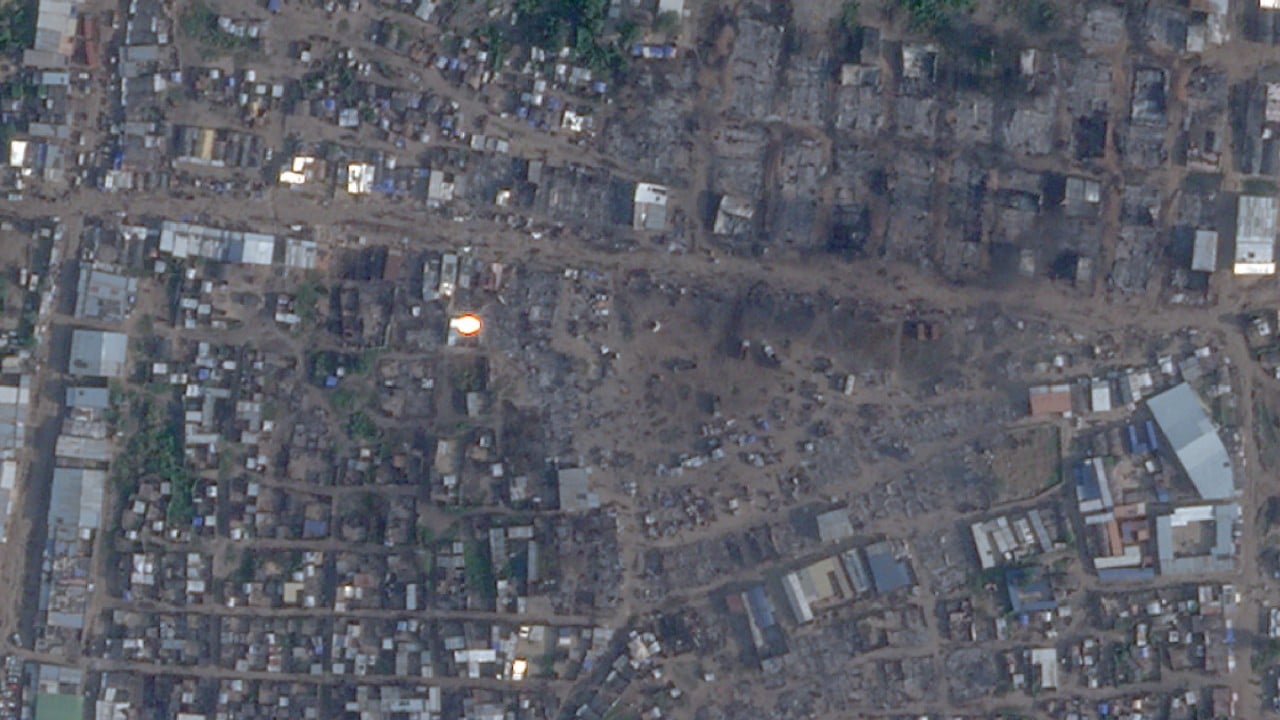
Standard reporting on the October 19, 2026 drone strike at Amiet Market in Abyei—which killed at least 153 people—treats the event as a discrete tragedy inside Sudan's wider war. That framing misses the structural mechanics of why a contested border marketplace became a high-lethality target. When unmanned aerial munitions hit dense civilian commerce adjacent to fuel storage in a legally ambiguous territory, the shockwave is not merely kinetic; it is institutional, economic, and diplomatic.
To understand the attack rigorously requires separating verified reporting from contested claims, mapping the logic of conventional event coverage, and analyzing the system dynamics driving drone warfare along the Sudan-South Sudan frontier. Discover more on a connected topic: this related article.
Deconstructing Conventional Event Coverage
Typical news dispatches on the Amiet Market strike follow a predictable sequence: headline casualty figure, attribution claim, counter-claim, local witness account, and diplomatic condemnation. This structure establishes basic situational awareness, yet it leaves major causal links unexamined.
Conventional coverage relies on four recurring analytical habits: More analysis by The Washington Post explores similar views on this issue.
- Headline casualty anchoring: Leading with "at least 153 killed" fixes attention on the immediate death toll while treating missing persons, severe burn injuries, and delayed fatalities as secondary details.
- Binary attribution framing: Presenting local officials blaming Sudan's military alongside an anonymous officer claiming strikes targeted Rapid Support Forces (RSF) personnel and fuel smugglers creates symmetry without evaluating evidentiary weight or operational incentives.
- Static historical background: Mentioning South Sudan's 2011 independence and Abyei's unresolved status as background context treats a live structural vulnerability as mere trivia rather than an active risk multiplier.
- Episodic clustering: Listing recent strikes in West Kordofan, Darfur, or Nyala shows momentum, but rarely explains how cheap, longer-range drones alter force-to-space economics across previously peripheral corridors.
The core flaw in event-driven reporting is treating space, fuel, and governance as passive backdrops. In Abyei, those three variables actively determine how violence escalates and why civilian harm spikes.
Known Facts Versus Educated Hypotheses
A disciplined assessment must draw a hard line between documented facts and analytical inference. Casualty counts in active conflict zones shift as rubble is cleared and unconfirmed missing persons are accounted for.
Verified Elements of the Record
Available reporting establishes several core facts around the October 19 strike at Amiet Market:
- Timing and location: The strike hit around 11 a.m. on Monday, October 19, 2026, at Amiet Market in the disputed Abyei border region between Sudan and South Sudan.
- Confirmed scale: Abyei administration acting information minister Yohanna Akol Ngor reported 153 deaths, with warnings the toll could rise as people remained missing and bodies were severely burned.
- Secondary combustion: Witnesses reported multiple large explosions and a fire at a nearby fuel depot, compounding shrapnel trauma with thermal injuries.
- Medical and peacekeeping response: Doctors Without Borders (MSF) reported more than 20 wounded patients—including burn victims and critical cases—arriving at Ameth Bek Hospital alongside South Sudanese health staff, while the United Nations Interim Security Force for Abyei (UNISFA) deployed medical personnel, firefighters, and quick-reaction forces.
- Conflicting target narratives: Local authorities attributed the strike to Sudan's military and said the fuel depot served local commerce, whereas an anonymous military officer asserted the strike targeted RSF fighters and fuel smugglers outside the border demilitarized zone—claims that independent observers had not verified.
- Diplomatic fallout: South Sudan summoned Sudan's ambassador in Juba to protest, and UN leadership condemned escalating drone strikes across the conflict.
Educated Hypotheses on Operational Logic
Where verification is incomplete, structured hypotheses clarify plausible mechanisms without inventing facts:
- Dual-use fuel as a targeting magnet: In war economies where diesel and petrol power both civilian transport/generators and military logistics, a fuel depot acts as a dual-use node. Striking dual-use infrastructure near a daytime market maximizes collateral lethality even if planners claim a logistics rationale.
- Drone proliferation lowering escalation thresholds: Armed drones allow belligerents to project lethal force across contested boundaries with lower pilot risk and lower unit cost than manned aircraft, encouraging strikes in areas that previously saw lower-intensity or sporadic violence.
- Cross-border spillover risk: Strikes near a disputed frontier raise the probability of miscalculation between Khartoum, Juba, and local armed actors, turning a civil war spillover into a bilateral crisis.
The Three Pillars of Border Market Vulnerability
Why did a single strike at Amiet Market produce mass casualties on this scale? In conflict economics and urban geography, marketplaces function as high-density central places where supply chains, cash/barter exchange, and human mobility converge at predictable hours. Three structural pillars explain the vulnerability of a border market like Amiet.
1. Spatial Compression and Dual-Use Co-Location
Markets concentrate crowds, vehicles, livestock, and goods in compact open spaces during peak trading hours. Placing or operating a fuel depot immediately adjacent to that crowd creates a compound hazard: initial blast and fragmentation waves are followed by rapid-spread fire and smoke. In low-resource environments, severe thermal burns overwhelm local clinics quickly because burn care requires specialized fluids, dressings, surgical capacity, and sustained evacuation corridors that rarely exist near contested borders.
2. Jurisdictional Ambiguity and Governance Friction
Abyei has remained contested between Sudan and South Sudan since South Sudan's 2011 independence, subject to joint administration arrangements, unresolved final-status questions, and overlapping local tensions involving Ngok Dinka communities and Misseriya pastoralists. When sovereignty and command authority are disputed, accountability diffuses. Belligerents can argue over demilitarized boundaries or military necessity, while civilian protection mechanisms face mandate limits, access friction, and competing political pressures.
3. Cross-Border Economic Interdependence
Border markets survive precisely because formal state lines do not stop everyday trade or seasonal movement. Pastoralists, traders, commuters, and supply networks link communities across fractured frontlines. That same connectivity means a strike inside a border enclave immediately disrupts food, fuel, and medical lifelines on both sides of the line, turning a localized attack into a regional humanitarian and diplomatic shock.
The Cost Function of Drone Escalation
From a strategic systems perspective, the rise of armed drones in Sudan's war—which began in April 2023—reshapes the cost function of violence for every actor involved. In military economics, belligerents weigh operational cost, delivery reach, deniability, and political/humanitarian blowback.
When unmanned systems enter a conflict at scale, several shifts occur simultaneously:
- Lower marginal cost of reach: Drones extend strike reach into secondary hubs and border corridors without exposing expensive manned aircraft or crews to air defenses.
- Higher civilian-to-combatant exposure in mixed spaces: When strikes hit crowded markets or adjacent fuel depots in daylight, the ratio of civilian harm to any claimed military objective rises sharply.
- Verification lag and narrative warfare: Remote strikes followed by conflicting claims over "smugglers" versus "local commerce" delay independent verification, letting each side lock in its preferred narrative before facts stabilize.
- Medical and humanitarian bottlenecks: Mass casualties with severe burns strain thin hospital networks and force aid agencies and peacekeepers to operate under heightened aerial threat.
The critical second-order effect is market hollowing. When traders and commuters fear aerial strikes during peak hours, markets shrink, disperse, or shift to irregular times and routes. That lowers transaction volume, drives up commodity prices, and accelerates food and fuel scarcity across surrounding districts.
Tactical Assessment Framework for Analysts and Responders
Anyone tracking the conflict—whether an intelligence analyst, policy advisor, humanitarian logistician, or risk manager—needs an operational method to separate noise from signal after a major strike.
- Audit casualty and injury composition: Track not just headline fatalities, but missing persons, blast/shrapnel versus burn injuries, and hospital intake numbers. High burn ratios point to secondary fuel or structural fires and signal acute surge demand for trauma and burn supplies.
- Cross-check target claims against spatial reality: Compare assertions about military targets or smuggling nodes against market operating hours, proximity to civilian stalls, and whether fuel supplies serve households and local transport alongside any armed group.
- Map demilitarized and administrative boundaries: Verify exact coordinates relative to agreed zones, joint administration areas, and peacekeeping deployments to assess whether the strike crosses a known political or legal tripwire.
- Monitor cross-border diplomatic signals: Watch state-level actions—such as summoning ambassadors, closing crossings, or issuing formal protests—as leading indicators of bilateral friction between Juba and Khartoum.
- Track market price and displacement ripples: Observe whether nearby markets close, prices spike, or displaced civilians move toward towns and clinics, signaling broader economic and humanitarian stress.
Limitations of This Analytical Approach
No analytical framework eliminates the fog of war. Information blackouts, witness safety risks, contested access, and delayed forensic verification mean early figures are always provisional. Distinguishing verified facts from hypotheses prevents overconfidence, but it cannot supply missing ground truth on its own. Furthermore, diplomatic de-escalation frameworks have limited leverage when belligerents view strikes on contested border logistics as vital to their war effort.
Strategic Play
Treat border marketplaces and adjacent fuel hubs along the Sudan-South Sudan frontier as priority de-escalation and protection nodes before the next strike occurs. Diplomatic and humanitarian actors should push immediately for verifiable no-strike understandings covering major civilian markets and municipal fuel/hospital infrastructure, paired with pre-positioned burn and trauma kits at border referral hospitals and clear deconfliction channels involving UNISFA and neighboring authorities. In a conflict where drones compress distance and amplify collateral damage, protecting the physical and economic nodes that keep border communities alive is the most direct way to curb both mass civilian casualties and wider regional escalation.