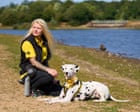
Open water leisure activity involving domestic canines carries systemic risk vectors that conventional public safety announcements routinely undersell. When organizations like the Dogs Trust highlight hundreds of annual rescue incidents across British canals, rivers, and coastal zones, the public discourse typically defaults to generic warnings about vigilance. Operational safety, however, requires more than generalized caution. It demands a mechanical breakdown of why aquatic environments fail dogs and, critically, why human intervention often converts a single-casualty animal emergency into a dual-casualty human tragedy.
Data compiled by the Royal National Lifeboat Institute and the Canal & River Trust demonstrates that dog-related water incidents are not random anomalies but predictable outcomes of interacting variables: hydrodynamic force, thermal shock, biological toxins, and human cognitive bias. Analyzing these variables through a structured framework exposes the precise failure points in typical recreational routines. Also making waves in related news: Why Sitting the Month is Overrated Quarantine Theater for New Mothers.
The Three Primary Hazard Vectors in British Open Water
Aquatic risks partition cleanly into three distinct categories based on their physical and biological mechanisms. Understanding the operational profile of each vector transforms abstract worry into measurable risk mitigation.
1. Hydrodynamic and Mechanical Hazards
The surface appearance of water correlates poorly with its subsurface danger. Canines evaluate water through immediate sensory feedback—primarily cooling relief during high-ambient-temperature periods. They do not calculate volume flow rates or boundary-layer drag. Further information on this are explored by WebMD.
- Subsurface Obstructions and Entrapment: Canals and artificial watercourses frequently contain discarded infrastructure, shopping trolleys, and dense root systems. A swimming dog caught in submerged debris experiences immediate linear deceleration, inducing panic and rapid exhaustion.
- Current Velocity and Egress Deficits: River systems and tidal coastal zones possess velocity vectors that exceed a dog's maximum sustained swimming speed. Vertical or steep-sloped concrete canal banks eliminate egress points, creating an energy-depletion trap where the animal swims against a current until muscular failure occurs.
2. Pathological and Toxicological Vectors
Still or slow-moving water bodies during elevated seasonal temperatures act as incubation chambers for pathogens and cyanobacteria.
- Cyanobacterial Blooms: Commonly termed blue-green algae, these prokaryotic organisms multiply rapidly in nutrient-rich, warm water. Ingestion or dermal absorption of cyanotoxins attacks the canine liver and nervous system with high acute toxicity. Because rapid-onset hepatic failure occurs without a specific antidote, the margin for error is near zero.
- Bacterial Load and Vector Transmission: Stagnant ditches and slow rivers serve as reservoirs for Leptospira bacteria, shed in the urine of mammalian vectors such as rodents. The pathogen penetrates mucosal membranes or micro-abrasions sustained during swimming, leading directly to renal and hepatic compromise.
3. Osmotic Imbalance via Marine Ingestion
Coastal environments introduce a distinct physiological stressor: hypertonic saline exposure. Canines retrieving objects from surf zones inevitably ingest substantial volumes of seawater.
The high sodium concentration initiates an osmotic shift, drawing extracellular fluid into the gastrointestinal lumen while elevating serum sodium levels. This triggers hypernatraemia, presenting as acute neurological dysfunction, ataxia, tremors, and potential cerebral edema if untreated.
The Human Intervention Cascade and the Rescue Failure Loop
The most severe consequence of canine aquatic distress is not pet mortality, but human mortality. National Water Safety Forum data highlights a persistent cohort of accidental drownings linked directly to animal rescue attempts. This phenomenon follows a predictable behavioural and physical sequence termed the Intervention Cascade.
[Canine Enters Water] --> [Encounters Subsurface Hazard/Fatigue] --> [Vocalizes/Panics] --> [Owner Enters Water] --> [Thermal Shock/Current Overload] --> [Dual-Casualty Emergency]
When an owner perceives that a dog is struggling, emotional urgency overrides environmental assessment. The human enters the water without personal flotation devices or baseline evaluations of local depth and temperature.
- Thermal Shock Response: Sudden immersion in cold open water induces an involuntary gasp reflex, hyperventilation, and tachycardia in humans, drastically reducing functional swim time.
- Weight and Resistance Dynamics: Swimming dogs instinctively attempt to climb onto any available buoyant surface—including a human rescuer's torso. This vertical clawing submerges the human, breaking their airway clearance and inducing mutual panic.
- Fatigue Multiplier: A human swimming against an open-water current while managing a thrashing, panic-driven 30-kilogram animal exhausts their adenosine triphosphate reserves within minutes. The rescue loop closes when the rescuer's physical capacity drops below the systemic load required for self-preservation.
Quantifying the Behavioral Risk Matrix
Recreational risk correlates directly with owner perception gaps. Survey data consistently shows that a vast majority of dog owners report high confidence in their ability to manage pet safety near water, yet incidents continue to rise during peak seasonal windows. This disconnect stems from treating wild water with the operational assumptions applied to controlled municipal environments like swimming pools.
To eliminate cognitive bias, owners must replace intuitive guessing with a binary decision protocol. If a water body fails baseline structural checks—such as verified water quality, low current velocity, and clear, shallow egress points—the default action must be strict physical restraint via leash protocols.
Operational Protocols for Open Water Management
Mitigating aquatic exposure requires an engineering mindset. Relying on a dog's self-preservation instincts is an invalid strategy, as selective breeding has amplified retrieve-drives that override self-regulation.
- Establish Hard Perimeter Boundaries: Maintain a mandatory leash buffer within five meters of fast-flowing rivers, flood-swollen canals, or marine surf zones during high-wind events.
- Carry Exogenous Hydration Systems: Dehydration drives dogs to drink from stagnant puddles or algal-contaminated ponds. Providing clean, portable potable water eliminates the metabolic trigger that forces pets to source dangerous alternatives.
- Pre-Scan Egress Geographies: Never permit water entry without identifying at least two low-angle exit points capable of supporting the combined weight of the wet animal and human retrieval assistance.
Implement a strict pre-entry assessment for every aquatic site: verify absence of surface scum, confirm low flow velocity, and ensure direct visual contact throughout the exercise period. When ambiguity exists regarding water safety, enforce the primary operational rule: keep the animal out of the water entirely.